


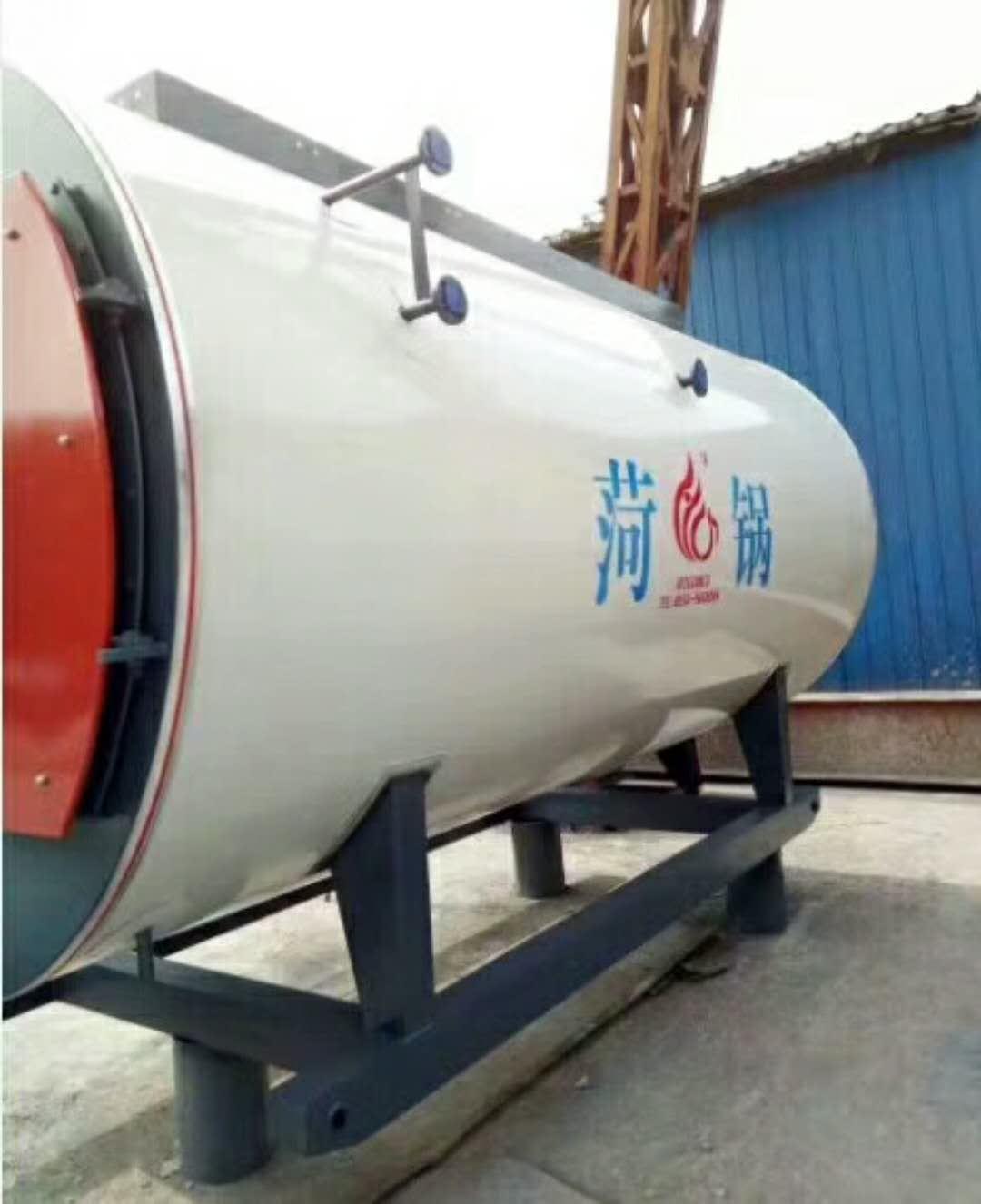
Shandong Zhongjie Special Equipment (formerly Heze Boiler Factory Co., Ltd.) was established in 2001, located at No. 2218 Jinnan Road, Development Zone, Heze City, with a registered capital of 50 million yuan and total assets of 500 million yuan. The company has 7 business centers: boilers, deep-freeze containers, pressure vessels, central air conditioning, engineering installation, international trade, and Internet of Things. It has three factory sites on Jinnan Road, East Changjiang Road, and Bohai Road, covering a total of 200,000 square meters, with the main workshop spanning 83,000 square meters. It currently employs 710 people, including 247 engineers and technicians, and 82 intermediate-level technicians. In December 2016, it was recognized as a "High-tech Enterprise" by the Science and Technology Department. In June 2021, it was identified as a "Specialized and New Enterprise in Shandong Province" by the Ministry of Industry and Information Technology. In June 2022, it was recognized as a "Gazelle Enterprise in Shandong Province" and in August 2022, it was identified as a "Specialized and New Small Giant Enterprise" by the Ministry of Industry and Information Technology.
Low-temperature liquid storage tanks are equipment designed for storing low-temperature liquids, commonly used for storing liquid oxygen, nitrogen, argon, and other low-temperature liquids. These liquids exist in a gaseous state at room temperature but are cooled to a liquid state at low temperatures for more efficient storage and use. The tanks are typically made of high-strength materials such as stainless steel or aluminum alloy to withstand low temperatures and high pressures. They usually have an insulating layer inside to reduce evaporation and maintain the low-temperature state. Applications of low-temperature liquid storage tanks include but are not limited to: They are widely used in rocket and spacecraft fuel and propulsion systems, such as liquid oxygen, nitrogen, and hydrogen storage tanks. They store and supply low-temperature liquids as fuel and oxidizers to propel rockets and spacecraft. Industrial Production: Low-temperature liquid storage tanks are used in industrial production for storing and supplying low-temperature liquids like liquid oxygen, nitrogen, and argon. These liquids serve as coolants, raw materials for gas separation, and reactants in chemical reactions, among other uses. Medical Applications: These tanks are used in the medical field to store and supply liquid oxygen for oxygen therapy, inhalation therapy, and operating rooms. Laboratory Research: In scientific research and laboratories, low-temperature liquid storage tanks provide low-temperature liquids as coolants and cryogenic media. They are used for cooling laboratory equipment, material research, superconductivity, and low-temperature physics, among other fields. In summary, low-temperature liquid storage tanks are widely used in aerospace, industrial production, and laboratory research to store and supply low-temperature liquids to meet the needs of various fields.
Liquid nitrogen storage tanks feature the following characteristics during the construction process:
Low-Temperature Construction: The construction of liquid nitrogen tanks must be carried out in a low-temperature environment, as the boiling point of liquid nitrogen is low, approximately -196 degrees Celsius. Construction personnel must take appropriate protective measures, such as wearing thermal protective clothing and gloves, to protect themselves from low-temperature injuries.
Welding Technology: Extensive welding is required during the manufacturing process of liquid nitrogen tanks, including the bonding of tank walls, bottom plates, top plates, and seams. Welding technology is crucial for the quality and safety of the tank, necessitating the use of appropriate welding methods and materials to ensure the strength and sealing integrity of the welds.
Insulation Layer Construction: Liquid nitrogen tanks must have excellent insulation properties to minimize heat conduction and retain low temperatures. The construction of the insulation layer requires materials such as polyester foam and glass wool, ensuring the thickness and quality of the insulation layer.
Proper installation steps for liquid nitrogen tanks are as follows:
Site Preparation: Select an appropriate site for tank installation, ensuring it is level, sturdy, and has adequate load-bearing capacity. The site should be located away from flammable, explosive materials, and other hazards.
Foundation Construction: Construction of the foundation based on the tank's dimensions and weight, including excavation of the foundation pit, pouring concrete foundation, etc. The design and construction of the foundation should comply with relevant standards and specifications.
Tank Installation: Transport the tank to the site and install it vertically. Appropriate lifting equipment and safety measures are required during installation to ensure the stability and safety of the tank.
Pipe Connections: Connect the storage tank to the relevant piping system as required, including intake pipes, exhaust pipes, and liquid supply pipes. Sealing and testing must be performed during the connection process to ensure the safety and integrity of the pipes.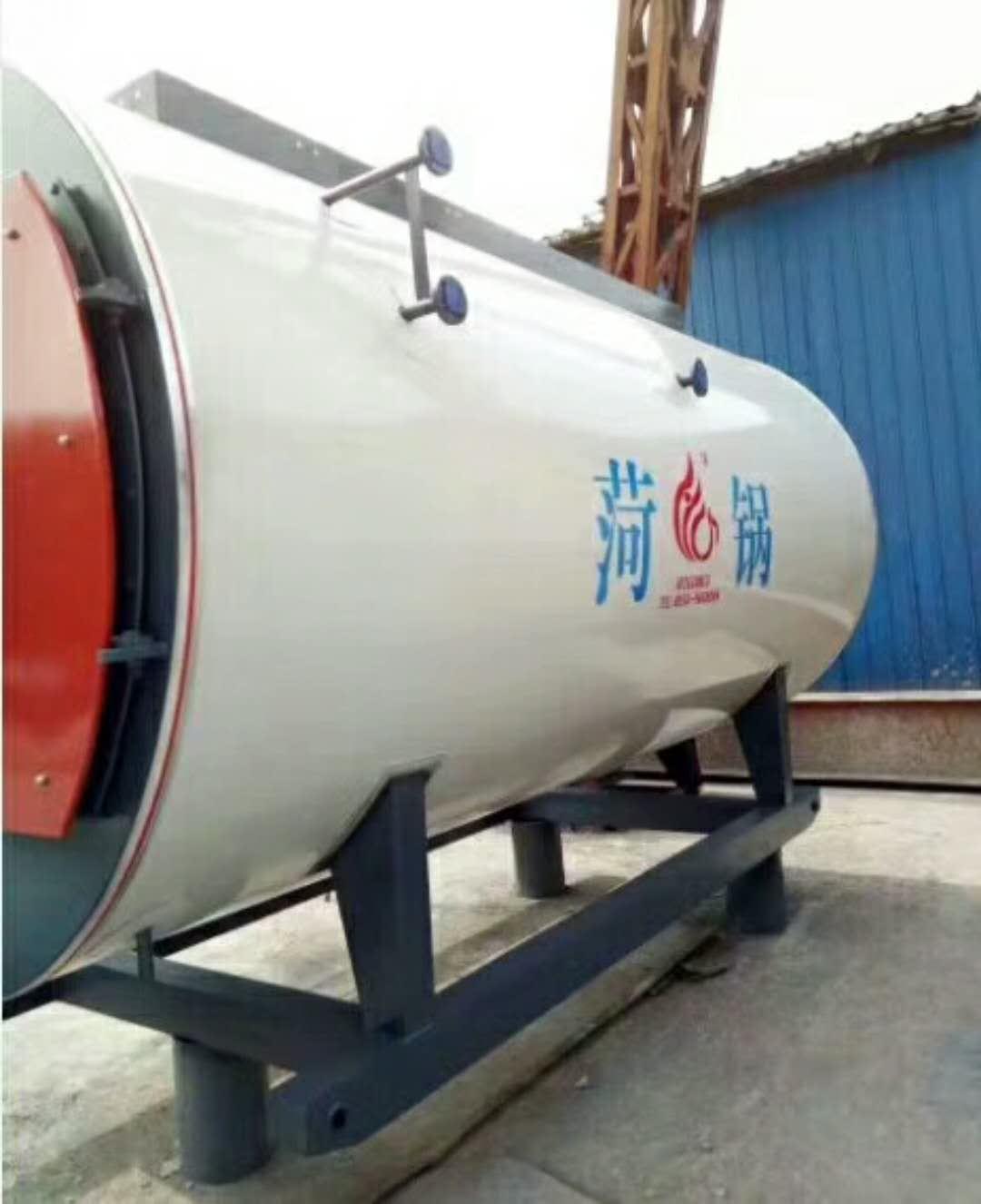
Liquid Oxygen Storage Tank is a specialized piece of equipment that requires particular attention to safety and an understanding of its characteristics. Here are the usage precautions and features of a liquid oxygen storage tank:
**Precautions for Use:**
- **Operation:** The operation of the liquid oxygen storage tank should be performed by trained and experienced personnel. Operators must be familiar with the tank's structure, performance, and operating procedures, and must operate strictly according to the manual and safety regulations.
- **Fire Prevention Measures:** Liquid oxygen is highly oxidative and can easily cause fires and explosions. Open flames and objects that generate sparks or high temperatures should be prohibited around the tank. Fire protection facilities and fire extinguishing equipment should be established and regularly inspected and maintained.
- **Leakage Control:** In the event of a leakage in the liquid oxygen storage tank, immediate measures for leakage control should be taken. Leakage can cause evaporation of liquid oxygen and an increase in oxygen concentration, raising the risk of fire and explosion. A leakage alarm system should be installed, and leakage control devices and personal protective equipment should be provided.
- **Insulation Protection:** Liquid oxygen storage tanks should have good insulation protection to reduce evaporation and maintain low temperatures. The insulation layer should be regularly inspected and maintained to ensure its integrity and insulating performance.
- **Safety Distance:** A certain safety distance should be maintained around the liquid oxygen storage tank to prevent the spread of accidents such as fires, explosions, and leaks. The specific requirements for safety distances should be assessed and determined based on local regulations and standards.
**Features:**
- **High Oxidizing Property:** Liquid oxygen is highly oxidative, capable of supporting combustion and causing more intense fires. Therefore, special attention to fire and explosion prevention measures is necessary when using the liquid oxygen storage tank.
- **High Pressure Storage:** Liquid oxygen storage tanks typically store high-pressure oxygen, with pressures usually around 2-5 bar. Therefore, pressure control and the safety of pressure relief devices should be noted during operation and maintenance.
- **Low Temperature Storage:** The liquid oxygen within the storage tank is in a low-temperature state, usually around -183°C. Therefore, when contacting the liquid oxygen storage tank, appropriate personal protective equipment should be worn.
The normal pressure range for liquid oxygen tanks typically falls between 2-5 bar. This range refers to the oxygen pressure inside the tank, which is necessary to maintain the liquid oxygen in its liquid state. The design and manufacture of liquid oxygen tanks should comply with relevant standards and specifications to ensure the tank can safely withstand this pressure range under normal operating conditions. It is important to note that the pressure of liquid oxygen tanks can be affected by various factors, such as the temperature of the liquid oxygen, tank design, and materials. In actual use, the normal pressure range of the tank should be determined based on specific tank design and operational requirements, and operations and maintenance should be conducted in accordance with relevant regulations and standards. Additionally, liquid oxygen tanks should be equipped with pressure control devices, such as pressure valves or relief devices, to ensure that the internal pressure of the tank remains within a safe range. These devices can automatically release gas when pressure exceeds the set value, ensuring the safety of the tank. Regular inspection and maintenance of these pressure control devices should be conducted when using liquid oxygen tanks to ensure they function properly.
Our company highly values technological innovation and R&D design. We have 1 municipal-level enterprise technology center in Heze City, equipped with testing facilities for non-destructive testing, physical and chemical tests, welding tests, hydrostatic tests, and more. We possess over 600 pieces of various equipment, including CNC machines, X-ray flaw detectors, digital ultrasonic flaw detectors, mechanical property testing machines, chemical analyzers, spectrometers, tensile testing machines, plasma welding machines, and others. Our key products, such as thermal-pressure vessels for welding, biomass boiler emission reduction, and waste heat recovery, have successively been selected for multiple Shandong Province Department of Industry and Information Technology scientific and technological innovation projects, key provincial projects, and Heze City innovation and excellence projects. We have累计 obtained 27 authorized utility models, 16 authorized inventions, participated in drafting 2 standards, 2 industry standards, and registered 15 trademarks. The technical team, in collaboration with Professor Li Yajiang of Shandong University, has developed deep cryogenic container processing technology using the internationally recognized plasma arc + wire-in-tube argon arc welding (PAW-GTAW) technology. After being evaluated by the provincial scientific and technological achievement commission, the technology has reached an international level in the field of deep cryogenic container manufacturing. Choose ZJ Special Equipment, and let's create brilliance together!
Yongzhou 5 cubic meter liquid argon storage tank, high cost-performance ratio
