

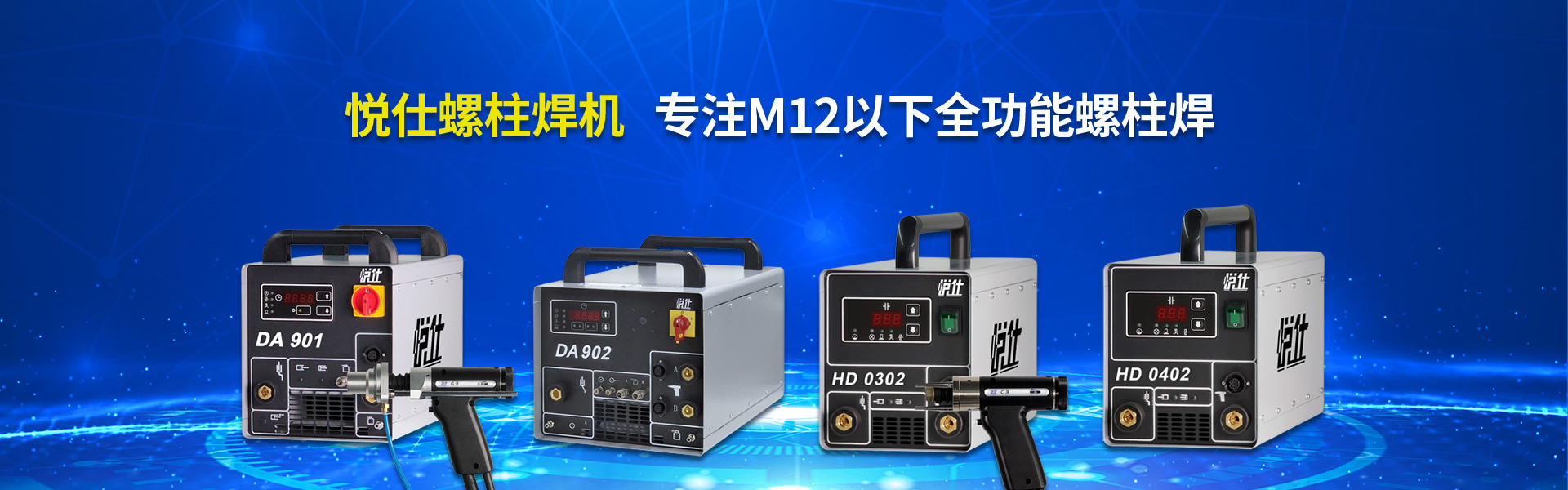
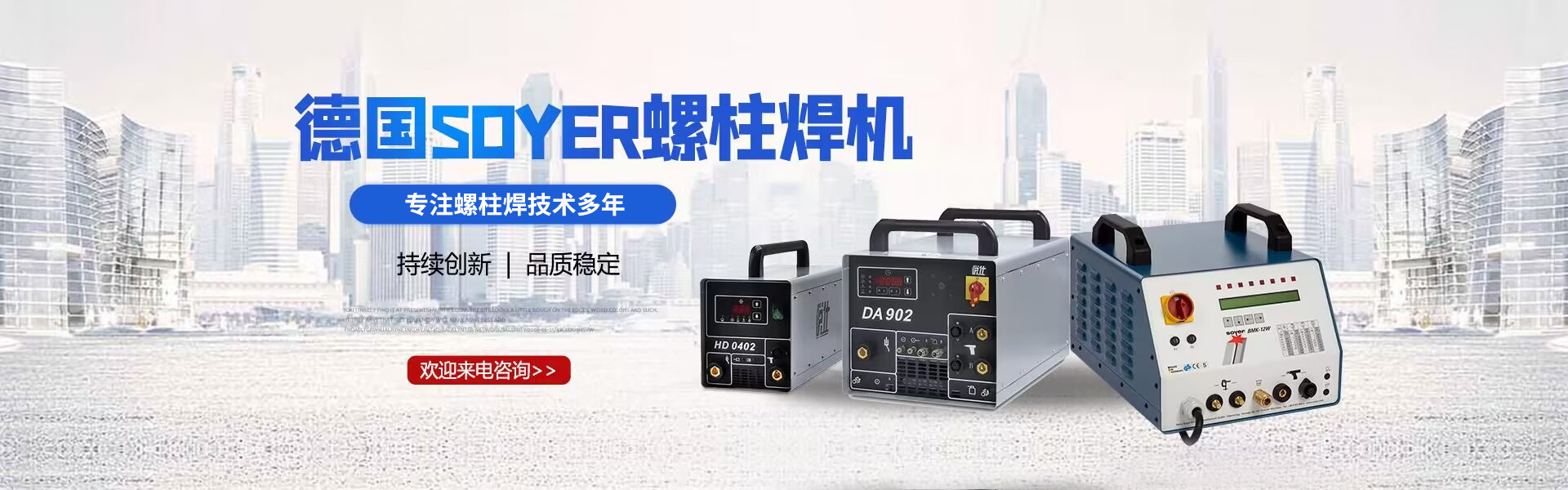

Compared to traditional arc welding, energy storage stud welding machines demonstrate significant advantages across five dimensions, particularly catering to the efficient and precise production needs of modern industry.
Welding Speed and Efficiency
Traditional Arc WeldingManual silk filling and current adjustment are required, resulting in a longer welding time per piece (usually several seconds to several tens of seconds).
Energy Storage Screw Welding:
High level of automationSingle-welding time less than 1 second via PLC or robotic control, suitable for batch operations.
No yarn filling/gas requiredEliminating steps like silk winding and air adjustment, efficiency is boosted by 5-10 times.
CaseWelding of automotive seat frames, traditional welding takes 20 seconds per piece, while energy storage welding requires only 1.5 seconds per piece.
2. Hot-Affected Zone and Deformation Control
Traditional Arc WeldingHigh heat input and wide heat-affected zone (usually >5mm) can easily lead to thin plate deformation or a decrease in material properties.
Energy Storage Bolt Welding:
Energy ConcentrationInstantaneous release of high energy, heat-affected zone <1mm, base material virtually undistorted.
Applicable scenariosPrecision instrument housing, stainless steel sheet welding, maintaining structural integrity.
Welding Quality and Consistency
Traditional Arc WeldingDependence on welder skills leads to significant fluctuations in weld quality, prone to defects such as porosity and slag inclusions.
Energy Storage Screw Welding:
Parameters可控Precision-set current, time, and pressure ensure consistent quality for each weld point.
Uniformly deep meltingThe studs are fully fused with the base material, achieving tensile strength up to 80%-90% of the material's inherent strength.
4. Automation and Flexible Manufacturing
Traditional Arc WeldingManual operation is predominant, making it difficult to integrate into automated production lines.
Energy Storage Bolt Welding:
Easy IntegrationThe system can be integrated with robots and conveyors to achieve continuous 24/7 production.
Adapted to multiple specificationsRapidly switch to different bolt welding diameters/materials by changing the nozzle or adjusting parameters.
5. Cost and Environmental Sustainability
Traditional Arc WeldingWelding wire and shielding gas are required, and the high rework rate adds hidden costs.
Energy Storage Screw Welding:
Material SavingsNo filling material required, high bolt utilization (no cutting loss).
Energy consumption reductionHigh-power operation in an instant, with low standby power consumption, the comprehensive energy consumption is reduced by 30%-50% compared to traditional welding.
Environmental AdvantagesNo welding smoke or spatter, in compliance with clean production requirements.
Comparison of Typical Application Scenarios
| Scenario | Traditional Arc Welding | Energy Storage Bolt Welding |
|---|---|---|
| Body Welding for Automotive Frames | Opening notches and post-weld grinding are required, resulting in low efficiency. | Direct welding of studs, no post-treatment required. |
| Stainless Steel Kitchen Cabinet Frame | Large heat-affected zone, prone to deformation | Small heat-affected zone, maintaining frame accuracy |
| Aluminum Alloy Battery Tray | Welding speed is slow, making it difficult to meet mass production requirements. | High-Speed Welding, Designed for Automated Production Lines |
ConclusionThe energy storage stud welding machine, with its characteristics of "fast, accurate, and stable," is gradually replacing traditional arc welding in the pursuit of efficiency, precision, and quality in modern manufacturing, and becoming a solution for stud welding processes.
