

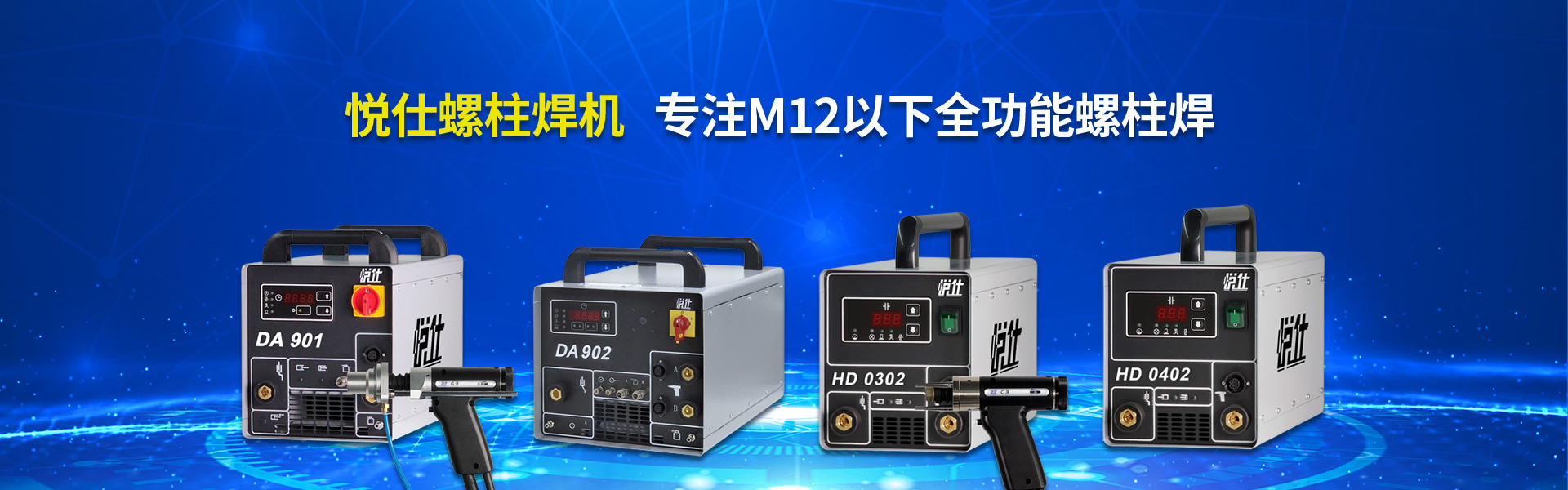
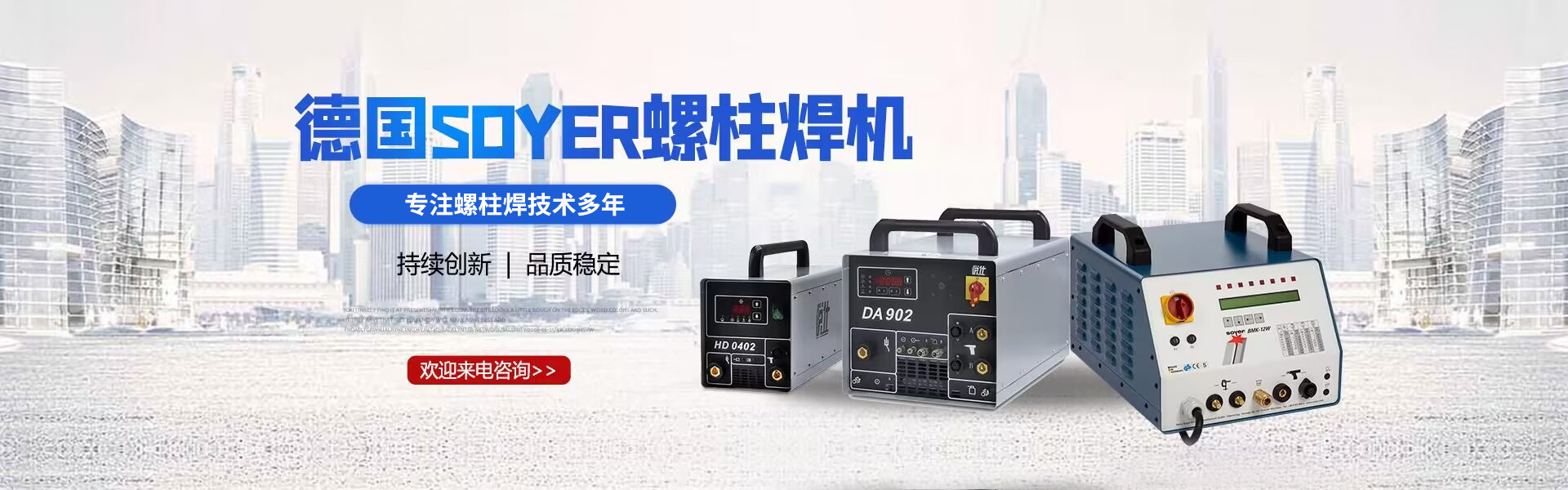

Energy Storage Bolt Welding Machine Rises to ProminenceEfficient, precise, and low splatterOur strengths are widely applied in the automotive industry, with the following 5 typical scenarios and specific cases:
Body structure welding
Application Scenarios:
Key components such as the white body frame (e.g., A/B/C pillar reinforcement plates), door hinges, and hood lock.
Technical Advantages:
Welding cycle ≤ 0.5 seconds, suitable for automated production line pacing (such as 60JPH lines).
Melt deep control accuracy ±0.1mm, ensuring reliable connections for high-strength steel (such as 1500MPa).
Case:
Tesla's Model Y utilizes stud welding to connect the aluminum alloy battery tray to the steel body frame.
2. Component Assembly
Typical Component:
Parts requiring bolt connections, such as seat bracket, dashboard crossbeam, and airbag bracket.
Process Advantages:
No pre-drilling required; directly weld M6-M12 studs to reduce assembly procedures.
The post-welding stud verticality is less than 0.5°, facilitating subsequent nut tightening.
Case:
Bosch ESP system brackets incorporate pillar weld integrated sensor mounting holes, boosting production efficiency by 30%.
3. Aluminum Welding
Technical Challenge:
Aluminum alloy has high thermal conductivity, and traditional welding is prone to deformation.
Solution:
Instantaneous energy concentration for energy storage welding (peak power > 1MW), reducing the heat-affected zone.
With pulse waveform control, prevent the collapse of the molten pool.
Case:
In the all-aluminum body of the Audi A8, stud welding is used to connect the battery housing to the coolant piping.
4. New Energy Vehicle Battery Pack
Key Applications:
Battery module connection with cooling plate/end plate requires conductivity >20mΩ and vibration resistance >5G.
Process Features:
Multi-pulse welding technology prevents copper foil burn-through.
Welding spatter <0.1g, preventing short circuit risks.
Case:
BYD's Blade Battery Tray utilizes stud welding to connect 48 modules in series, achieving a high welding pass rate.
5. Interior fittings fastening
Typical Component:
Sky windows tracks, luggage racks, handrail supports, and other visible parts.
Process Advantages:
No spatter welding, no need for secondary sanding, enhancing the interior aesthetics.
Weld heat-affected zone is minimized to prevent plastic part deformation.
Case:
The Mercedes-Benz S-Class roof rack now features stud welding instead of riveting, reducing weight by 15% and improving NVH performance.
Tech Trend Developments
Intelligentization:
Welding parameter automatic matching system (such as AI algorithms based on base material thickness/anchor bolt diameter).
Modular:
The Gun Head Quick Change System supports various bolt specifications (M4-M16) and is adaptable to mixed-line production.
Digitalization:
Weld quality online monitoring (such as real-time calculation of penetration depth, integrated X-ray defect detection).
SummaryThe storage bolt welding machine has become a key process for the lightweighting and electrification of vehicles, with its high efficiency and precision perfectly aligning with the modern automotive manufacturing's high pace and quality demands.
