
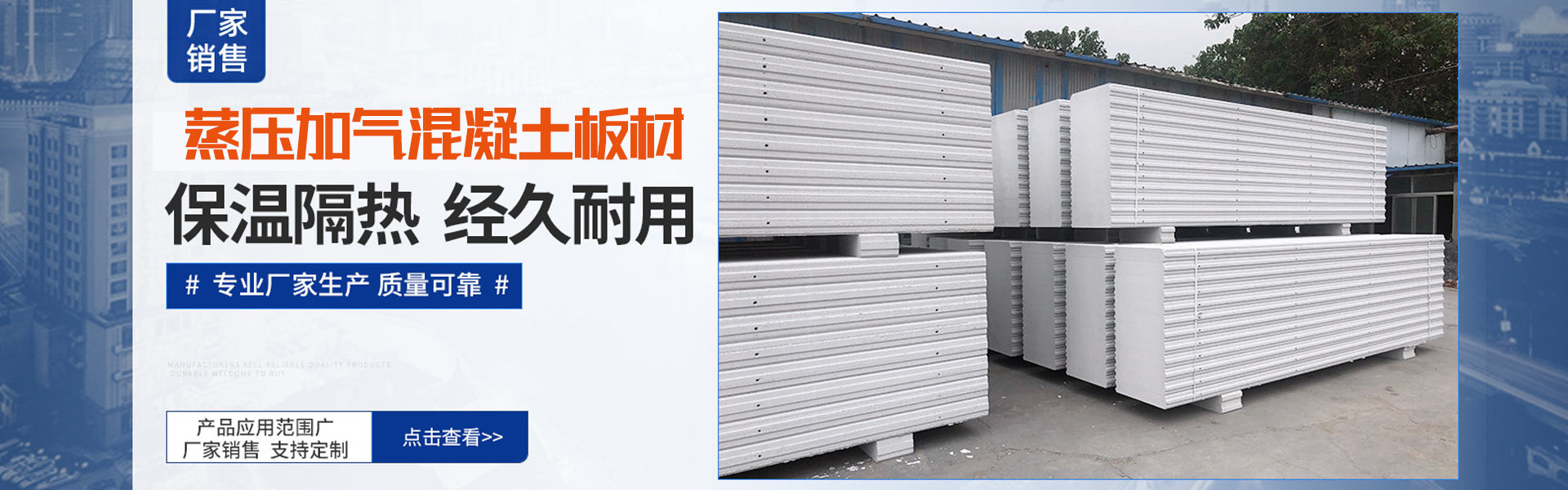


Saving Time and Labor: The use of autoclaved aerated concrete panels significantly reduces the construction period, as they can be factory预制 and merely require simple installation on-site. In contrast, traditional masonry work requires individual bricklaying, which is time-consuming and labor-intensive.
2. Enhanced Construction Efficiency: The dimensions of autoclaved aerated concrete panels are generally larger, which reduces the number of joints and improves construction efficiency. In contrast, traditional masonry requires individual bricklaying, resulting in more joints and seams, and is thus slower in terms of construction speed.
3. Ensuring Consistent Quality: Autoclaved aerated concrete boards are factory预制, guaranteeing uniform quality for each panel and avoiding the quality variations that may occur in traditional masonry. This enhances the overall quality and stability of the construction.
4. Reduced Construction Noise: Autoclaved aerated concrete panels generate relatively low noise during construction, whereas traditional masonry work, which requires the use of tools for building, produces greater construction noise.
5. Enhanced Insulation Performance: The structure of autoclaved aerated concrete boards is loose, containing a large number of tiny pores, which offer excellent insulation properties. In contrast, traditional bricks used in masonry often have gaps between them, leading to easier heat loss.
6. Excellent Fire Resistance: Autoclaved aerated concrete panels are treated with high-pressure steam at high temperatures, offering superior fire resistance and effectively preventing the spread of fires and reducing the risk of fire incidents. Traditional bricks used in masonry are more sensitive to high temperatures.
