
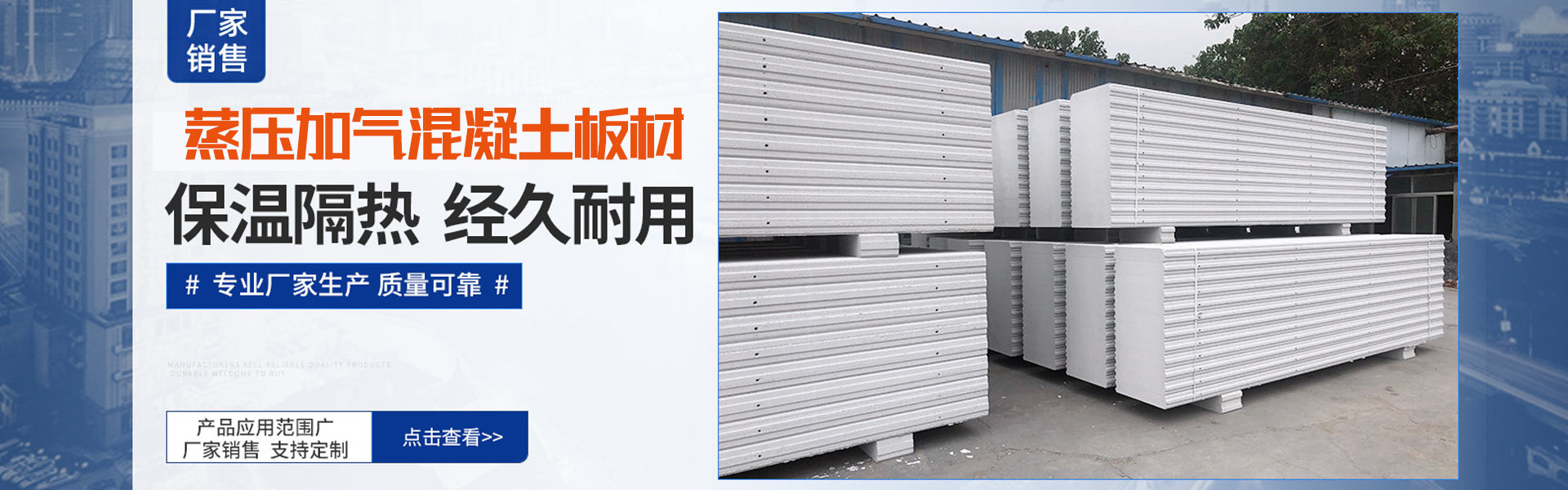
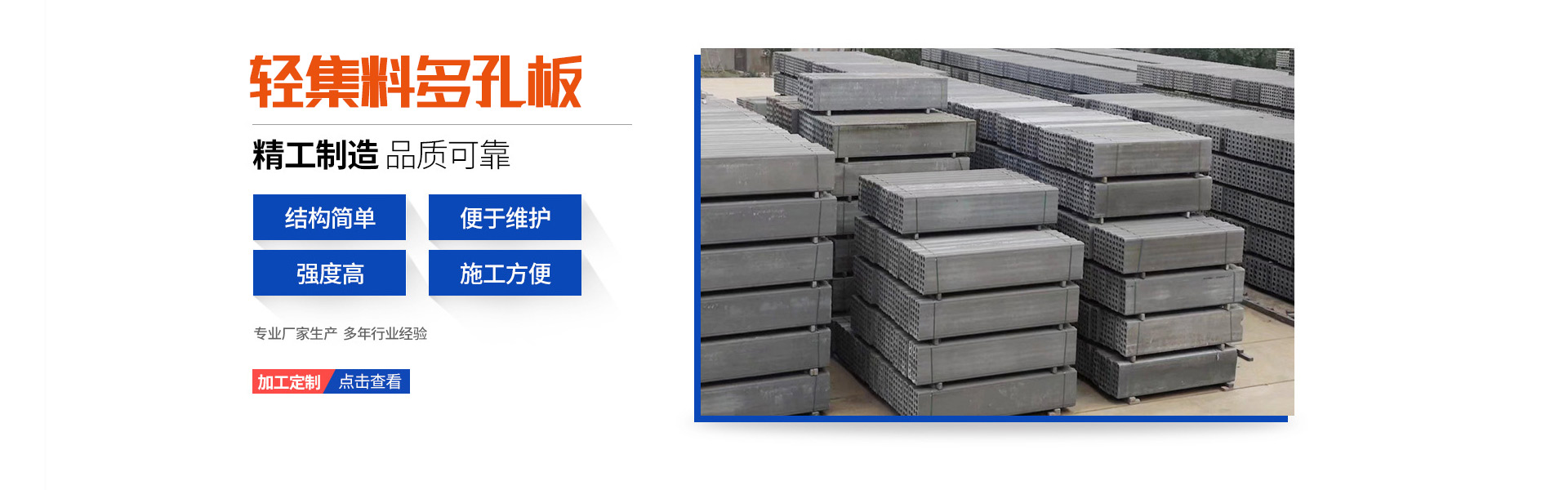


Autoclaved aerated concrete panels, commonly known as AAC panels, are made primarily from siliceous materials and calcareous materials, with aluminum powder as the gas-generating agent. They are reinforced with anti-corrosion treated steel mesh, and are produced through a process of mixing with water, casting, pre-curing cutting, and autoclaving to create a porous material. AAC panels are categorized by their raw materials, into sand AAC and fly ash AAC. "Sand" and "fly ash" refer to the silicon dioxide, with sand indicating the use of finely ground sand for silicon dioxide, and fly ash indicating the use of powdered coal ash for silicon dioxide. Whether it's sand AAC or fly ash AAC, the standard used is the national standard GB 15762-2008 for Autoclaved Aerated Concrete Panels.
Gray aerated concrete panels and sand aerated concrete panels are both favorites in the new wall material industry, with no significant differences in their functional applications, such as being lightweight, soundproof, thermal insulation, heat preservation, and fire-resistant. Moreover, they are all produced, quality-inspected, functionally tested, and meet the same construction standards. So, what's the difference between "gray aerated panels" and "sand aerated panels"? Generally, sand aerated concrete panels have better performance than gray aerated concrete panels, primarily because the sand aerated panels have less shrinkage. Sand aerated concrete also exhibits better frost resistance than gray aerated concrete.
The production of "autoclaved aerated concrete panels" utilizes a variety of industrial waste products such as fly ash, tailings sand, and desulfurization gypsum, aligning with the development of circular economy strategies and falls under the category of new wall materials encouraged by policy incentives. However, due to the differences in local resource conditions among enterprises, the selected raw materials and formulas vary. Generally speaking, those produced using fly ash are called "fly ash aerated panels," while those using quartz sand (or tailings) are known as "sand aerated panels." The production of "sand aerated panels" requires quartz sand (or tailings) to be ground into powder by a ball mill, leading to higher electricity consumption and a greater amount of cement added, thus resulting in a slightly higher price.
