



Characteristics and Classification of Rust Preventive Oil
Common rust preventive oils offer excellent dehydration and displacement properties, forming a dense protective oil film that enhances the anti-corrosion capability of sealed parts, while also improving their darkness and brightness. They are particularly suitable for use after phosphatizing or blackening, featuring a simple process and the ability to apply oil directly with water. They mainly include the following types:
Volatile Rust Inhibiting Oil: Offers excellent rust prevention, forming a dense, protective dry oil film that enhances the corrosion resistance of closed components. It has a non-greasy feel, suitable for rust prevention on large quantities of bulk workpieces. The thin oil film is cost-effective. Excellent overlap resistance. After the oil agent volatilizes, it forms a transparent film with good density and strong adhesion, preserving the metal's original color and effectively resisting rust. It complements phosphating, electroplating, blackening, or can be used alone for even better results.
Marine Anti-Rust Oil: Fine, transparent oil film, non-sticky to the touch, offering superior rust prevention, ideal for high-quality product requirements and particularly suitable for marine use. Enhanced rust prevention when used in conjunction with a sealing agent. Neutral salt spray resistance up to 48-96 hours.
Electroplating Anti-Rust Oil: Forms a dense protective film on the surfaces of metals like copper, iron, and stainless steel, with strong adhesion. It effectively prevents corrosion from external substances, the protective film is resistant to scratching, does not affect conductive welding, and post-surface treatment can significantly enhance the salt spray resistance. Neutral salt spray tests can exceed 24-72 hours without rust (differences in salt spray resistance may occur due to varying coating thickness, electroplating process, and type of plating). Standard electroplating, such as nickel, can rust in less than 4 hours, but the treated surface maintains a good luster.
Dewatering rust preventive oil belongs to the field of metal surface treatment technology, specifically involving the dewatering and preparation techniques of metal surface rust preventive oils. Currently available metal rust preventive oils typically consist of a combination of mineral oil, dewatering additives, and rust preventive additives. The mineral oil is generally kerosene, with a quality fraction of approximately 90%, the rust preventive additive is usually barium laurate of petroleum sulfonic acid, with a quality fraction of 2%-3%, and other additives account for 7-8% with varying compositions, all of which are the safety technologies of the manufacturers.
Common drawbacks of this de-watering anti-rust oil are:
1. Slow dehydration rate, for instance, components adhering to the steel water surface, need to be immersed in this anti-rust oil for dehydration, with the dehydration film taking 10-45 minutes.
2. Short rust prevention period; typically, after such treatment on steel parts that have rusted or oil has been depleted, rust prevention is only needed for one month.
3. Speed of dehydration and rust prevention cannot be balanced; that is, varieties with a higher speed of dehydration tend to have shorter, longer, and more rust, and they operate at a slower speed.
Liangyuan Dewatering Rustproof Oil Breakthrough Progress:
1. The dehumidification speed is fast; the water film on the surface with metal sheets is soaked in the pure water of Liangyuan anti-rust oil for 2-5 minutes.
2. Rusting time is long, usually for steel parts. After being treated by Liangyuan, the surface is coated with a layer of anti-rust oil, and the uniform layer has a rusting period of 1-2 years.
Rust Preventive Oil Classification and Features
(1) Fingerprint-type rust preventive oil
Fingerprint-removing rust preventive oil refers to a type of oil that can remove fingerprints from metal surfaces, dissolving, displacing, or neutralizing sweat (a small amount of water, salt, uric acid, etc.) on the metal surface to inhibit corrosion. This kind of oil boasts excellent rust prevention under humid conditions, film removal, separation, and resistance to sweat corrosion.
(2) Solvent-thinned rust preventive oil
This rust preventive oil is formulated using a suitable fraction of petroleum solvent as the solvent medium, combined with film-forming materials and rust inhibitors, etc. It is commonly applied to metal surfaces at room temperature, where it forms a uniform protective film after the solvent evaporates. It offers excellent resistance to salt spray, humidity, and dehydration for both ferrous and non-ferrous metals.
(3) Rust preventative grease
The rustproof grease boasts excellent resistance to salt spray and humidity, offering a long protection period. It does not lose its properties at high temperatures or crack at low temperatures. The oil film is transparent, soft, and has good coating properties.
(4) Lubricating Oil Type Rust Inhibitor
This type of rust preventive oil is based on lubricating oil fractions and mixed with appropriate rust inhibitors. It is categorized into two main types: general metal materials and internal combustion engine internal rust prevention. Primarily used for short-term rust prevention of metal materials and their products during indoor storage, it can also provide short-term lubrication for machinery in emergency situations.
(5) Vapour Phase Corrosion Inhibitor Oil
Vapor-phase rust preventive oil is a rust inhibitor containing oil-soluble substances that can vaporize at room temperature, providing rust protection for metal surfaces inside equipment or areas not coated with rust preventive oil.
Why does rust-inhibiting oil exhibit a sedimentation phenomenon?
Rust preventive oil exhibits a phenomenon where its solid components settle to the bottom of the container during storage. In some cases, the sedimentation is severe, and the solid components of the rust preventive oil, upon stirring, are not easily dispersed, a condition known as "caking." Why does rust preventive oil sediment? These conditions can have adverse effects on the oil.
Corrosion-inhibiting oil forming sediment can be caused by these adverse factors:
During the production and processing, poor dispersion and coarse grinding occur. In the formula of oil products, reasons such as excessively high density of solid raw materials can easily lead to sedimentation. Due to the addition of too much diluent, the viscosity of the rust preventive oil decreases, causing the raw materials to lose surface suspended particles and form sediment. Certain chemical reactions or mutual adsorption of materials can cause gel formation and sedimentation. Rust oil manufacturers produce by purchasing rust preventive oil formulas without strict quality control in the production process.
The effects and treatment methods of sedimentation in rust preventive oil
If the rust preventive oil settles, it will affect its function, failing to provide the intended rust prevention for machines and metal components. Therefore, when purchasing rust preventive oil, it is crucial to pay attention to proper usage and selection of the oil.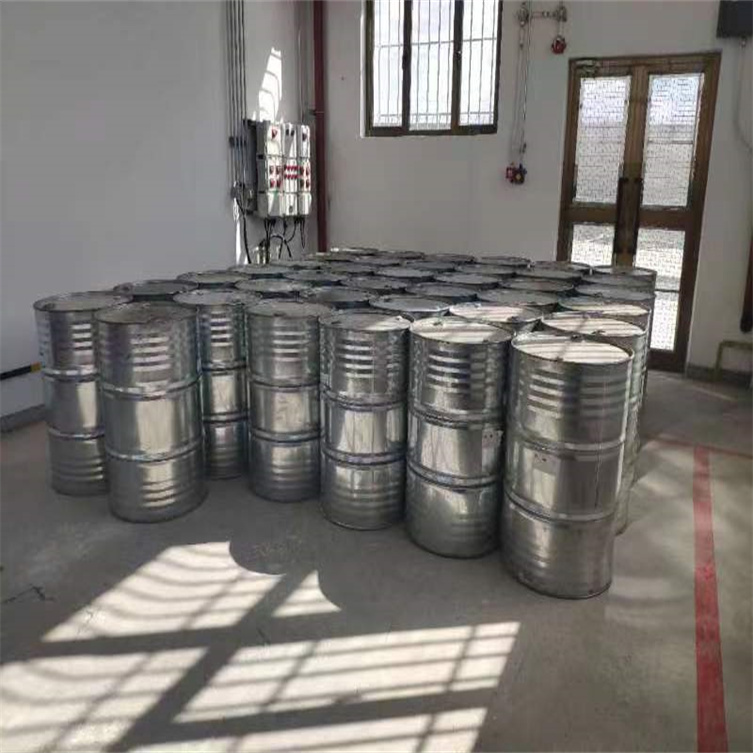 The anti-rust oil has a certain viscosity, adhering to metal surfaces to form a hard or soft continuous film, which isolates the metal from air and water, preventing rust on ferrous or non-ferrous metals. The anti-rust oil is of short-term protective properties, with a rust prevention period of about five years. However, when reusing the machinery, the anti-rust oil film can be cleaned at any time, distinguishing it from anti-rust paint used for rust prevention.
Atmospheric corrosion is the result of electrochemical action caused by oxygen, water vapor, and other harmful gases in the air acting on the metal surface. By isolating the metal surface from the factors causing atmospheric corrosion (i.e., protecting the metal surface), the purpose of preventing atmospheric corrosion of the metal can be achieved. The packaging technology of desiccant anti-rust oil is based on this principle to coat and seal the metal to prevent rust. Method of packaging desiccant anti-rust oil:
1. The coated workpieces with anti-rust oil should be left for 3 to 4 hours to allow solvent gasoline to evaporate (if kerosene or other solvents are used for dilution, the dwell time should be extended accordingly) or dried with hot air, and then packaged.
2. Packaging should be done using plastic film, but neutral paraffin paper or sodium benzoate paper can also be used, or packaging paper with one side waxed and the other with sodium benzoate. When packaging, the side with sodium benzoate should face inward.
3. For large workpieces, oiling can be used if conditions permit. If not, cover the entire workpiece with oil cloth or other materials to protect it from rain and dust, and to prevent damage to the oil film.
Inappropriate uses of rust preventive oil
Improper use of rust preventive oil can lead to abnormal situations, such as rust spots. What are the common incorrect usage methods we often encounter?
1. Prior to applying rust preventive oil, is the workpiece to be cleaned and dried?
It is crucial to clean and dry metal workpieces before applying rust-inhibiting oil; otherwise, its effectiveness will be significantly reduced. When inspecting workpieces after thorough cleaning, removing oil and other contaminants, and drying, one should wear thin gloves; do not inspect with bare hands or gloves that are dirty.
2. Coating Defects.
Improper use of rust preventive oil can result in ineffective performance. When using hot-dip coating rust preventive oil, controlling the temperature is crucial; it should generally be maintained between 65°C and 95°C. For large workpieces, they should be left in the dipping container for a period to prevent the coating from becoming too thick and prone to slippage; ensure the entire piece is fully immersed. For solvent-thinned rust preventive oil, the workpiece should be left to stand for a while after dipping, allowing the solvent to fully evaporate before packaging.
3. Poor packaging.
The desiccant anti-rust oil film is tough, usually withstands minor impacts without external packaging. However, in case of severe collisions, protective materials like wax paper should be used. Oil-based anti-rust oils are not resistant to friction and pressure, so care should be taken to avoid impacts. During oiling operations, allow the oil to dry and cure before wrapping with protective materials such as packaging paper or plastic film.
Jiangmen waste cutting oil collection, offering quick on-site processing service
