


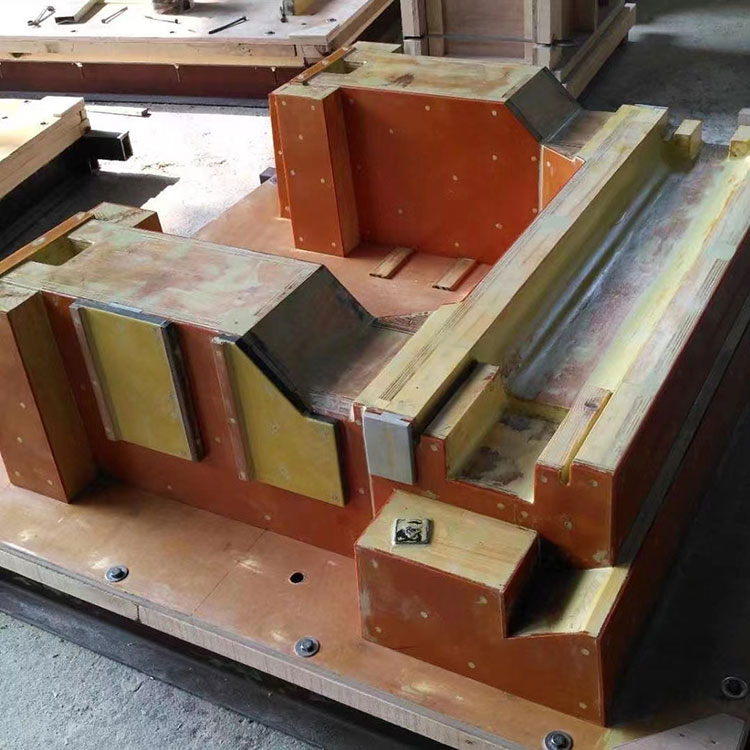


Molds are tools that, under external force, transform blanks into specific shapes and sizes, widely used in stamping, die forging, cold heading, extrusion, pressing of powder metallurgy parts, die casting, and the molding or injection processes for engineering plastics, rubber, ceramics, and other products. Molds are categorized into metal molds and non-metallic molds, with common non-metallic molds being wooden mold products. Casting weight is not restricted, and the minimum wall thickness can reach 3mm. Manufacturing complex structures is easy, with low costs and a short production cycle. However, due to the inherent characteristics of the material, the size of block molds can change with temperature and humidity variations, and the low hardness of the wooden surface makes it prone to deformation and damage, resulting in a high scrap rate. Additionally, the presence of air holes or sand holes in the wooden surface or interior, poor corrosion resistance, and a short lifespan lead to the use of wooden grain patterns, which are only suitable for single pieces or small batch production.

The purpose of wood mold processing is to provide a manufacturing method for wood molds that can address the issue of short lifespan in existing wood molds. Solving this problem involves the following steps:
Raw Material Processing: After wood is cleaned, it is placed in a microwave drying kiln for low-temperature drying and sterilization, ensuring the moisture content of the wood does not exceed 10%; Manufacturing of Green Component: Processed wood is shaped into wooden green components according to the drawings, with an allowance, then soaked in a solution of 20% to 25% binder concentration for 20 to 30 minutes. Subsequently, the green components are dried in the microwave drying kiln, and after drying, the moisture content of the green component does not exceed 10%; Manufacturing of Molding Components: Precision machine the blank components from step b according to the required dimensions, producing wooden molding components. Assemble the components with joint holes established, then coat the outer surface of the essential molding components with varnish for natural drying. After fines are imposed, apply a protective coating on the outer surface of the molding components and allow for natural drying; Wood Molds: Assemble the precision parts obtained from step C according to the drawings, fit them with connecting pieces at the joint holes for securing, and apply wear-resistant paint to the surface.
In the wooden mold processing plan, a more specific approach could be: the connecting pieces are wooden pegs, with the surface of the pegs covered by sleeves that are 1.1 to 1.3 times the size of the pegs. Additionally, the wooden sleeve is made of resin or rubber. This can enhance the surface hardness of the wooden molds, reduce moisture content, make them less prone to deformation and damage, and significantly lower the likelihood of being affected by temperature and humidity changes. They are also less susceptible to corrosion, extending the lifespan of the wooden molds and reducing costs. The microwave drying kiln is used for drying wood, providing even heating, short drying time, and easy control over drying temperature and moisture content in the wood. This can minimize deformation and cracking in the wooden molds during later use and also serves as a pest control measure. Throughout the manufacturing process, the moisture content of the raw materials is kept below 10% to ensure that the finished wooden molds maintain low moisture content, stable performance, and are less prone to deformation and cracking. Immersing coarse components in a 20% to 25% adhesive solution can reduce or seal the pores and sand holes in the wooden mold processing wood, lowering the probability of deformation, cracking, or corrosion. The surface of fine mold components is coated with varnish, anti-pest paint, and abrasion-resistant paint to minimize termite infestation, prevent corrosion, and enhance wear resistance. The connecting pieces are wooden pegs, covered with sleeves that are 1.1 to 1.3 times the size of the pegs, made of resin or rubber, allowing for some flexibility between the joints of the wooden mold, making it less susceptible to wear.
