




Conductive SiliconeConductive particles, such as nickel-coated copper powder, silver-coated copper powder, silver powder, and nickel-coated graphite powder, are uniformly distributed within silicone through pressure, facilitating contact and interconnection. This results in silicone with excellent electrical conductivity. Beyond its conductivity, conductive silicone boasts superior electromagnetic shielding and sealing properties, making it a material for electromagnetic wave shielding widely used in the electronic and electrical industries.
Conductive silicone boasts numerous advantages, including its compact size, low resistivity, excellent flexibility, shock resistance, high-temperature and low-temperature resistance, aging resistance, and high reliability. It can be applied in complex-shaped and finely structured electronic components, suitable for use in printed circuit boards, integrated circuits, displays, and more. It can replace traditional welding processes, simplify the manufacturing process of electronic and electrical products, and reduce production costs.
In the electronics industry, conductive silicone can be utilized in the connections between LCD displays and drive circuits, as well as between keyboard switches and circuit control boards. In the electrical industry, it finds applications in cable insulation shielding, power equipment, and new energy power generation. In the communication industry, conductive silicone is used in the conductive and electromagnetic shielding of 5G communication equipment. Additionally, it can also be applied in electric tools and small household appliances.
The "2021-2025 Deep Market Research and Investment Strategy Recommendations Report on Conductive Silicone Industry" released by the New思界 Industrial Research Center indicates that due to the continuous expansion of the scale of downstream industries and the continuous improvement of technology levels, the global demand for electromagnetic wave shielding materials is on the rise. From 2015 to 2019, the global electromagnetic wave shielding material market has seen a compound annual growth rate of 4.3%, reaching $6.64 billion in 2019. As one type of electromagnetic wave shielding material, the market space for conductive silicone is also expanding, and the future development prospects of the industry are promising.
Conductive silicone products are categorized by conductive particles, with a variety of types including silver powder, silver-coated copper powder, silver-coated aluminum powder, and silver-coated glass microspheres. Conductive silicones primarily made of metal silver are relatively more expensive. Nickel-coated copper powder conductive silicone boasts antioxidant and corrosion-resistant properties, as well as excellent conductivity and electromagnetic wave shielding capabilities. It is stable in performance and has a long service life. Currently, the production process is mature, making it a mainstream type of conductive silicone product.
Conductive SiliconeOne of the indispensable basic materials for the development of the electronic and electrical industry, it is a silicone material that integrates conductivity and electromagnetic wave shielding. As the scale of China's electronic and electrical industry continues to expand, the demand for conductive silicone in the domestic market is also on the rise. With a large number of conductive silicone enterprises in China and a relatively low market concentration, as industries such as 5G and wearable smart devices continue to develop, the market's requirements for the performance and quality of conductive silicone are increasingly stringent. In the future, the market will gradually converge towards enterprises, and lagging enterprises will be gradually phased out.
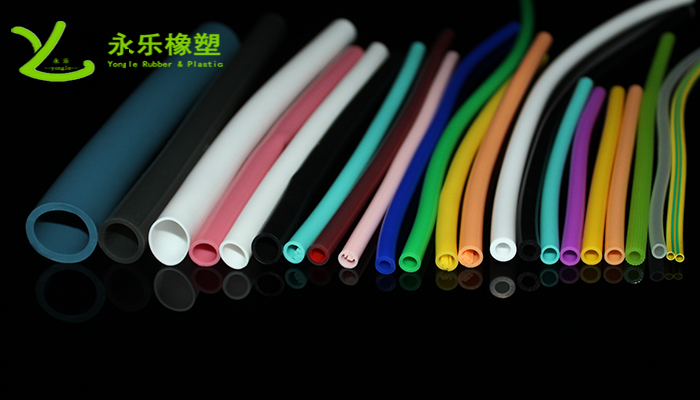
Yongle Rubber & PlasticWe have successfully passed the ISO9001 certification. Our main products include platinum silicone tubes, peristaltic pump silicone tubes, food mold silicone forming parts, and silicone products. We also specialize in custom production of sealing components for plastic and rubber products. Our competitive strategy revolves around the three principles of "better products, better service, and better image." We continuously strive for innovation in transformation and management to enhance our overall corporate competitiveness.
