

The fire-resistant bridge truss is composed of fire-resistant panels made from glass fiber reinforced materials and inorganic binders, combined with a metal frame and other fire-resistant materials, coated with fire-resistant paint on the outer layer. It does not burn when exposed to fire, effectively preventing the spread of flames. The fire-resistant bridge truss offers excellent fire-resistant and flame-retardant properties, along with features such as heat resistance, oil resistance, corrosion resistance, non-toxicity, and environmental friendliness. It is also easy to install as a whole. The fire-resistant paint has characteristics such as a thin coating, high耐火 limit, and strong adhesion.
Fire-resistant bridge supports are suitable for the installation of power cables below 10KV, as well as control cables and lighting wiring in overhead cable channels and tunnels, both indoor and outdoor.
Fire-resistant cable trays are currently a popular choice among cable tray products, largely due to their inherent fire-retardant properties. However, fire-resistant cable trays and fire-resistant cable trays are indeed two very different concepts. Let's take a closer look to understand how to differentiate between them:
Fire-resistant bridge架
The fire-resistant board is primarily composed of a composite of glass fiber reinforced materials and inorganic binders, combined with a metal frame and other fire-resistant materials. It features a steel shell, double-layer fire-resistant cover plates, and an internal inorganic fire-resistant tray. The average thickness of the insulation layer is 25mm. The double-layer cover plates are designed for ventilation and heat dissipation, with fire-resistant coatings internally applied. When exposed to fire, the fire-resistant cable tray expands, blocking the ventilation holes to protect the cables within the tray. The inorganic fire-resistant tray has passed a 60-minute fire resistance test by the National Fixed Fire Resistance Testing Center, with no damage to the cables. The supporting structure is robust, allowing for effective fixation of the inorganic fire-resistant tray.
F耐火 Bridge Support
The side panels are formed using an extrusion machine, enhancing the bending strength of the fire-resistant bridge; the technology used on the side and bottom panels ensures a smooth and flat surface; the exterior is coated with fire-resistant paint, effectively隔绝 air for insulation purposes; the interior is lined with alumino-silicate rock wool and fire-resistant boards to prevent heat conduction; the fire-resistant bridge comes with a dust cover, supported by special materials. In case of a fire, the dust cover detaches to seal all the ventilation holes on the protective cover, achieving fireproofing effects; the product meets fire-resistant standards.
Fire-resistant bridge supports refer to structures constructed from fire-resistant materials or coated with a fire-resistant finish; whereas fire-retardant bridge supports are more resistant to heat and will not collapse or disintegrate under short-term high temperatures. Both offer good performance, the difference being primarily in cost.
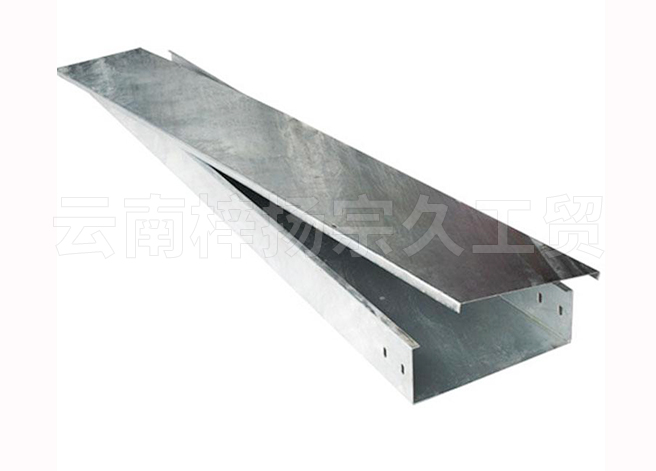
The Difference Between Fire-Resistant Trays and Fireproof Trays:
Varying shell structures, combustion temperatures, and耐火 endurance.
Shell Structure Variations:
1) Fire-resistant bridge: The shell and insulation layer of the fire-resistant bridge are made of fire-resistant materials that can withstand temperatures of ≥1100℃ and insulating materials that can withstand temperatures of ≥300℃.
2) Fire-resistant Bridge Frame: The outer shell of the fire-resistant bridge frame is reinforced with fire-resistant separators, and some shells are coated with fire-resistant paint.
2. Varying flame temperatures:
1) Fire-resistant bridge: The fire-resistant bridge will only ignite when the burning temperature reaches 920~1050℃.
2) Fire-resistant Bridge: The fire temperature of the fire-resistant bridge reaches approximately 800 degrees.
3. Different processes, colors, and lifespans:
Two types of ladder racks differ in zinc layer thickness and surface color. Fire-resistant ladder racks are usually a gray similar to electrical boxes, while fiberglass ladder racks are a light green (and are lighter in weight), making them easy to distinguish.
Therefore, the service lives of the two are different. As fire-resistant bridges are ineffective, the GB50116-2013 standard no longer requires fire protection measures for metallic conduits.
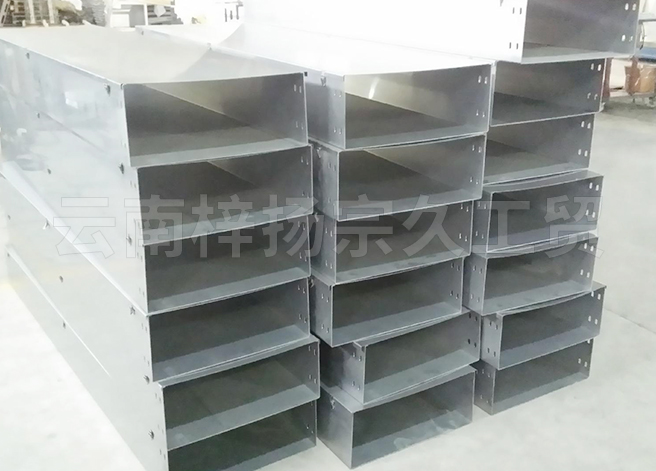
Yunnan Ziyang Zongjiu Industrial & Trade Co., Ltd. is a manufacturer of cable trays and conduit in Yunnan, specializing in tray and conduit production and processing for many years. We offer factory-standard specifications with槽式 galvanized fire-resistant installation. If you need to purchase cable trays or conduits, please feel free to call for detailed discussions!!
