

The surface treatment of stainless steel sculptures boasts a variety of processes, including some common techniques: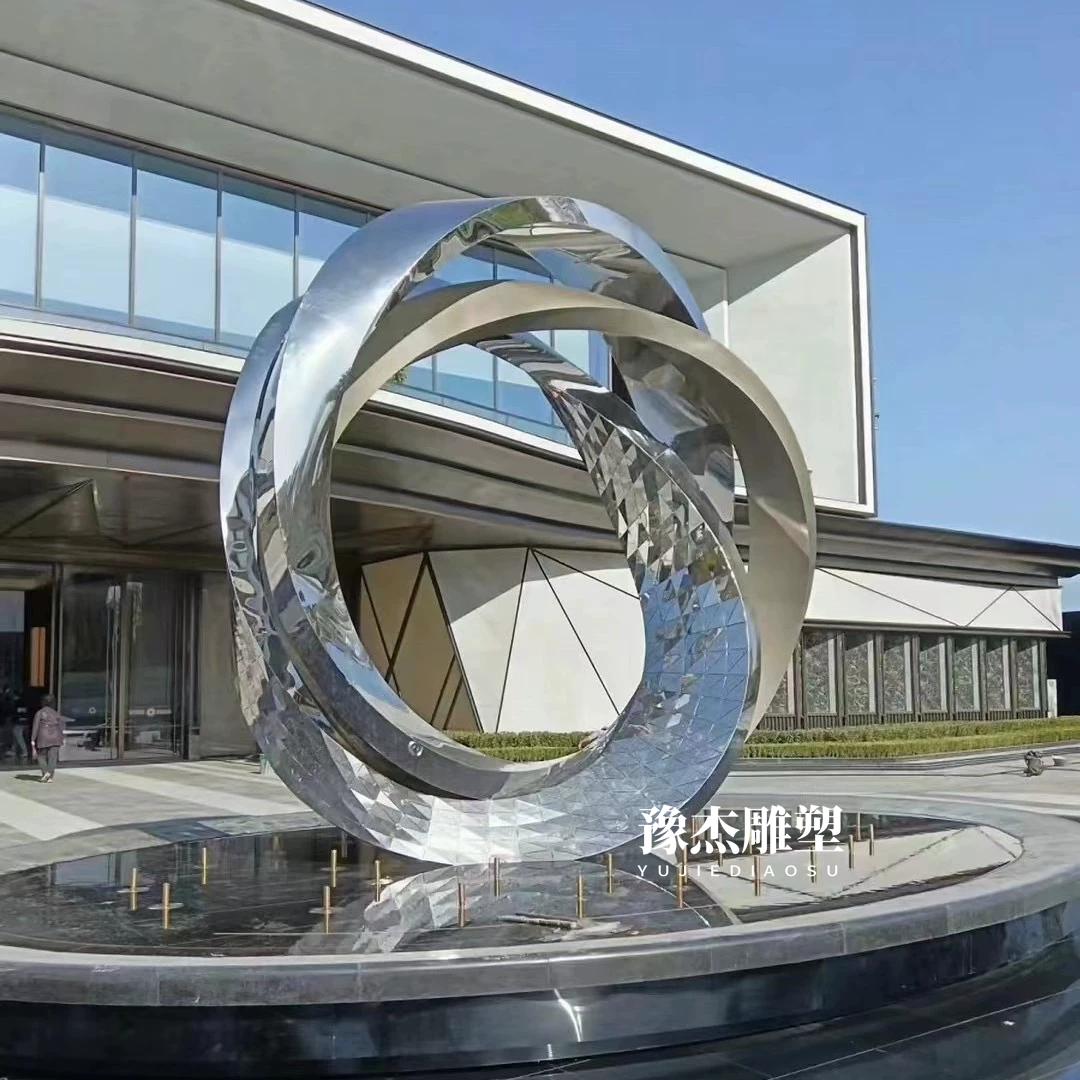
Polishing and Buffing Techniques
Rough grinding:
Utilizing tools and materialsGenerally, a grinding wheel with an abrasive disk, or coarse sandpaper (such as 80-120 grit), is first used to初步polish the surface of stainless steel sculptures, particularly the welded areas and regions with significant unevenness.
Purpose and EffectivenessRemove welding spatter, surface burrs, larger scratches, and other obvious defects to initially smooth the sculpture's surface, preparing it for further polishing.
Zhong Mo:
Utilizing tools and materialsSwitching to medium-grit sandpaper (such as 240 to 320 grit) allows for continued use of an angle grinder or manual sanding, performing the sanding operation along the grain of the stainless steel surface.
Purpose and EffectivenessFurther refined the surface, eliminating finer scratches left after coarse grinding, resulting in a smoother and more even finish, enhancing the sculpture's appearance and texture.
Polished finely:
Utilizing tools and materialsSelect fine-grit sandpaper (such as 600 to 1000 grit) and carefully hand-sand the entire sculpture surface, ensuring uniform sanding. This process requires patience and attention to detail.
Purpose and EffectivenessSurface fine scratches have been largely eliminated, resulting in a smooth finish on the stainless steel, laying a solid foundation for polishing. At this point, the sculpture's surface has begun to exhibit a certain degree of luster.
Polishing:
Utilizing tools and materialsUsing professional polishing machines, operate with various types of polishing waxes (such as coarse, medium, and fine polishing waxes). The polishing wheel of the machine applies the wax evenly to the stainless steel surface and performs friction polishing at high speed.
Purpose and EffectivenessPolishing treatments bring out a glossy, mirror-like finish on stainless steel sculptures, significantly enhancing their aesthetic appeal and texture. This is a crucial step for sculptures that aim for high-gloss appearances. Adjusting the degree of polishing and choosing different polishing waxes can also achieve specific surface textures like matte.
Chemical Etching Process
Etching Solution ReadyAccording to the required pattern and depth of etching, a corresponding chemical etching solution is mixed. Common etching solutions are primarily composed of strong acids (such as nitric acid, hydrochloric acid, etc.), supplemented with appropriate inhibitors and additives to ensure that the etching process effectively corrodes the surface of stainless steel while also controlling the etching speed and precision well.
Pattern DesignFirst, protective patterns are created on the surface of the stainless steel sculpture in the areas that need to be etched, using methods such as screen printing or photoresist coating. This involves covering the parts that are to be retained with a protective layer to prevent them from being corroded by the etching fluid.
Etching ProcessThe stainless steel sculptures with pattern protection are placed in an etching solution, allowing the unprotected areas to fully contact the solution. Under specific conditions of temperature and time, a chemical reaction occurs, corroding the surface of the stainless steel to the desired patterns and textures as designed. After etching, it is essential to promptly remove the sculpture and clean it thoroughly to remove any residual etching solution. Subsequent processes such as polishing and coloring can then be applied to enhance the aesthetic appeal and longevity of the etching.
Electroplating Process
Preprocessing:
Descaling and rust removalBy thoroughly removing oil, rust, and other impurities from the surface of stainless steel sculptures through methods such as chemical degreasing and acid pickling, we ensure a clean surface, which creates favorable conditions for the adhesion of the electroplating layer. Contaminants on the surface can affect the bonding strength and quality of the electroplating layer.
Revitalization treatmentBy treating the surface of stainless steel with an activator, the surface is brought to an active state more receptive to the deposition of electroplated metals, thereby enhancing the electroplating effect.
Electroplating operationSelect the appropriate electroplating solution (such as chrome plating solution, nickel plating solution, etc.), based on the desired appearance and functional requirements. Place the stainless steel sculpture as the cathode into the electroplating tank, forming an electroplating circuit with the anode (a corresponding metal plate) and the electroplating solution. Under specific conditions such as current density and electroplating time, metal ions in the electroplating solution deposit on the surface of the stainless steel sculpture, creating a uniform and durable electroplating layer. This alters the sculpture's color, enhances its corrosion resistance, etc. For instance, chrome plating results in a brighter and more corrosion-resistant surface.
Painting technique
Surface Cleaning and Pretreatment:
CleanThoroughly clean the surface of the stainless steel sculpture with detergents and high-pressure water guns to remove dust and oil, preventing any impact on the paint layer's adhesion.
PolishSurfaces typically require appropriate sanding to achieve a certain roughness, facilitating better adhesion of the paint layer. After sanding, the surface must be cleaned again to remove any dust and impurities generated during the sanding process.
Paint Spraying Operation:
Primer coatingSelect an appropriate primer for stainless steel materials, such as epoxy primer, and evenly spray it on the sculpture surface using a spray gun with reasonable spray parameters (e.g., air pressure, spray distance, spray angle, etc.) to prevent rust and enhance adhesion. After spraying, it is generally necessary to dry the primer either by baking or air drying to ensure complete curing.
Surface Paint SprayingBased on the color scheme design, the appropriate topcoat (such as fluorocarbon paint) is selected and applied evenly using a spray gun. The topcoat determines the sculpture's color and appearance. Multiple coatings result in a more saturated and uniform color. After the topcoat is applied, curing is also necessary, and attention must be paid to the effects of environmental temperature and humidity on the curing of the paint layer.
Lathing process
Mechanical Wire Drawing:
Equipment and ToolsUsing specialized polishing machines, or by hand with polishing cloths, wheels, and other tools, repeatedly wipe and pull along the specific direction of the surface of the stainless steel sculptures.
Effect PresentationContinuous, uniform wire-like textures with varying thickness and spacing are pulled on the surface of stainless steel, creating a unique metallic texture and decorative effect for sculptures. Often used in stainless steel sculptures that aim for an industrial or modern minimalist style.
Chemical Drawing:
Solution Preparation and TreatmentProcessing stainless steel surfaces with chemical solutions (such as those containing specific metal salts), this method creates a corrosion texture resembling silk through chemical reactions. Compared to mechanical polishing, it produces a finer and more unique texture. However, strict control over parameters like the concentration of the chemical solution and reaction time is necessary. Post-processing steps such as cleaning and drying are also required to ensure the desired effect and prevent further corrosion.
