




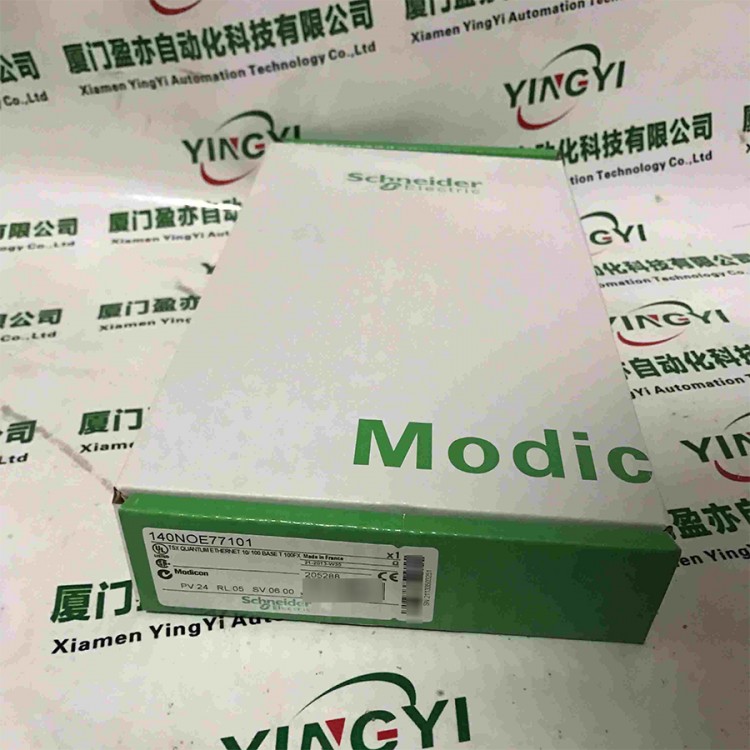
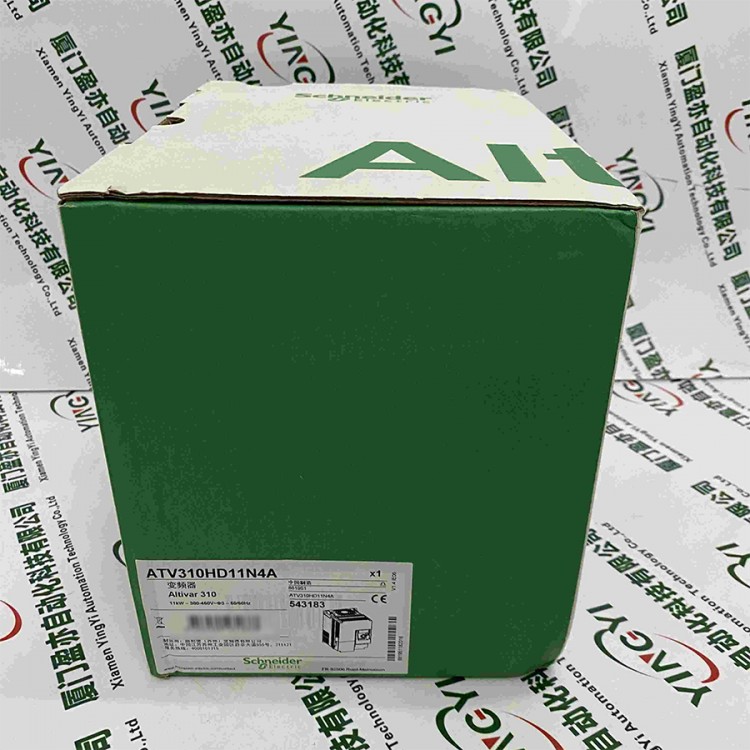
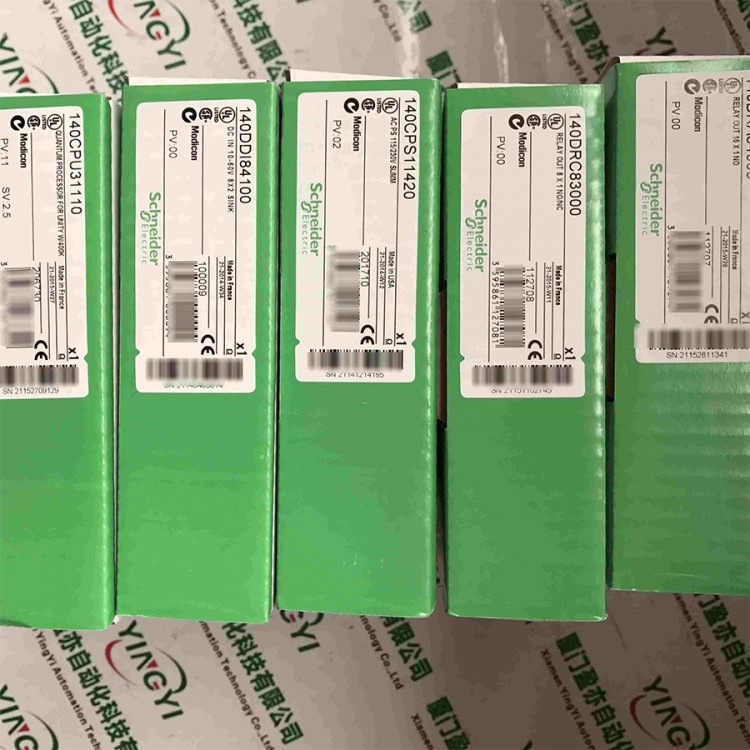
Schneider 140NOE77110 Processor
1. Functional testing cannot replace parameter testing.
2. Functional testing can only test the cutoff, amplification, and saturation regions of the device, but it cannot determine the working frequency's high or low and the speed's fast or slow at this point.
3. For digital chips, we only know about the output changes between high and low levels, but cannot determine the speed of the rise and fall edges.
4. For analog chips, they process analog variations. They are complex due to the distribution of circuit components and the different influences on signal schemes. As of current online testing technology, it is impossible to perform online testing on analog chips. Therefore, the results of this functional test can only be for reference.
5. Most online test instruments, after performing functional tests on various chips on the circuit board, will provide a "Pass" or "Fail" result. So why don't they indicate whether the tested device has issues? This is a shortcoming of such test instruments. Because there are too many factors that can affect (interfere with) online testing. Measures must be taken before testing (such as disconnecting the crystal oscillator, removing the CPU and programmed chip, and adding isolation for interrupt signals, etc.). Whether these measures are always effective is worth studying. At least, the current test results are sometimes not as satisfactory as desired.
6. Readers of online testers are familiar with this adage: "A chip that fails during online testing is not necessarily damaged; a chip that passes testing is definitely not damaged." The explanation is that if a device is affected by online interference or resistance, the results may fail, which is not hard to understand. So, does a damaged chip always result in a "fail" during testing? The answer is definitely not. Both the author and colleagues have encountered situations where a chip is clearly damaged (specifically, the board does not work when this chip is installed), but the test results show a pass. This is attributed to the working principle of the testing instrument (post-drive technology). Therefore, we cannot over-rely on the capabilities of online testers (although manufacturers hype them), otherwise, it may lead to a wrong path in repairing circuit boards.
Schneider 140NOE77110 Processor
| 140CPS21100 |
| 140CPS21400 |
| 140CPS22400 |
| 140CPS41400 |
| 140CPS42400 |
| 140CPU11302 |
| 140CPU11303 |
| 140CPU21304 |
| 140CPU42401 |
| 140CPU42402 |
| 140CPU43412 |
| 140CPU43412A |
| 140CPU43412C |
| 140CPU43412U |
| 140CPU53414 |
| 140CPU53414A |
| 140CPU53414B |
| 140CPU65150 |
| 140CPU67160 |
| 140CRA21110 |
| 140CRA21120 |
| 140CRA21210 |
| 140CRA93100 |
| 140CRA93101 |
| 140CRA93200 |
| 140CRP93100 |
| 140CRP93200 |
| 140DA084210 |
| 140DA |
| 140DA |
| 140XBP00600 |
| 140XBP01000 |
| 140XBP01600 |
| 140xCA10206 |
| 140XCP50000 |
| 140XCP51000 |
| 140XCP60000 |
| 140XCP90000 |
| 140XPP01000 |
| 140XSM00200 |
| 140XSM01000 |
| 140XSM10100 |
| 140XTS00100 |
| 140XTS00200 |
| 140XTS00203 |
| 140XTS00206 |
| 140XTS00209 |
| 140XTS00212 |
| 140XTS01203 |
| 140XTS01206 |
| 140XTS01209 |
| 140XTS01212 |
| 140XTS10206 |
| 140DAI45300 |
| 140DAI54000 |
| 140DAI54300 |
| 140DAI55300 |
| 140DAI74000 |
| 140DAI75300 |
Schneider 140NOE77110 Processor
Schneider Electric, in collaboration with China Communications Standards Association and China Unicom, has jointly authored and released the white paper "5G+PLC Deep Integration Solution." The paper first introduces the basic principles and characteristics of the integration of 5G and PLC technologies, offering suggestions for application and planning in industrial control systems by elaborating on communication mechanisms and the performance requirements of different control models for 5G networks. It then focuses on the hierarchical networking architecture system for 5G network applications in industrial manufacturing scenarios, as well as some key technologies of 5G networks, providing guiding suggestions for network deployment and optimization strategies. Furthermore, combining with application cases, a set of implementation guidelines for the transformation of 5G+PLC automated lines is proposed by multiple parties to demonstrate the advantages of the solution in improving production efficiency, reducing costs, and enhancing resource utilization efficiency. The white paper also looks forward to the future trends and challenges of 5G+PLC integrated applications, aiming to promote its sustainable development in the field of industrial core control.
