


 通过中商114认证
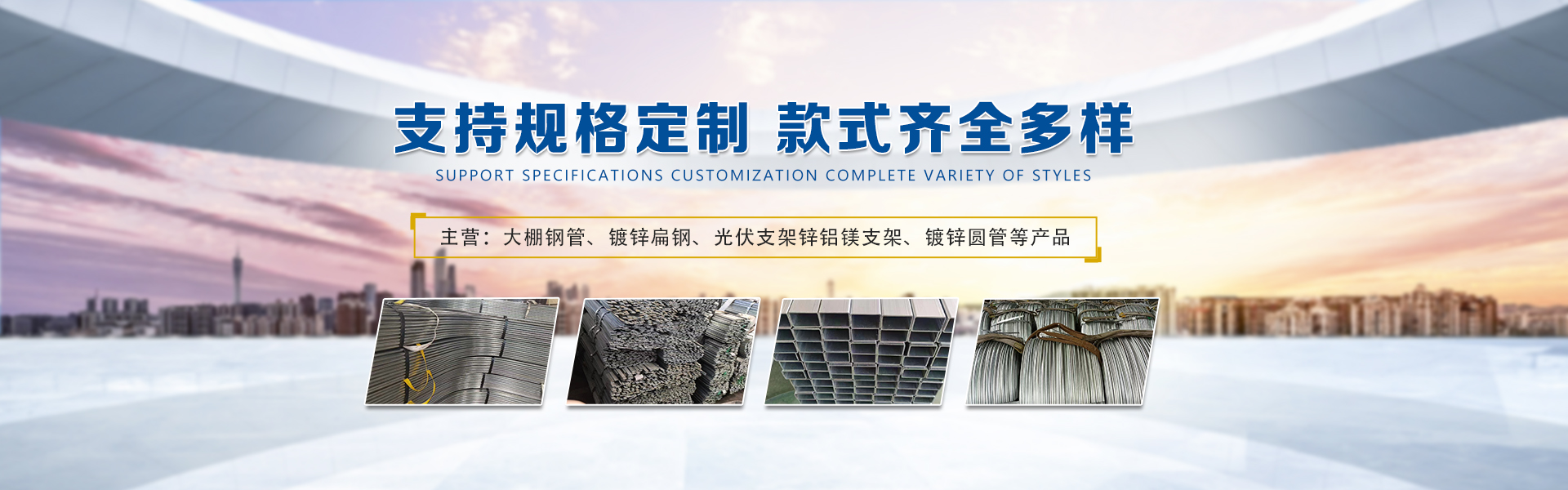
Currently, the commonly used photovoltaic support systems in our country are primarily divided into three types according to their layout: concrete supports, steel supports, and aluminum alloy photovoltaic supports.
(1) The steel support brackets are known for their stable performance, mature manufacturing process, high load-bearing capacity, and simple installation. They are widely used in civil, industrial solar photovoltaic, and solar power plants. The steel sections are factory-produced, ensuring consistent standards, stable performance, excellent corrosion resistance, and attractive appearance. Additionally, the modular steel bracket system allows for quick on-site assembly using specially designed connectors to assemble the channel steel, eliminating the need for welding and ensuring the integrity of the corrosion-resistant coating. The drawback of the modular steel bracket system is that the connectors have complex manufacturing processes, a wide variety, and require higher production and design standards.

(2) Aluminum alloy frames are commonly used in civil building roof solar applications. Aluminum alloy is characterized by its corrosion resistance, lightweight, and attractive durability, with 6063 alloy being a popular grade. However, its load-bearing capacity is low, making it unsuitable for solar power plant projects. The price of aluminum alloy is higher than that of galvanized steel.
(3) Concrete support structures are applied in large-scale photovoltaic power stations due to their substantial weight, which necessitates outdoor installation and placement in well-founded areas. However, they offer high stability and can support large-scale solar panels.
