
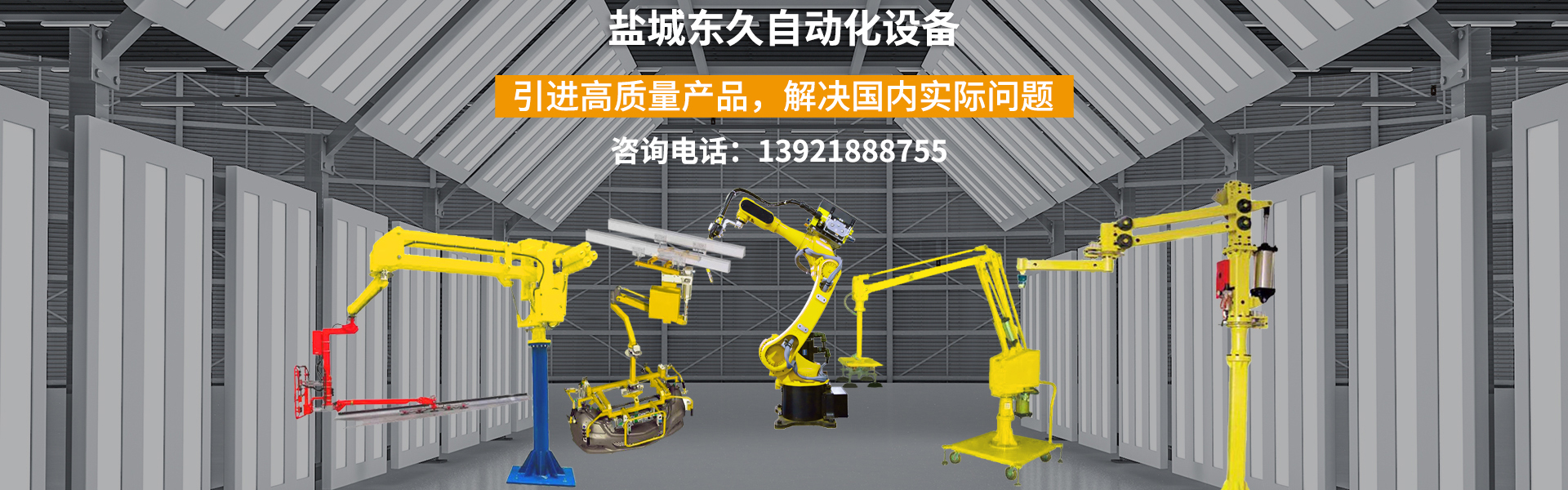

The assistive robot arms are now widely used in fields such as mechanical processing and manufacturing, automotive parts, construction machinery, power distribution, automobiles, petroleum, chemicals, coatings, ceramics, textiles, building materials, home appliances, and electronics. However, many people are still unaware of what kind of device assistive robot arms are and how their force balance is achieved. Today, we will provide a detailed explanation.
The Assistive Robot is a customized labor-saving device that enhances production efficiency and ensures product quality. Also known as an air-balanced crane, it is a new type of auxiliary equipment for material handling, particularly suitable for specific positioning and assembly requirements.
Assistive robots offer a low-cost, safer solution to address most ergonomic issues. They are used across various industries to reduce operator back injuries and fatigue, while enhancing production. All controllers and accessories are custom-designed.
The force balance for the robotic arm is achieved by regulating the piston pressure using valves under varying load conditions to balance the end load of the fixture. It ingeniously utilizes the force balance principle to achieve a zero-gravity state for the parts, and then balances the weight of the components through the corresponding gas control system. This allows operators to apply minimal force when handling products, enabling them to push or pull heavy objects and place them accurately in any position in space without the need for skilled button operation.
