
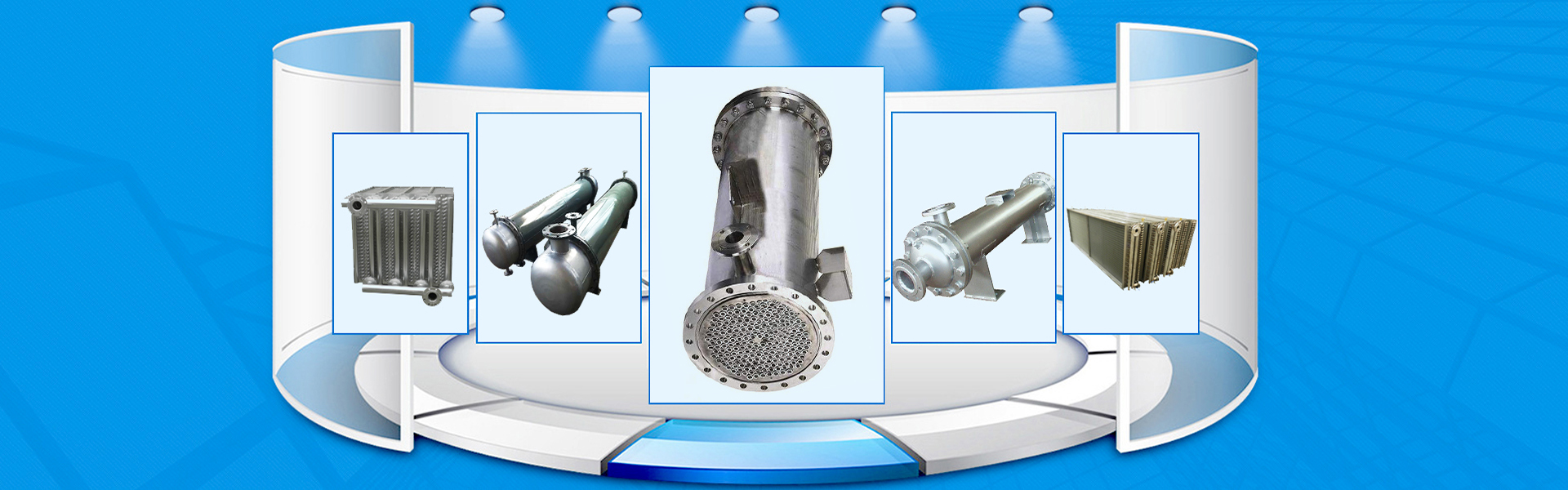

Leakage in tube-type heat exchangers is a common equipment management issue during their operation. The leaks are primarily caused by corrosion, with a small part attributed to the selection of the heat exchanger and defects in the manufacturing process. The corrosion of tube-type heat exchangers mainly involves two types: electrochemical corrosion and chemical corrosion. In the manufacturing of tube-type heat exchangers, manual arc welding is typically used for welding tube plates together. These welds often have defects such as concave shapes, gas pores, and slag inclusions, resulting in uneven stress distribution. During use, the tube plate sections usually come into contact with industrial cooling water, which contains impurities, salts, gases, and microorganisms that can cause corrosion to the tube plates and welds.
This is what we often refer to as electrochemical corrosion. The results indicate that industrial water, whether fresh or seawater, produces various ions and dissolved oxygen, with changes in chloride ions and oxygen concentration playing a significant role in the corrosion patterns of metals. Additionally, the complexity of the metal structure also influences the corrosion appearance. Therefore, pitting and crevice corrosion are the primary types of corrosion at the tube plate and tube bundle welds. Visually, the tube plate surface will exhibit a large amount of corrosion products and deposits, along with pits of varying sizes. Electrolytic coupling corrosion also occurs when seawater is the medium. Chemical corrosion is the corrosion of the medium.
News Center Co., Ltd.
