
公司主营:CNC Programming Training, Mold Design Training, Mechanical Drafting Training, CAD Drafting Training, UG Modeling Training
17737709545

Product Center
Company Qualification
Luoyang Mold Design Training School, Yan Gong CNC Machining Training
Details Introduction
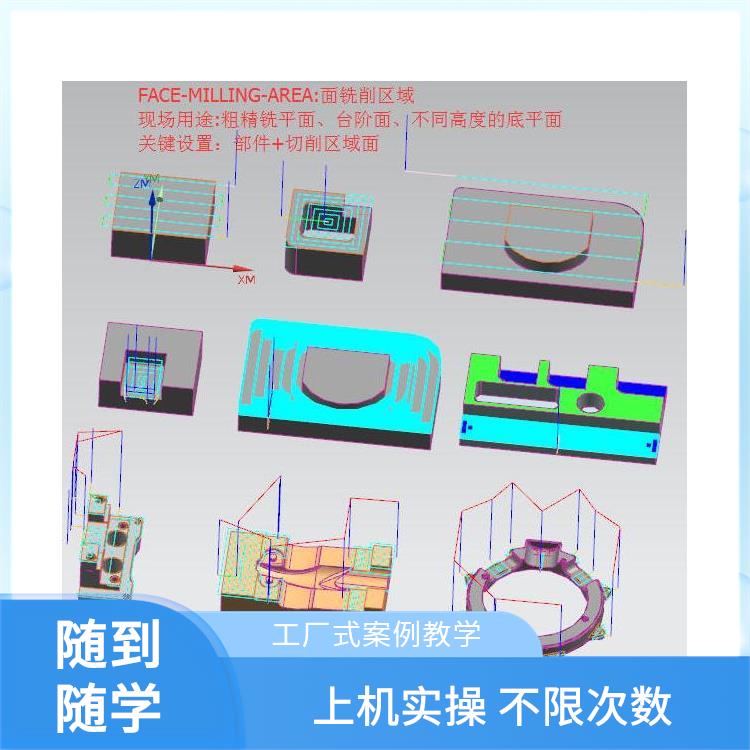
Mr. Yan's educational approach combines theory with practice, fostering both vocational skills and practical factory experience. Training content is illustrated with factory drawings and documents, far from the theoretical approach of other training programs. We cultivate practical factory work abilities, imparting only real-world factory experience. CNC programming is a practical skill; to learn UG 3, 4, and 5-axis CNC programming, hands-on operation on a 5-axis machining center is essential. We provide 5-axis machines for students to intern on, familiarize themselves with the processing techniques, truly align with factories, and ensure that students can apply what they learn.
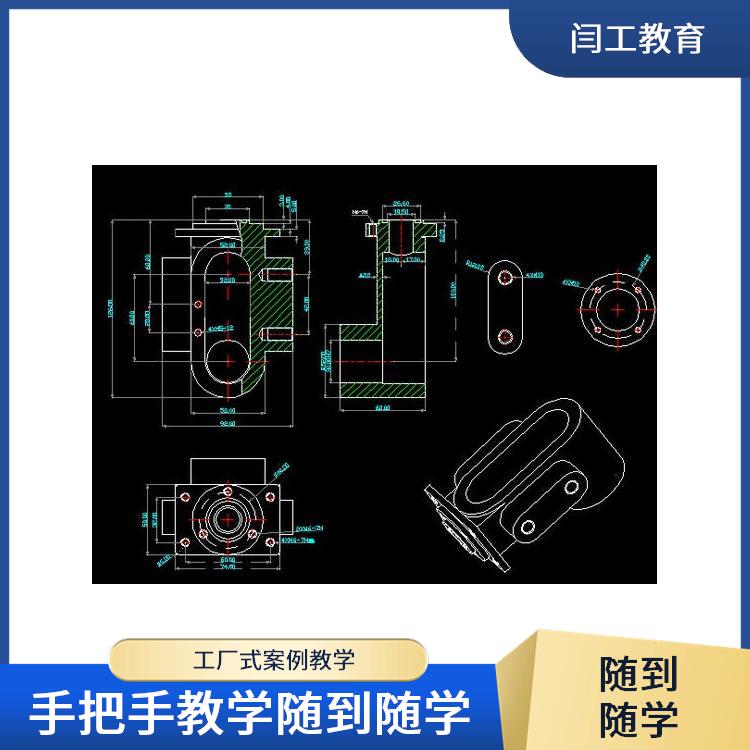
In CAD engineering drawings, designers can utilize a variety of drawing tools and commands, such as lines, circles, rectangles, and other basic geometric elements, as well as more complex curves and surfaces, to construct design objects. Additionally, CAD software offers robust editing functions like move, rotate, zoom, copy, and more, allowing designers to easily modify and optimize their designs. Moreover, CAD engineering drawings emphasize the annotation and description of graphics, ensuring the accuracy and completeness of design information through dimension annotations and textual descriptions.
CAD engineering drawings, also known as Computer-Aided Design (CAD) drawings, are a method of engineering design and drafting utilizing computer technology. They are extensively used in various fields such as architecture, mechanical, electronics, automotive, and more, significantly enhancing design efficiency and accuracy. Software tools like AutoCAD and SolidWorks enable designers to create, edit, and modify drawings in two or three-dimensional space, resulting in detailed and easily understandable engineering drawings and models.
Common software in the mechanical design field includes AutoCAD (mainly for 2D drafting), SolidWorks, UG/NX, Creo (formerly Pro/E), and CATIA (for complex surface and equipment manufacturing). Engineers must be proficient in the core functions of 1-2 of these tools. At the beginner level, it's crucial to familiarize yourself with the software interface layout, including the functional areas of the menu bar (drawing, modifying, annotating, etc.), customizing the toolbar, and setting up common shortcut keys (e.g., L for drawing lines, C for drawing circles, TR for trimming in AutoCAD; extrude, rotate, etc. in SolidWorks). Additionally, understanding the application scenarios of different coordinate systems (absolute coordinates, relative coordinates) is necessary to enhance drawing accuracy and efficiency.
3D modeling relies on feature generation techniques, including stretching, rotating, scanning, lofting, etc., and combines Boolean operations (addition, subtraction, intersection) to construct complex geometric shapes. Parametric design is one of the core capabilities, enabling rapid model iteration through dimension-driven design (such as design tree editing in SolidWorks). Modeling involves specialized skills like complex surface construction (e.g., automotive body panels, mold cavities), standard thread generation, and feature arrays (e.g., gear tooth distribution).
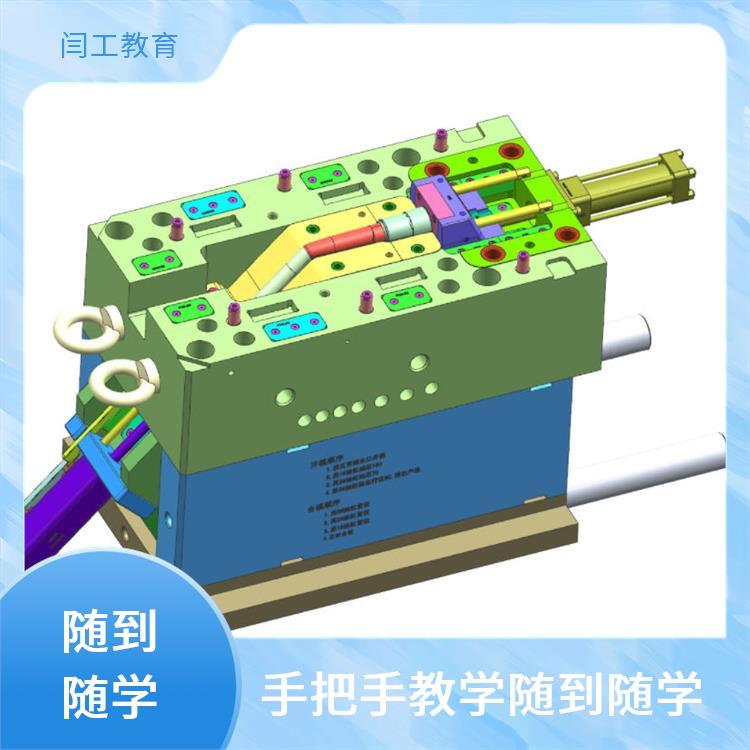
Molds are tools used to produce parts with specific shapes and dimensions, primarily composed of forming tools and templates. The learning content of mold design training includes: Mechanical Drawing and CAD: Mechanical drawing is the foundation of mold design, using graphic symbols to express the structure and dimensions of mechanical parts.
Material Science: Materials form the foundation of molds, with different materials exhibiting varying properties and processing characteristics.
Machining and Heat Treatment: Machining is one of the key processes in mold manufacturing, encompassing various methods such as turning, milling, drilling, and grinding.
Mold structure and design principles: This is the core content of mold design study.
Plastic Molding Technology: Plastic molding technology is one of the key application areas in mold design.
Numerical Control Programming and Machining Technology: Numerical control programming and machining technology is a crucial component of modern manufacturing, ensuring high efficiency, precision, and reliability in manufacturing processes.
吕经理 (Mr.)
17737709545
17737709545
17737709545@189.cn
Jiaofuheng Building, 3rd Floor, at the intersection of Yingyun Road and Zhijixi Road, in the northwest corner of Yingyang City.
b2b.china9.net © Zhongshang 114 Hebei Network Technology Co., Ltd.Address: Room 6009, Oriental New World Center, No.118 East Zhongshan Road, Qiaoxi District, Shijiazhuang City, Hebei ProvincePlatform Service Hotline: 4006299930