

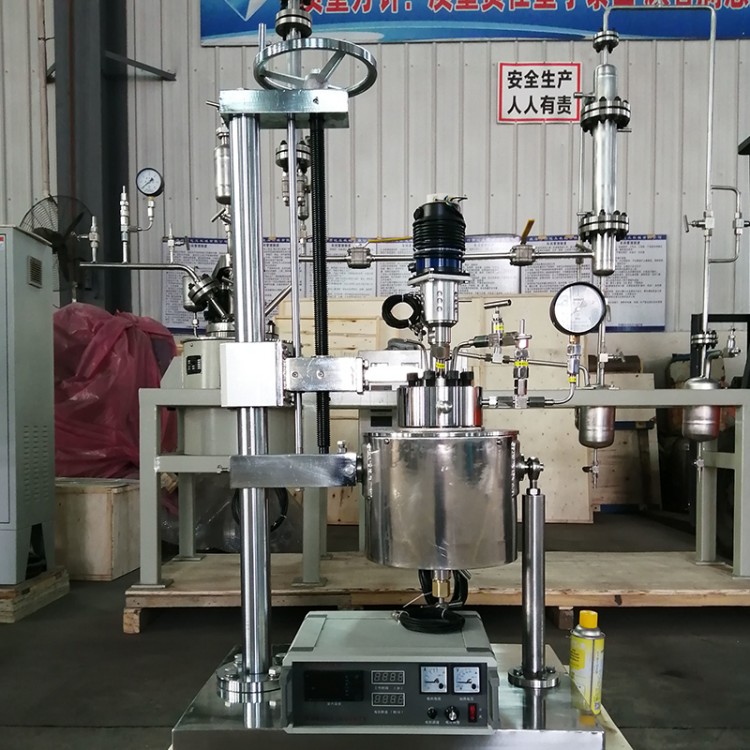


1. Standard reactors typically use 8-M20 bolts for fastening, requiring the manual twisting off of each nut, which is labor-intensive. In contrast, quick-opening reactors utilize clamping sleeves and corresponding bolts for tightness, allowing for the quick removal of the lid by simply loosening each stud slightly to detach the clamp.
2. Vessel Material Extraction: Conventional reaction vessels require manual removal of the vessel lid using two hands, then lifting and flipping the vessel to pour out the material. In contrast, quick-opening vessels utilize a hand-cranked screw to easily lift and rotate the lid 90 degrees, clearing space for the vessel. Subsequently, a worm screw on the hand-cranked column is used to rotate the worm gear, flipping the vessel 135 degrees for material discharge.
3. The heating furnace can be easily installed and removed, taking only 2 seconds. This allows the kettle body to cool in the air, shortening the reaction process time.
The above three tasks, a single cycle of a conventional reactor requires at least 20-30 minutes (excluding reaction time), and it's labor-intensive, especially uncomfortable for the operator due to heat, and there's a risk of burns if not careful. In contrast, each cycle of a quick-opening reactor takes just minutes, making it effortless, energy-saving, and not too hot or too cold.


