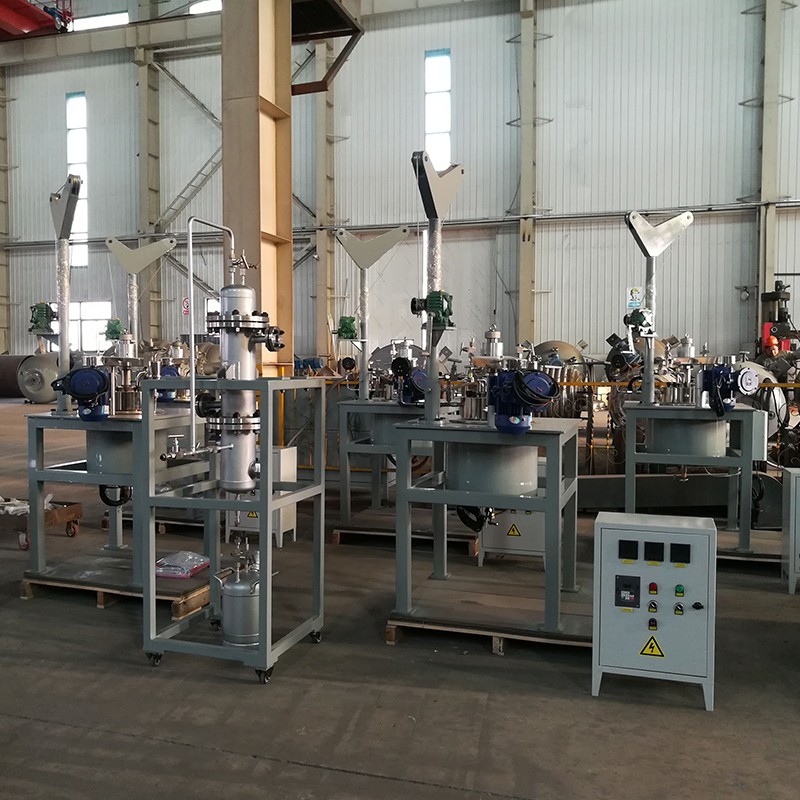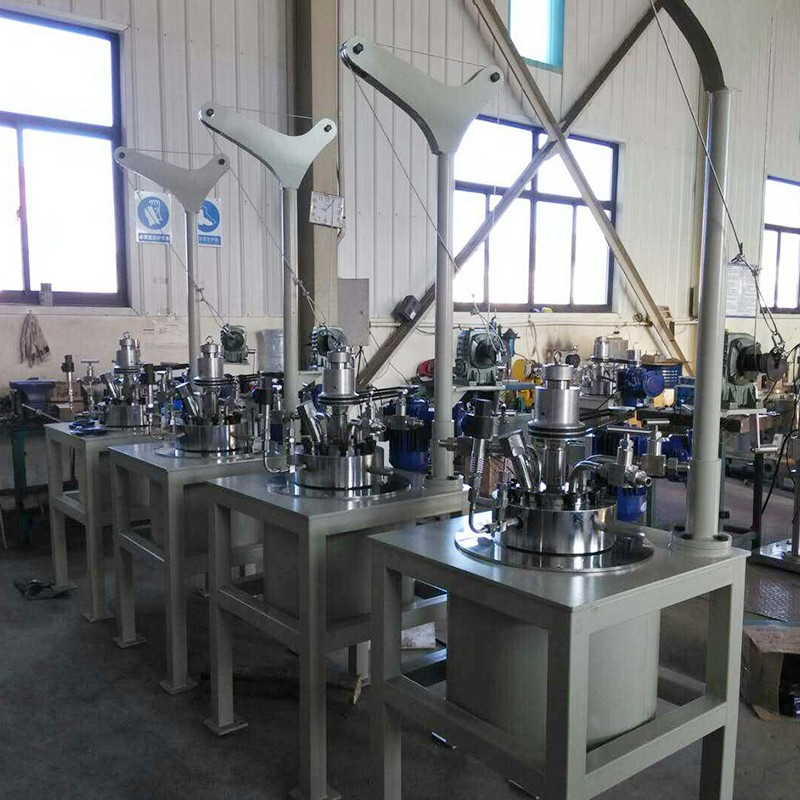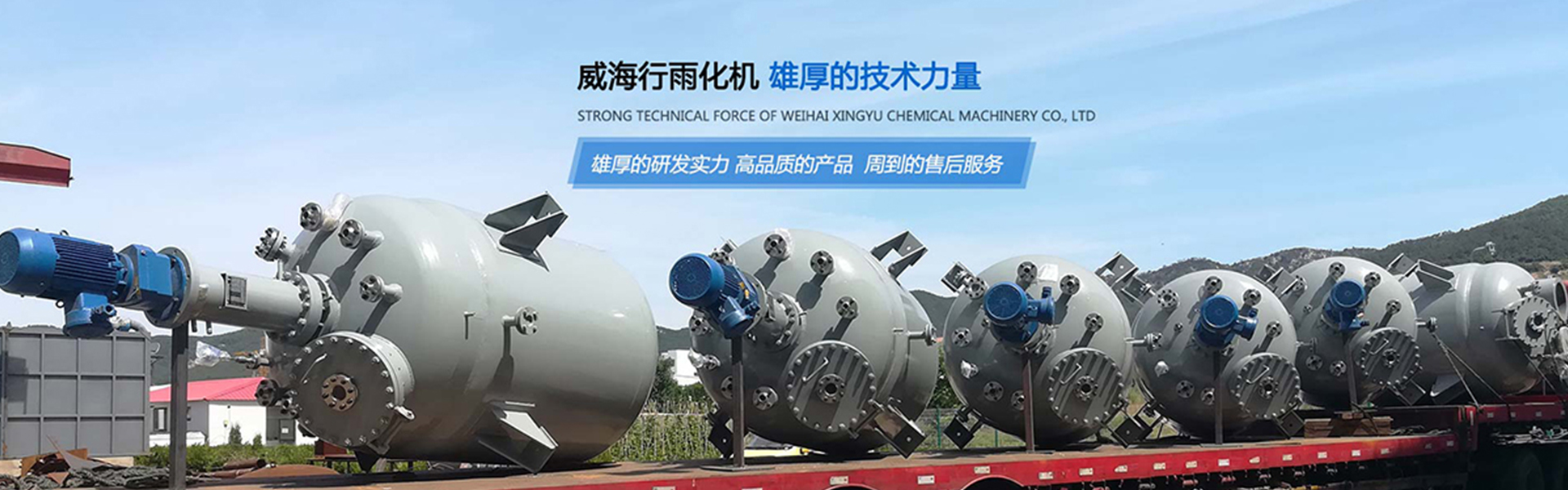
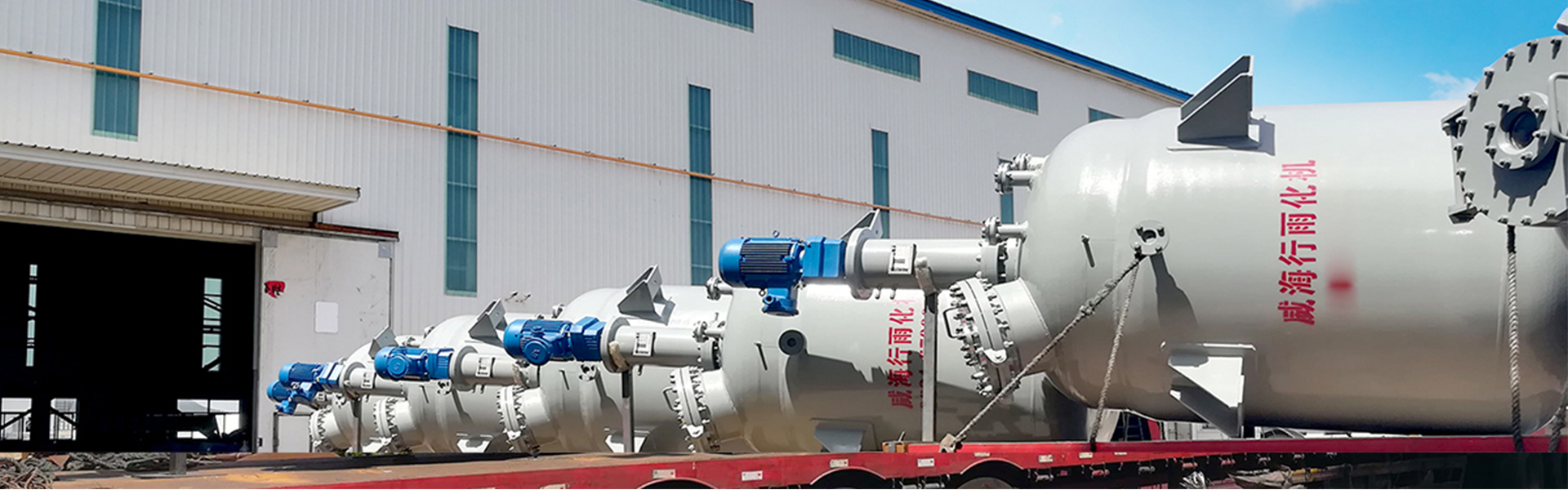

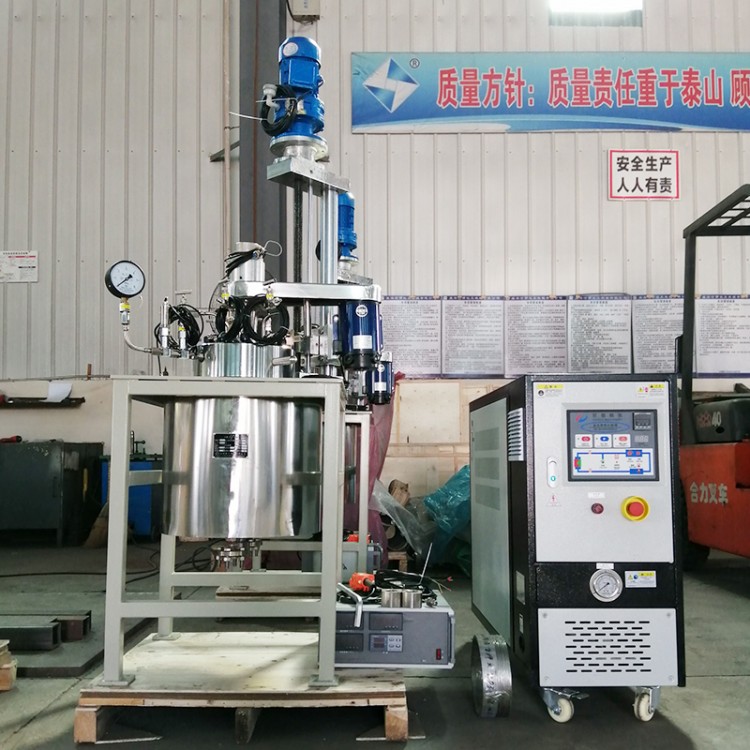
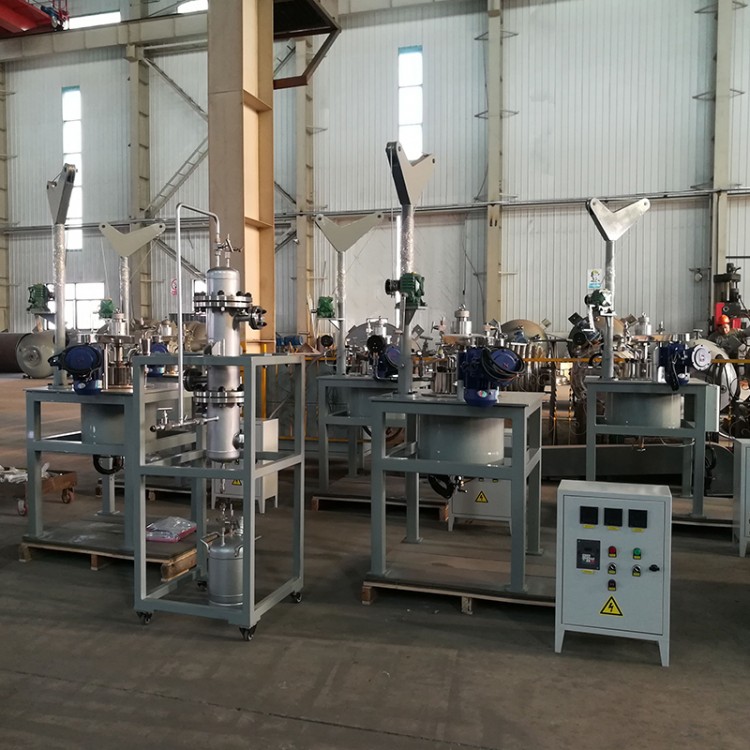
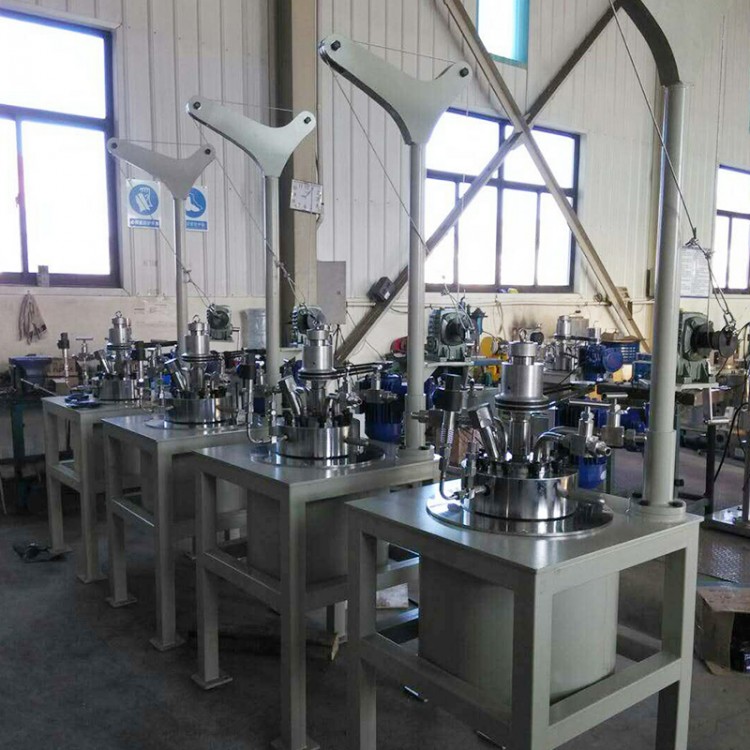
The lifting reactor is widely used in the oil, chemical, rubber, dye, and food industries. It serves as a pressure vessel for processes such as vulcanization, nitration, hydrogenation, hydrocarbonation, polymerization, and condensation. Depending on different production processes and operating conditions, the design structure and parameters of the reactor vary, meaning the structural style of the reactor differs, making it a non-standard container equipment.
Materials generally include carbon manganese steel, stainless steel, zirconium, nickel-based alloys (Hastelloy, Monel, Inconel), other non-ferrous metals, and composite materials. Heating/cooling methods can be electric heating, hot water heating, thermal oil circulation heating, steam heating, far-infrared heating, external/internal coil heating, electromagnetic induction heating, jacket cooling, and internal coil cooling. The choice of heating method primarily depends on the required heating/cooling temperature for the chemical reaction and the amount of heat needed. Agitators are available in anchor, frame, paddle, turbine, scraper, and multi-layer composite blade types, designed and manufactured according to the specific process requirements of different working environments.