
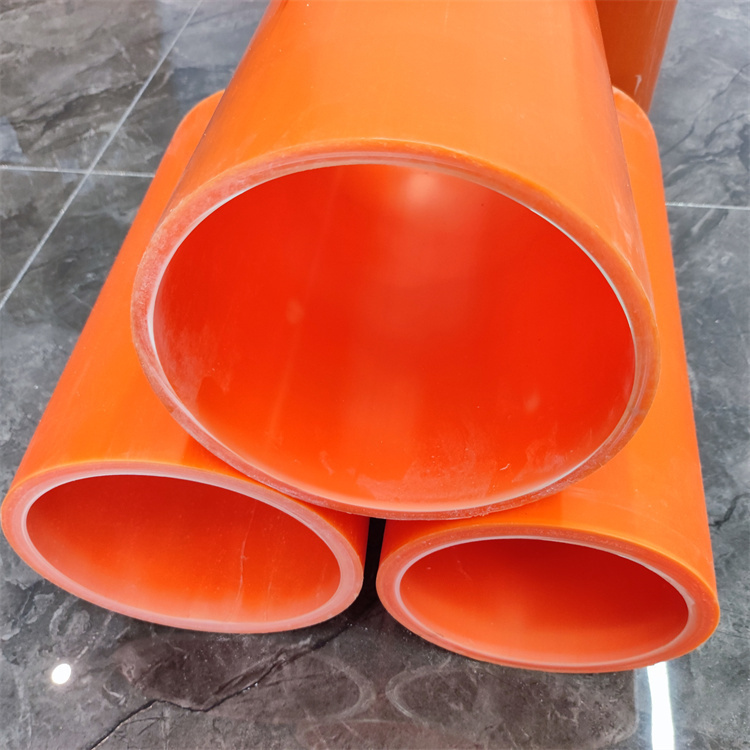
 MPP Power Pipe
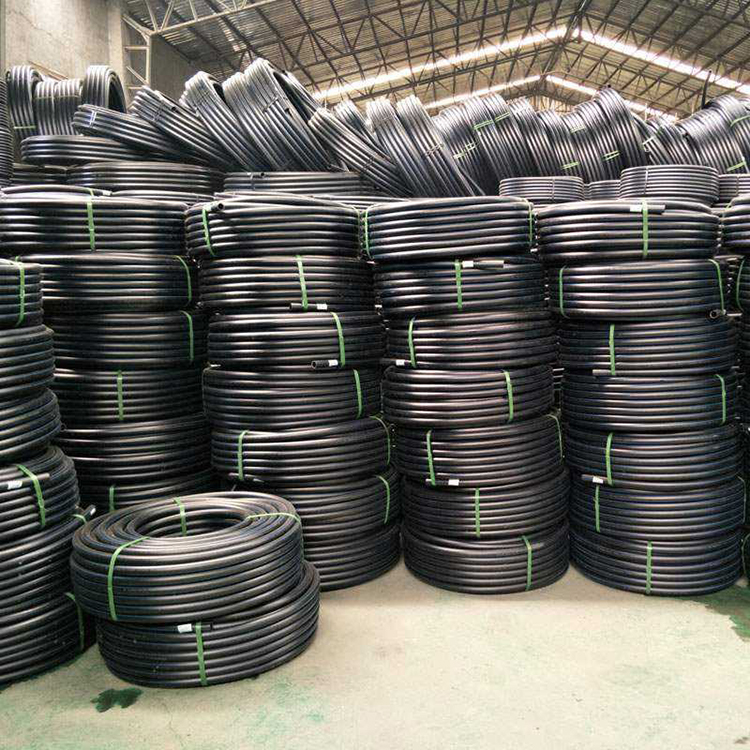 Polyethylene (PE) Conduit
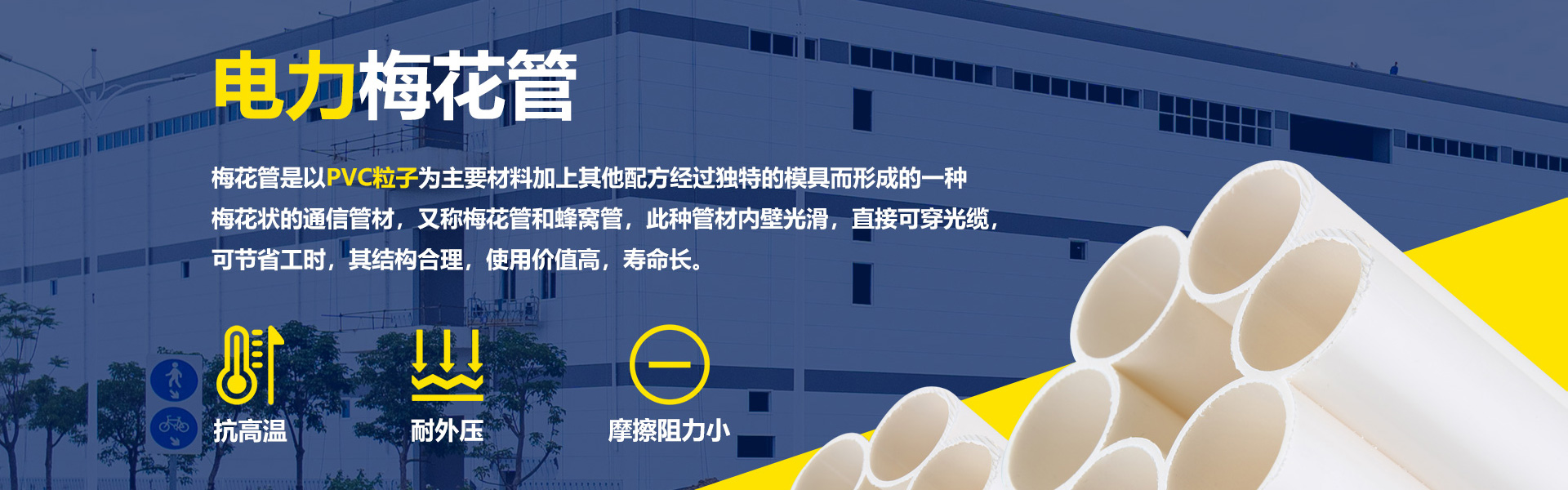
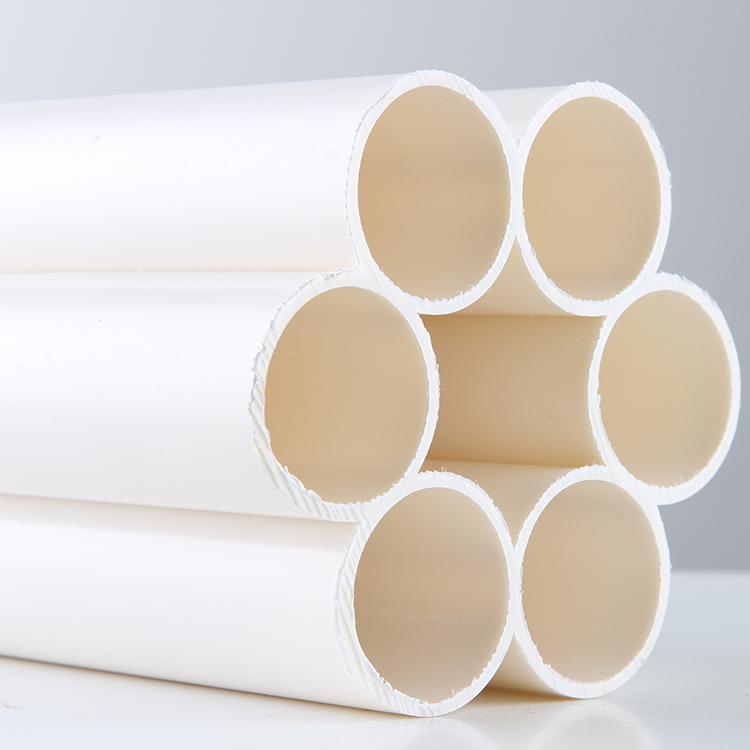 Plum Blossom Tube
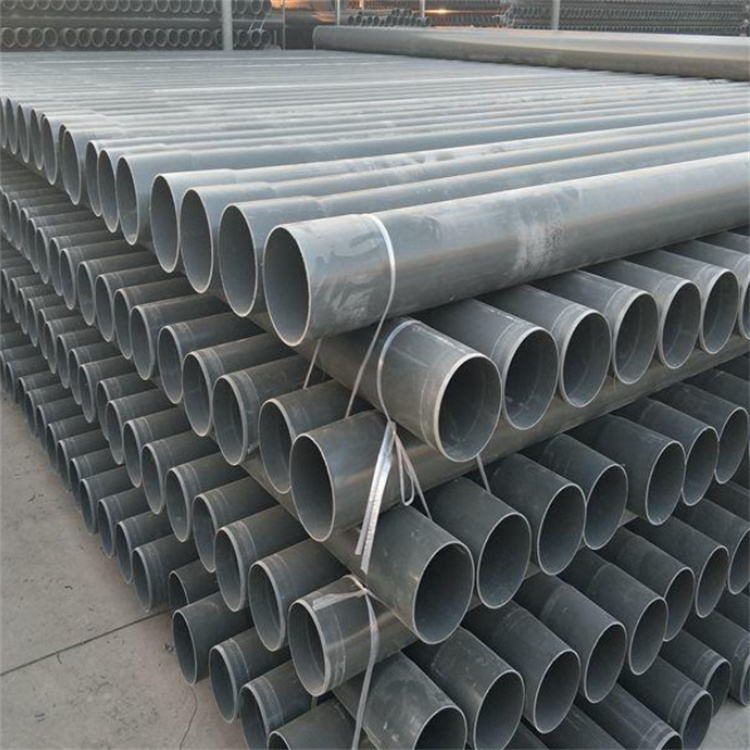 PVC-U Irrigation Pipe
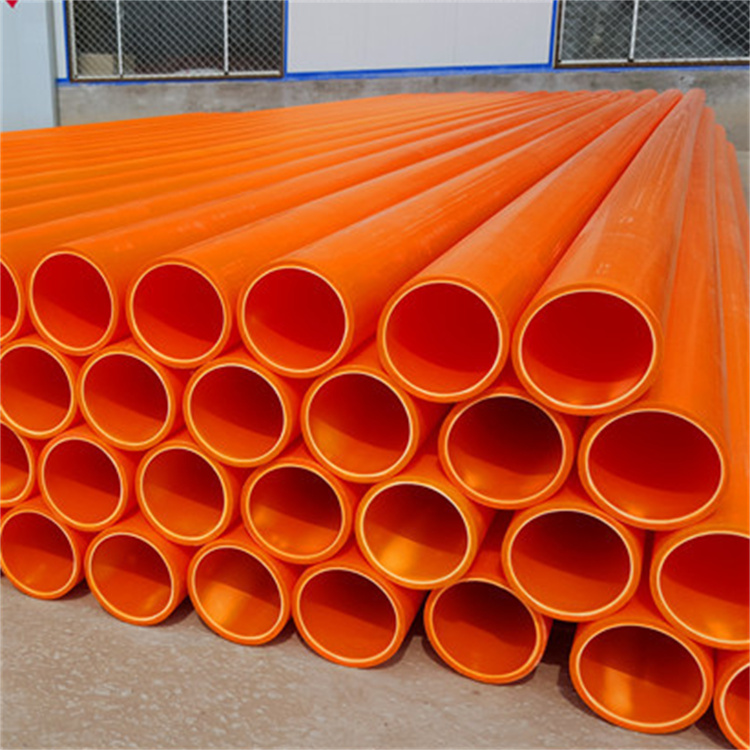 MPP Electrical Pipe
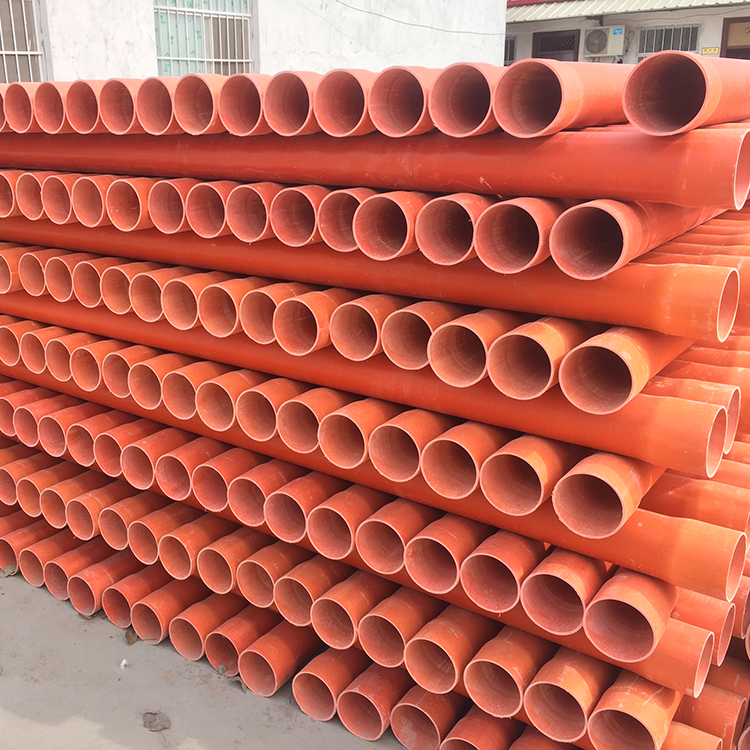 CPVC Electrical Pipe
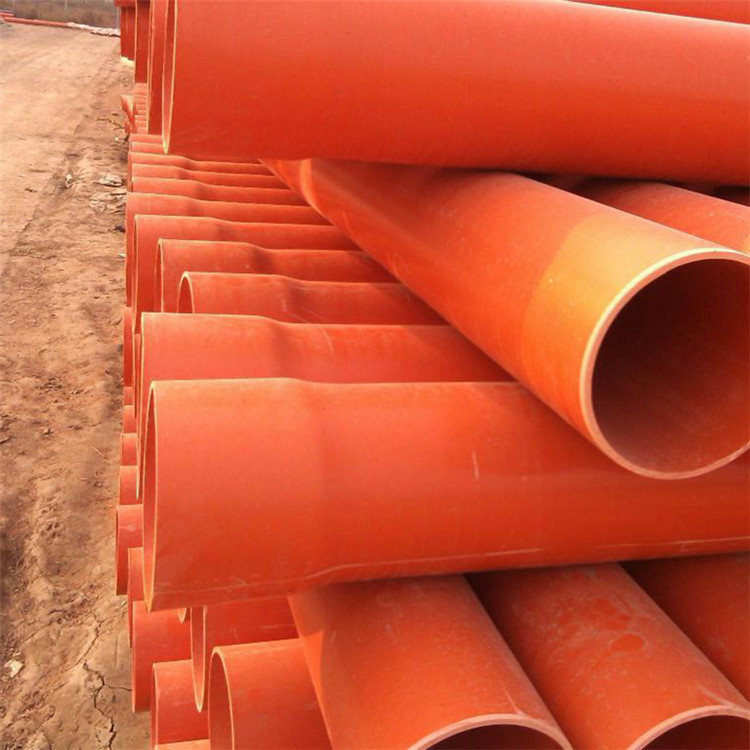 CPVC Power Pipe
Product Details





产品Price 1.00/Rice
最小起订Quantity:1000 Rice 供货总Quantity: 100000 Rice


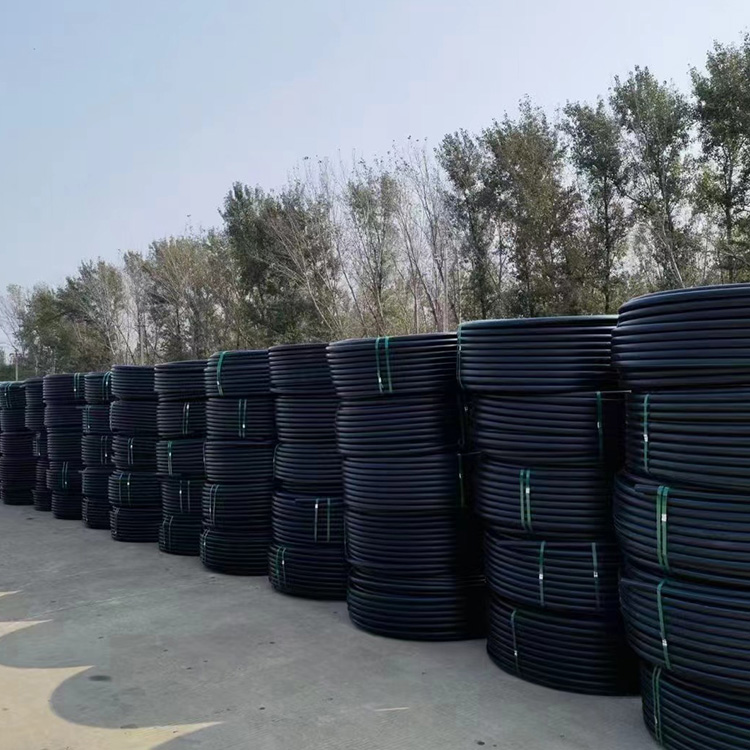
PEPVC conduit is made primarily from polyethylene resin, with appropriate additives, and is formed through extrusion processing. It features corrosion resistance, impact resistance, aging resistance, high strength, ease of bending, and convenient installation.pePVC conduit is a rigid rubber hose, used for corrosion resistance, electrical leakage prevention, and for running wires through. The epoxy coated layer of the conduit provides an even more effective solution against corrosion from water transmission, burial, and acids, alkalis, and salts, with a service life that can reach50Over one year. Features of the PE Conduit: 1It offers excellent rigidity, strength, and flexibility. It can be connected using sleeves or by heat-fused bonding. 2Corrosion-resistant and long-lasting.(Soil-buried pipe lifespan over 50 years),。 3Good toughness and flexibility.PETubing is a high-tensile tubing with a tensile elongation beyond500%Exceptional adaptability to uneven ground settlement and misalignment. 4Wall smooth, low friction coefficient, easy to pull through cables, high construction efficiency, and low construction cost. 5Excellent electrical insulation properties, durable, and ensures safe and reliable operation of the lines. 6Lightweight, easy to maintain, install, and operate, and convenient for transportation. 7Small diameter pipes can be supplied in coil form, featuring longer pipe sections, fewer joints, and easy installation. 8Pipe materials can be made in various colors for differentiation. 9Excellent low-temperature impact resistance.PEThe低温脆化temperature is very low, it can-20~60℃Safe for use within the temperature range. During winter construction, the material's good impact resistance prevents pipe cracking. 10Excellent wear resistance.PECompared to other metal pipe materials, the metal pipe has superior wear resistance.4Please provide the Chinese content that needs to be translated. 11A variety of brand new construction methods.PEIn addition to traditional excavation methods, various innovative non-excavation techniques can be employed, such as jacking, lining, and bursting methods. This is a preferred option for locations where excavation is not permitted. Advantages of Polyethylene (PE) Conduit: 1Excellent wear resistance and aging resistance with a long service life; polyethylene is an insulator for electricity, thus it does not undergo rotting, rusting, or electrochemical corrosion. 2Superior mechanical properties are reflected in high compressive strength and high elongation rate. The material is made of high-density polyethylene. 3Easy to install, offering connection methods like heat fusion and electric fusion, with high efficiency and cost savings. 4Processed with stable performance, withstands high and low temperatures, cost-effective, bendable, and has good insulation properties. The application scope of the PE conduit: For normal indoor environments and locations with high temperatures, dust, vibration, and fire hazards. Also suitable for use in humid areas. Not suitable for use in particularly humid, acidic, alkaline, corrosive, or explosive environments. Operating temperature range:-15℃~+40℃Excellent mechanical properties of conduit. Excellent corrosion resistance, with high pressure-bearing strength and working pressure exceeding2.5MpaThe conduit surface is smooth with low fluid resistance, non-scaling, and resistant to microbial growth. It has a small coefficient of thermal expansion, preventing shrinkage and deformation. Traditional installation and connection methods are employed. The epoxy powder-coated layer of the conduit provides more effective solutions to corrosion from water transport, burial, and acids, alkalis, and salts, with a service life of50Over 1 year. Caution for Polyethylene (PE) Conduit Installation: 1Of course, it's important to use conduit for wiring. 2Circuit wiring should be handled with care.“Close proximity wiring between ends”No unauthorized rerouting is allowed, as this not only causes dead lines but also increases the investment in electrical modifications. 3Do not run too many wires through a conduit; after threading, give each one a pull to ensure they can be easily moved. 4Wiring must have junction boxes installed at the joints, with concealed covers for easy replacement and maintenance in the future. 5Pipe diameter less than25ThePVCConduitBend applications should use bend reducers; avoid bending with elbows, as 90-degree dead bends often result in dead ends.


Phone Consultation