

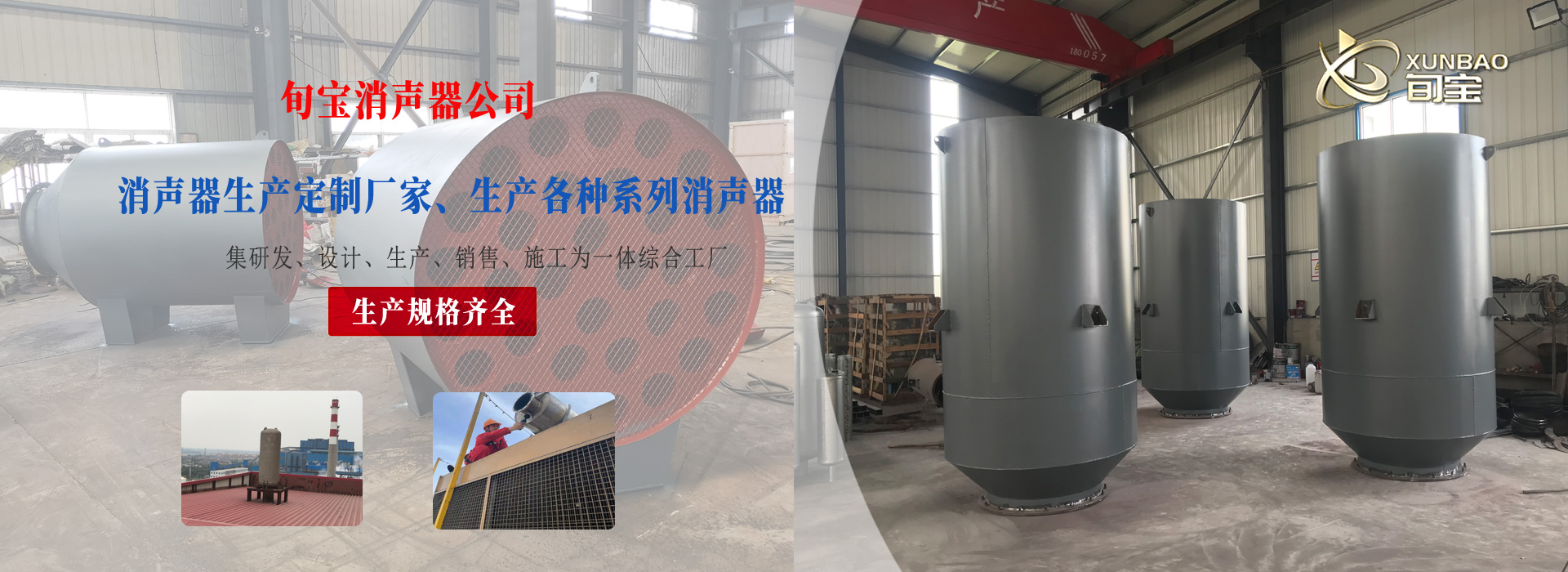

Features of Wind Turbine Silencers:
Fans are a type of general machinery equipment with a wide range of applications, essential in industries such as electricity, mining, machinery, metallurgy, and chemical engineering. The noise generated during their operation often becomes a source of harm to workers' health and environmental disruption. Particularly, fans located near residential areas, with their intake and exhaust air ducts emitting aerodynamic noise, are a major factor in environmental pollution, causing public nuisance. They have become one of the primary targets for noise pollution control in recent years within the industrial sector.
Industrial fans are continuous operation equipment. The International Organization for Standardization (ISO) specifies noise standards for such equipment at ≤90 decibels. The new standard is the same, serving as the basis for industrial enterprises to meet continuous noise requirements. However, without noise reduction measures, the noise emitted from the intake and exhaust openings of the fans can reach 110-120 decibels, significantly exceeding the standard requirements.
分类 of Wind Turbine Silencers:
Noise suppressors for fans are categorized into centrifugal fan silencers, Roots blower silencers, blower silencers, and axial flow fan silencers. These fan silencers are primarily used to reduce aerodynamic noise from various fan inlets, air ducts, and intake openings of enclosed machine rooms. Depending on the structure of the fan's inlet and outlet, they are available in either circular or rectangular configurations.
(1) Circular structures are designed for round wind turbine exhaust ports, and they are available in two types: A and B. Type A has flanges at both ends and is directly connected to the pipeline (i.e., pipeline silencer). Type B features a flange on one end and a direct open-to-the-air exhaust on the other (rainproof vent hat can be installed), suitable only for outdoor pipeline ends and the air intake of enclosed machine rooms.
(2) The sound-absorbing panels in the circular structure typically have a thickness of 100 mm or 150 mm, offering a noise reduction of 15-30 dB(A). Under wind speeds of 5-12 m/s, they are suitable for air volumes ranging from 1000 to 50,000 m³/h. The structure employs two impedance-based sound-absorbing zones for both high-frequency and low-frequency noise, maximizing the broadening of the sound-absorption frequency range.
