

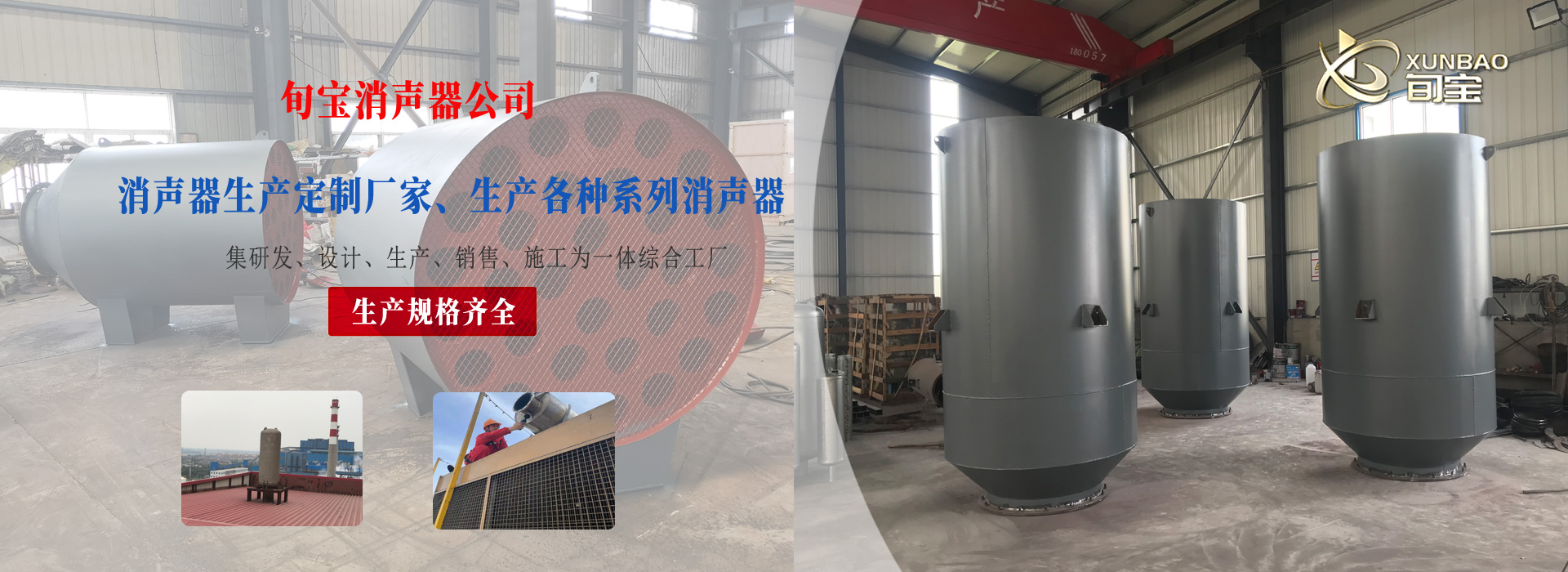

The silencer for safety valves primarily utilizes anti-noise size silencing, achieved through the appropriate combination of variously shaped pipes and chambers, to provide impedance mismatch in the piping system, thereby reflecting or disrupting sound waves, and reducing the radiated sound energy from the silencer. The supports and connecting parts of the blowpipe silencer shell should possess sufficient rigidity and strength. The structural design should be rational and capable of withstanding additional forces such as exhaust back pressure, thermal expansion thrust, torque, and vibration forces caused by high-speed steam flow of debris. The silencer body should be able to withstand various impacts caused by temperature and pressure changes. The safety valve silencer employs the principles of through-hole jetting and resistance silencing.
In our design, we opt for large-pore expansion control flow over micro-porous piercing, ensuring the smooth principle of safety door exhaust. This incorporates multi-level perforated sound absorption, combined with resistance noise attenuation, allowing steam sound waves to enter the countless pores of the porous sound-absorbing material. This stimulates molecular vibration in the porous material, converting sound energy into heat energy, overcoming friction resistance and viscosity, thus achieving ideal noise reduction. It also guarantees the smooth elimination of steam. The performance of the boiler drum silencer is related to the shape of the pipeline structure, generally with strong selectivity, suitable for narrowband noise and low to medium frequency noise control. Due to its excellent low and medium frequency noise reduction effect and minimal pressure loss, it is widely used in exhaust noise reduction processing for engines and internal combustion engines. However, with the increase in noise reduction, the corresponding pressure loss also increases, leading to increased power loss of the equipment. When designing the silencer, it is necessary to consider the effective adjustment of the relationship between the silencer and pressure loss. This article uses acoustic analysis from finite element analysis software to optimize the resistance silencer of a module.
The safety valve silencer features a compact structure, made of stainless steel for resistance to corrosion. It boasts a high noise reduction capacity, low steel consumption, small size, light weight, and high strength, making it easy to install. The silencer is individually mounted, capable of accommodating pipeline thermal expansion and absorbing both vertical and horizontal thermal movements of the exhaust pipe, ensuring safe thermal operation of the exhaust system and significant noise control (typically refers to noise and piercing sounds). The silencer can withstand intense impacts from various industrial debris, operates smoothly under harsh conditions without affecting the steam flow through the blowing pipe. The installation of the silencer does not impact the flow rate of the safety valve or its actuation, allowing for acoustic quantitative calculations to ensure safety and effectiveness.
