

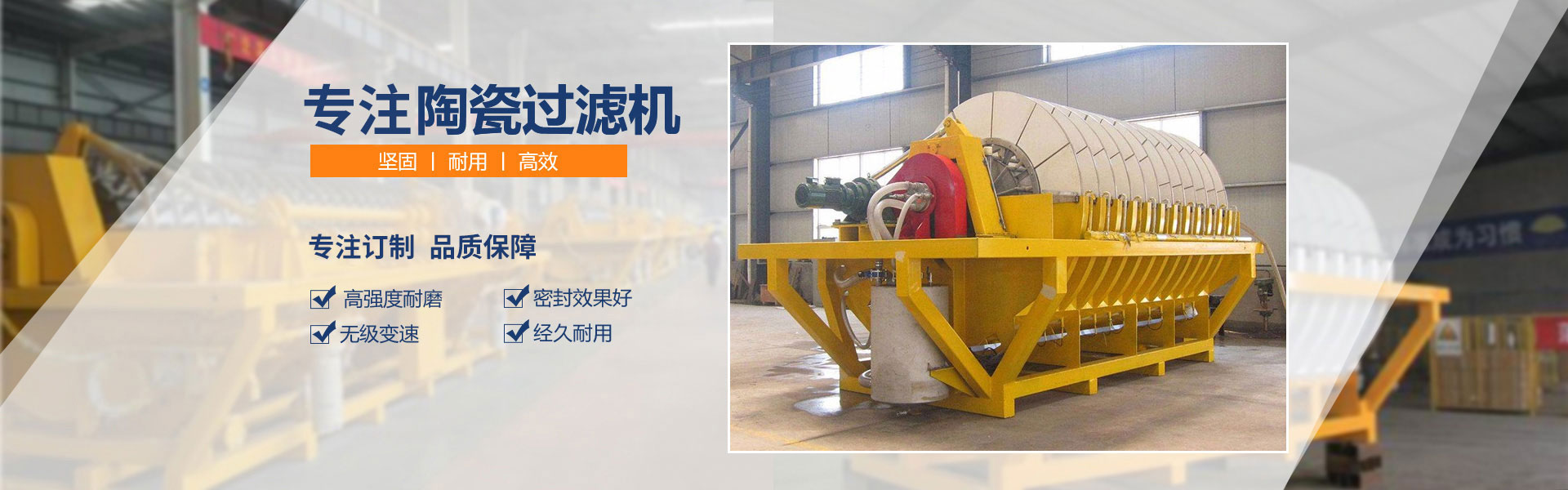

Ceramic filters are widely used in industries such as chemicals and food processing as filtration equipment. They utilize special ceramic materials as the filtration medium, effectively removing suspended particles and impurities from liquids, thereby purifying water quality. Below, we delve into the working principle of ceramic filters.
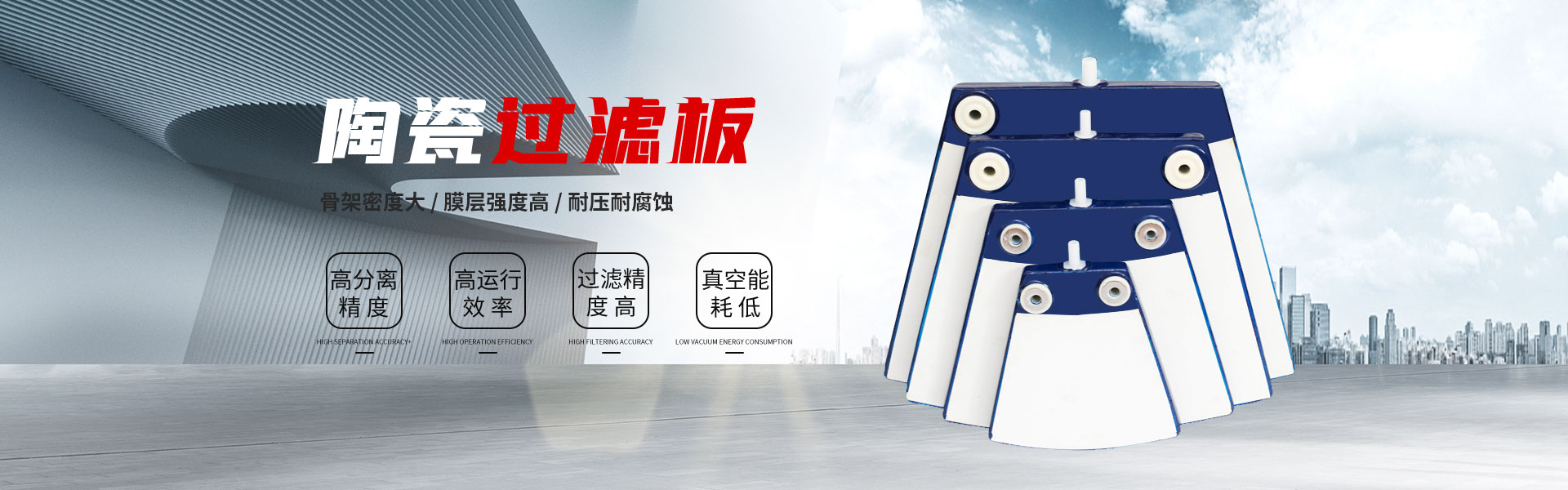
Firstly, the liquid to be filtered is introduced into the ceramic filter through the feed opening. During the filtration process, the ceramic filter plate continuously rotates, causing the filtrate to form a thin film on the surface of the plate. As suspended particles or solids pass through the filter plate, they are adsorbed onto the film and rotate with the plate. Due to the high surface area and porosity of the ceramic material, these adsorbed particles gradually accumulate on the filter plate, forming a layer of solid particles.
Next, the solid particle layer will be cleaned off to yield a clean filtrate. The cleaning process is typically carried out in reverse flow, first blowing away the solid particles with high-pressure air, followed by rinsing the remaining debris from the filter plate surface with low-pressure water. The entire cleaning process is very quick, ensuring the quality and stability of the filtrate.
After multiple cycles of use, ceramic filter plates will gradually wear and age, at which point it is necessary to promptly replace them with new ones to ensure the normal operation of the equipment.
In summary, the ceramic filter operates by utilizing special ceramic materials as the filtering medium, effectively removing suspended particles and impurities from liquids. Its stability has been widely recognized and applied.
