
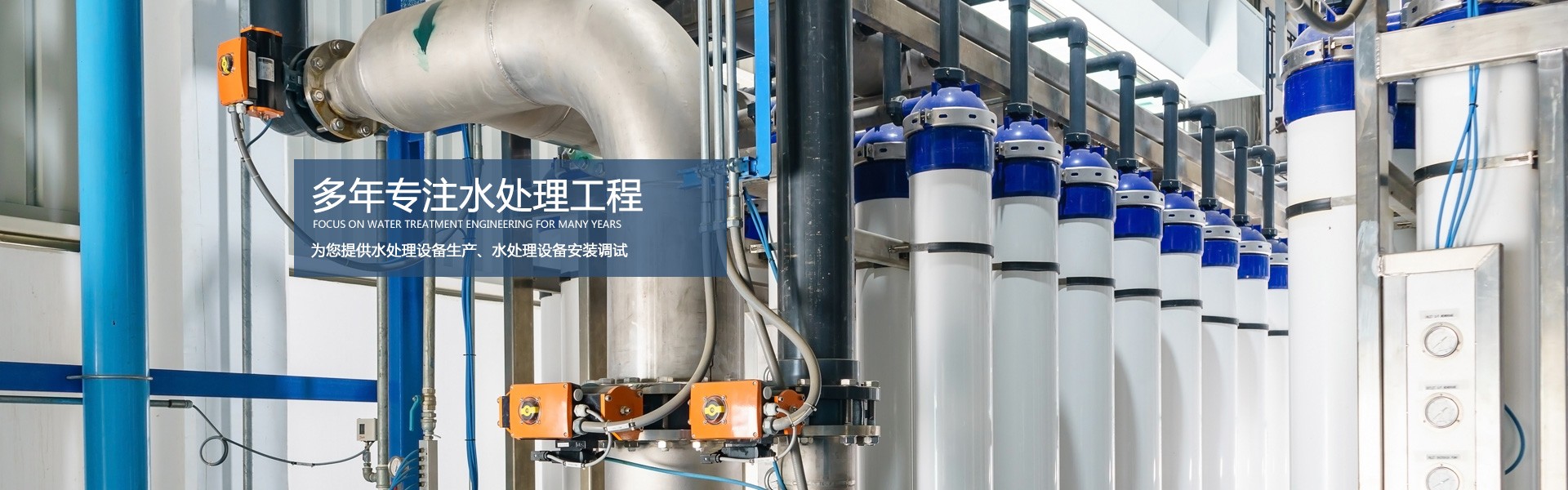


Water treatment engineering involves purifying, softening, disinfecting, removing iron, manganese, and other contaminants from water that does not meet the required standards. It includes the elimination of heavy metal ions and filtration projects. Simply put,
"Sewage treatment engineering is the process of removing certain unnecessary substances from water through physical and chemical means. It involves sedimentation of water for specific uses."
Water treatment processes including filtration, coagulation, flocculation, corrosion inhibition, and scale prevention.
Water treatment engineering has a vast range of applications, due to its close relationship with social production and living, forming a massive industrial application project.
Below, Harbin Water Treatment Co., Ltd. introduces some common knowledge about water treatment:
What is self-purification of water bodies?
Water Self-Purification: Through physical, chemical, and biological processes, polluted rivers experience a reduction or transformation of pollutants, restoring the water body to its original state.
The contaminant levels from Z have decreased from exceeding water quality standards to meeting them.
What are the basic methods of wastewater treatment?
Basic Methods of Wastewater Treatment: Utilizing various means and technologies to separate and remove pollutants from wastewater, recycle them, or convert them into harmless substances.
Purify wastewater. Generally, it is divided into water treatment and wastewater treatment.
What are the current wastewater treatment technologies?
Modern wastewater treatment technology can be divided into physical, chemical, and biological treatment methods based on their principles of action.
4. Five Water Measurement Indicators
Biochemical Oxygen Demand (BOD): It refers to the amount of oxygen required for the degradation of organic matter under aerobic conditions due to the action of microorganisms. It is an indicator of the organic pollution level of wastewater.
Met target.
Theoretical Oxygen Demand (thOD): The theoretical oxygen demand for a specific organic substance in water. It typically refers to the complete oxidation of carbon and hydrogen elements in the organic substance into carbon dioxide and water.
Theoretical Oxygen Demand for Water (i.e., the oxygen demand calculated based on the complete oxidation reaction equation).
Total Oxygen Demand (TOD): Refers to the amount of oxygen required to oxidize substances present in water, primarily organic matter, into stable oxides upon combustion, the result expressed in terms of O2.
mg/L denotes.
Harbin Water Treatment Company
Chemical Oxygen Demand (COD): It is a measure of the amount of oxidizable substances in water samples by chemical means. It is found in wastewater, effluent from wastewater treatment plants, and polluted water.
Oxygen equivalent of substances (generally organic) that can be oxidized by strong oxidizing agents.
Total Organic Carbon (TOC): It refers to the total amount of carbon contained in dissolved and suspended organic matter in water bodies.
What situations require the use of biochemical treatment?
It is generally believed that wastewater with BOD/COD values greater than 0.3 is suitable for biological treatment.
What are the sanitation standards for drinking water?
Physical indicators of drinking water quality standards: Color, turbidity, odor, and taste.
What is Eutrophication of Water Bodies?
Eutrophication is a natural phenomenon that occurs in freshwater, characterized by the sudden and excessive proliferation of algae due to elevated levels of nitrogen, phosphorus, and potassium in the water body.
The primary cause of eutrophication in water bodies is the influx of elements like nitrogen, phosphorus, and potassium into slow-flowing, long-renewal cycle surface waters, leading to excessive growth of aquatic organisms such as algae.
The process in which organic matter accumulates in water bodies at a rate far exceeding its consumption, disrupting the aquatic ecological balance.
What is Dissolved Oxygen?
Dissolved oxygen refers to the oxygen that is dissolved in water. The organisms and aerobic microorganisms in water rely on this dissolved oxygen for survival. Different microorganisms have varying requirements for dissolved oxygen.
The requirements are different.
What are the basic methods of modern wastewater treatment?
Modern wastewater treatment technology can be divided into physical treatment methods, chemical treatment methods, and biological treatment methods according to their principle of action.
What is the stability of colloids?
Colloidal Stability: It refers to the property of colloidal particles to remain dispersed and suspended in water over a long period.
