

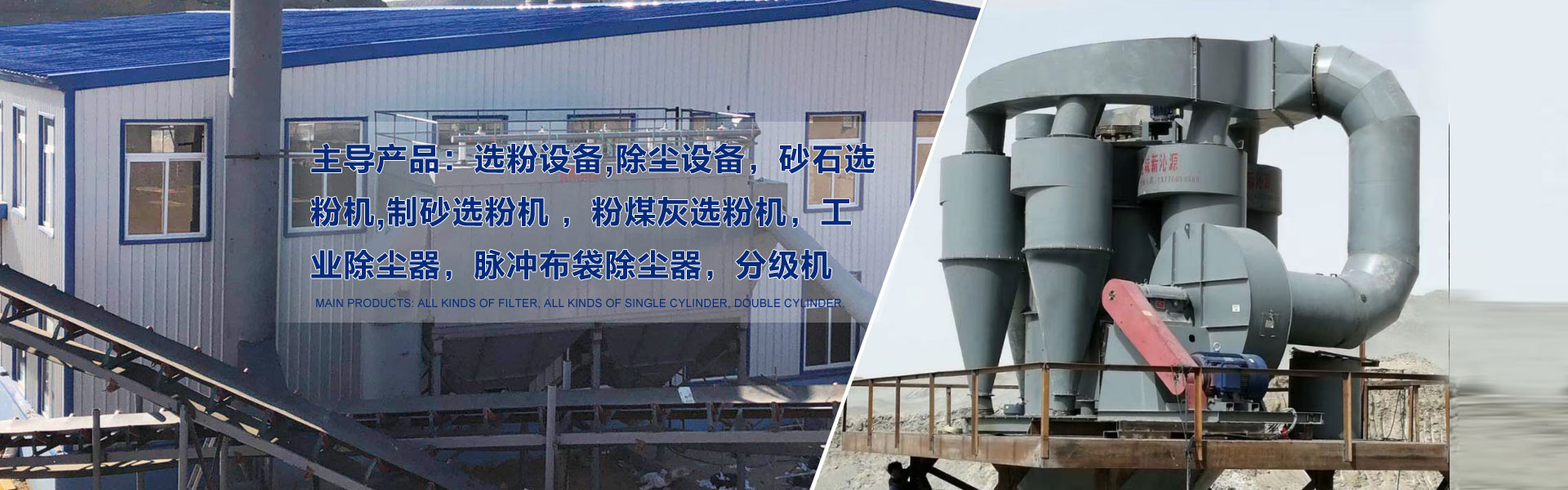


What are the reasons for the frequent shutdown of the separator?
The separator integrates the combination of gravity centrifugal force and multi-level vortex force field, achieving high grading accuracy. The down-type rotor helps to resuspend the accumulated material particles, enhancing the grading capability and reducing the fine content in coarse powder. A variable-speed motor adjusts the spindle speed, making fineness adjustment convenient, highly sensitive, and with a wide range. The separator area and lift zone have been optimized, improving the grading efficiency. The low-resistance cyclone dust collector reduces the resistance of the separated fluid, enhancing dust collection efficiency. The separator features an optimized design of an elastic cleaner and various anti-condensation devices within the machine, providing excellent anti-condensation performance. The dust-reducing and vibration-reducing fan without feet is easy to install.
Material fluctuations, foreign objects entering the classifier, uneven gaps in rotating parts, impact on rotor balance, mechanical transmission issues, electrical problems with the motor body, control cabinet controller faults, loose bolt connections, localized wear on rotor blades or guide vanes, weld detachment, and rotor bearing damage.

If there are no mechanical and electrical issues, it could be due to a sudden large batch or a sudden ball leak. This is because the material needs to pass through two air chutes to be ground in the classifier. When the透气 layer of the chute leaks, the material accumulates inside the chute. Under certain conditions, this accumulated material is suddenly conveyed away, leading to a sudden increase in incoming material for downstream equipment, which may cause the classifier to trip and stop. If the透气 layer of the chute is normal, consider other causes.
Due to the coarse powder being separately fed into the fine grinding bin and the coarse grinding bin via distribution valves, no material was found upon entering the classifier. In the event of a blockage in any branch valve, the material will flow through another branch valve, which is why no material blockage was detected during the inspection. The reason for the main motor's overcurrent is the limited material quantity in a single branch valve. Over time, the material accumulates slowly in the coarse powder channel, leading to the accumulation of the coarse powder cone. This causes the material to come into contact with the rotor, increasing the operating load of the powder classifier, and ultimately triggering the main motor's overcurrent shutdown.
Therefore, it is believed that the connection point between the return grinding bin chute and the branch valve is more prone to clogging. Due to the limitations of the process equipment's spatial layout, the chute and branch valve are connected at a 90° right angle, which is prone to material clogging. Through the gas cutting inspection hole in this section, it was found that steel balls and materials were堆积 together, with the steel balls originating from the leakage of balls after the grinding plate was damaged. This is the fundamental reason for the frequent jumps of the classifier.
Measures and Effects:
Material and steel balls in the blocked area were cleaned, and the welding was redone to restore the cut inspection holes.
(2) Inspect the wear of the grinding grid plates, replace the damaged ones, weld round steel at areas with significant wear, and control the grinding grid gap to approximately 12mm.
(3) Revise the stop-milling maintenance procedures, enhance ball matching and iron removal, and promptly clear away chipped and small balls. Simultaneously, strengthen inspections and shut down the mill immediately upon detecting any ball leaks to prevent blockage accidents.
(4) During shutdown maintenance of the mill system, inspect the transition point under the branch valve.
