

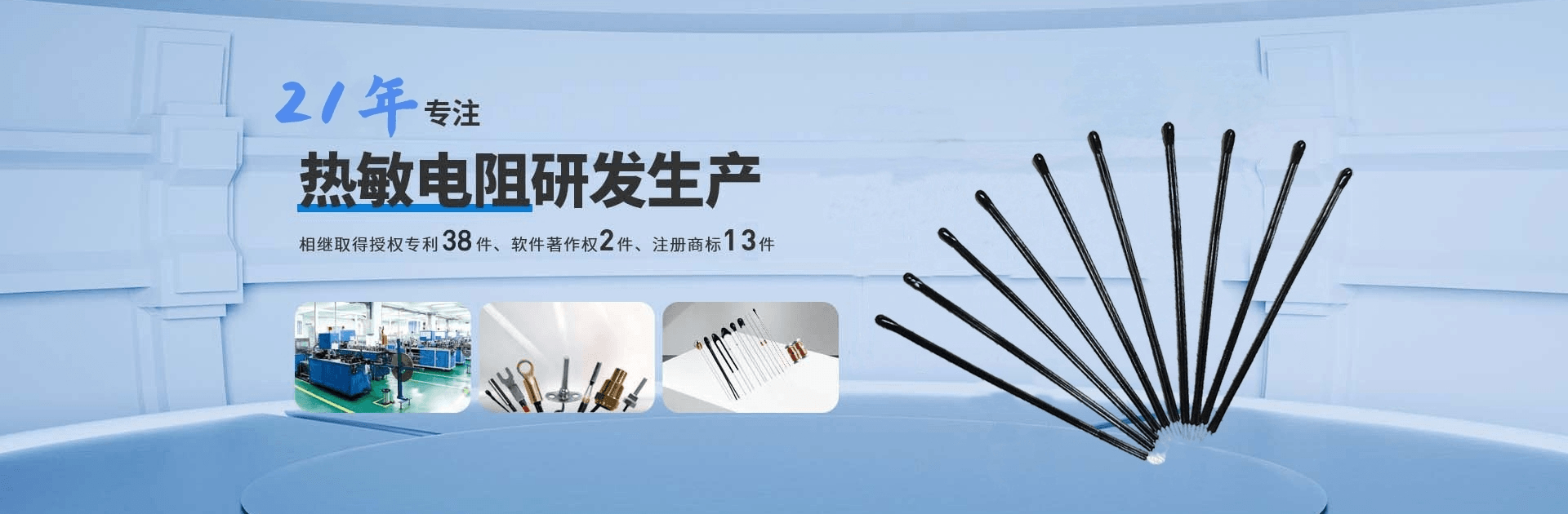
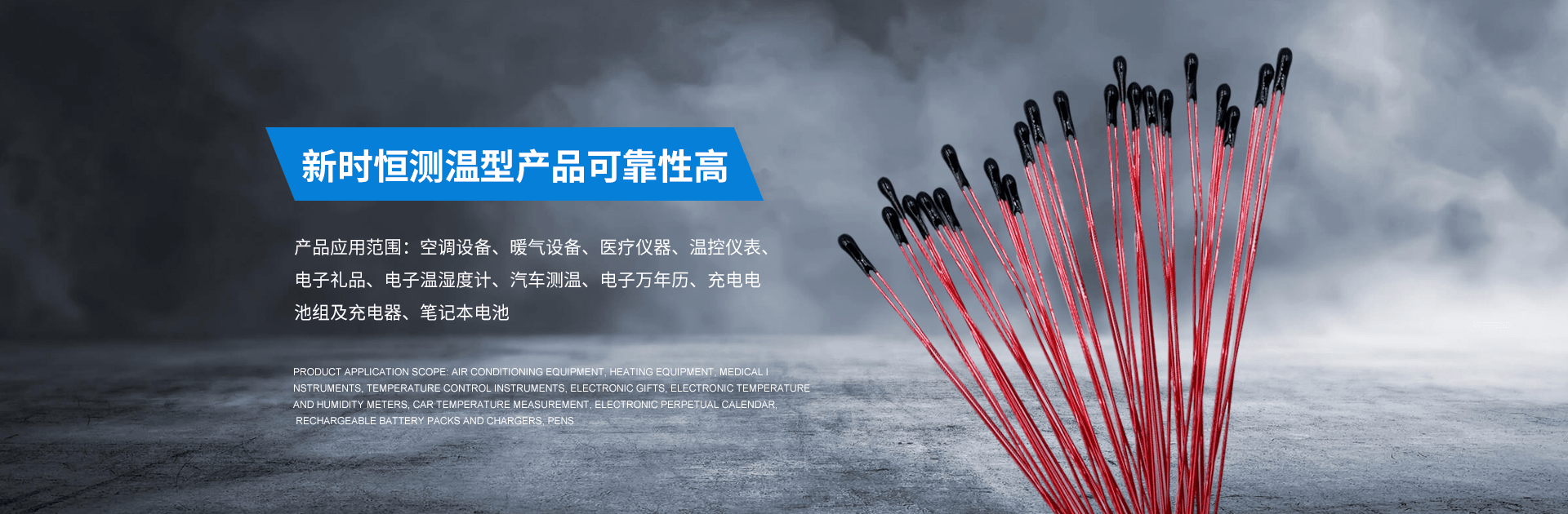


The resistance is minimally affected by temperature changes, yet...Thermistor resistorTotally different, its resistance changes with temperature, making it an element that controls the size of resistance through temperature manipulation.
Thermistors are temperature-sensitive elements made from semiconductors whose resistance changes significantly with temperature. They are manufactured from certain metal oxides using different formulations. Within a specific temperature range, the change in the resistance of the thermistor can indicate the temperature change of the medium being measured.
Thermistors will remain inactive for extended periods; when the environmental temperature and current are in the c region, the dissipation power and heat generation power of the thermistor are nearly equal, thus it may or may not activate. At a constant environmental temperature, the activation time of the thermistor sharply decreases with the increase of current; at relatively higher environmental temperatures, the thermistor has shorter activation times and lower holding and activation currents. Thermistors come in various shapes, such as spherical, rod-shaped, tubular, and circular.
Thermistor Types: Positive Temperature Coefficient (PTC) and Negative Temperature Coefficient (NTC). PTC thermistors have an increasing resistance with rising temperature, while NTC thermistors have a decreasing resistance with rising temperature. Currently, NTC thermistors are widely used.
Thermistors are highly sensitive to temperature, have low thermal inertia, long lifespan, compact size, simple structure, and can be manufactured in various shapes and structures. Therefore, with the development of industrial, agricultural production, and science and technology, this component has been widely used in applications such as temperature measurement, temperature control, temperature compensation, liquid level detection, pressure measurement, fire alarms, weather sounding, switch circuits, overload protection, pulse voltage suppression, time delay, stable amplitude, automatic gain adjustment, microwave and laser power measurement, and more.
With the advancement of modern technology, particularly in space technology,Thermistor resistorIn addition to high reliability, long lifespan, ultra-high and ultra-low temperatures, we also require thermosensitive equipment with higher sensitivity, non-cold requirement, and high functional intensity for measuring radiation power.
