

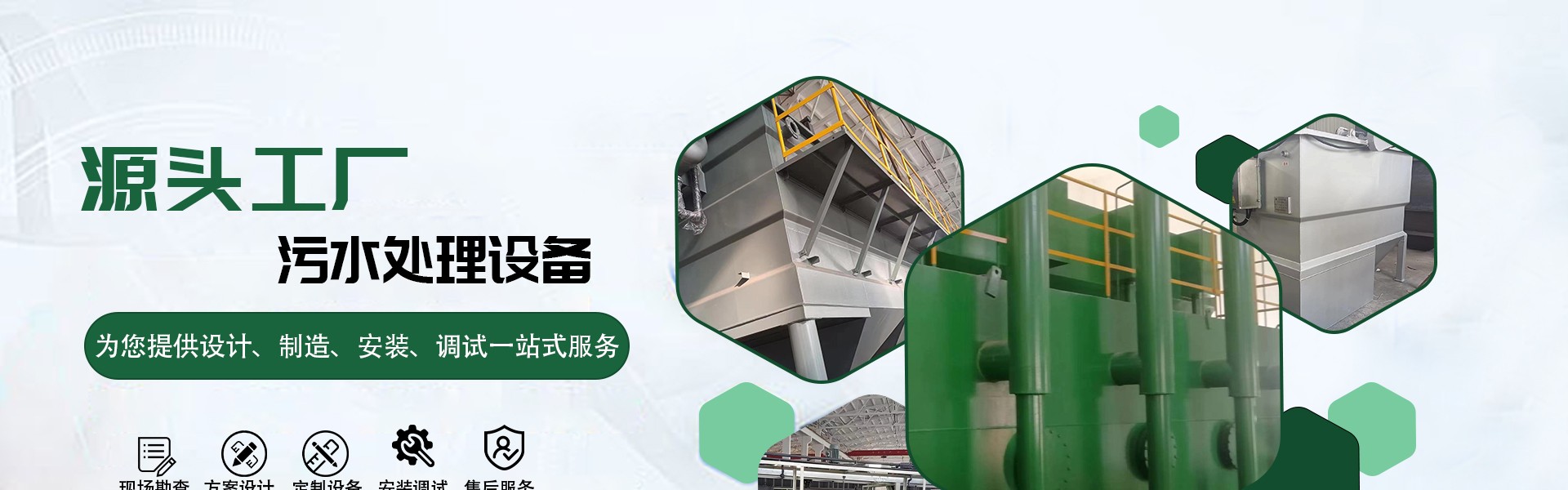

Wastewater treatment equipment refers to devices used for treating and purifying various types of wastewater, including domestic, industrial, and agricultural effluents. As global water scarcity and environmental pollution issues become increasingly severe, the application of wastewater treatment equipment is expanding, playing a crucial role in protecting the environment and promoting sustainable development.
Wastewater treatment equipment typically includes pre-treatment, main treatment, and post-treatment stages. Pre-treatment primarily involves the initial processing of wastewater to remove large particles such as mud, oil, and suspended solids, in order to minimize damage to subsequent treatment equipment. Common pre-treatment equipment includes grates, sand and stone separators, and sedimentation tanks. Main treatment is a deep processing of wastewater, mainly through physical, chemical, and biological methods to remove pollutants or convert them into harmless substances. Common main treatment equipment includes sedimentation tanks, flotation tanks, aeration tanks, filter tanks, and bioreactors. Post-treatment mainly involves further processing of the treated water, such as disinfection and water quality improvement, with commonly used equipment including UV disinfection units and activated carbon adsorbers.
In wastewater treatment equipment, biological treatment is a commonly used method. It utilizes microorganisms to decompose organic matter into inorganic substances and new biomass, thereby removing organic matter from wastewater. The advantages of biological treatment technology include excellent treatment effects, low operation costs, and simple operation, but it also has issues related to temperature,PHThe requirements for values and oxygen supply conditions.
In addition to biological treatment technology, both physical and chemical treatment technologies are widely used in wastewater treatment equipment. Physical treatment technology primarily utilizes physical and mechanical principles to process wastewater, such as sedimentation, filtration, and adsorption. Chemical treatment technology, on the other hand, employs chemical agents to treat pollutants in wastewater, including oxidation, reduction, and sedimentation.
With the advancement of science and technology and the continuous development of wastewater treatment equipment, new technologies and devices are increasingly being applied in the field of wastewater treatment. For instance, membrane separation technology utilizes microporous or ultrafiltration membranes to filter and separate wastewater, achieving the goal of removing suspended solids and microorganisms. Reclaimed water utilization technology involves reusing treated wastewater for irrigation, flushing, and industrial production. These new technologies and equipment not only enhance the efficiency of wastewater treatment but also provide possibilities for resource recovery and recycling.
Wastewater treatment equipment plays a crucial role in maintaining ecological environments, protecting water resources, and promoting sustainable development. In the future, as technology advances and environmental issues intensify, wastewater treatment equipment will continue to evolve and innovate, creating cleaner water environments for us.
