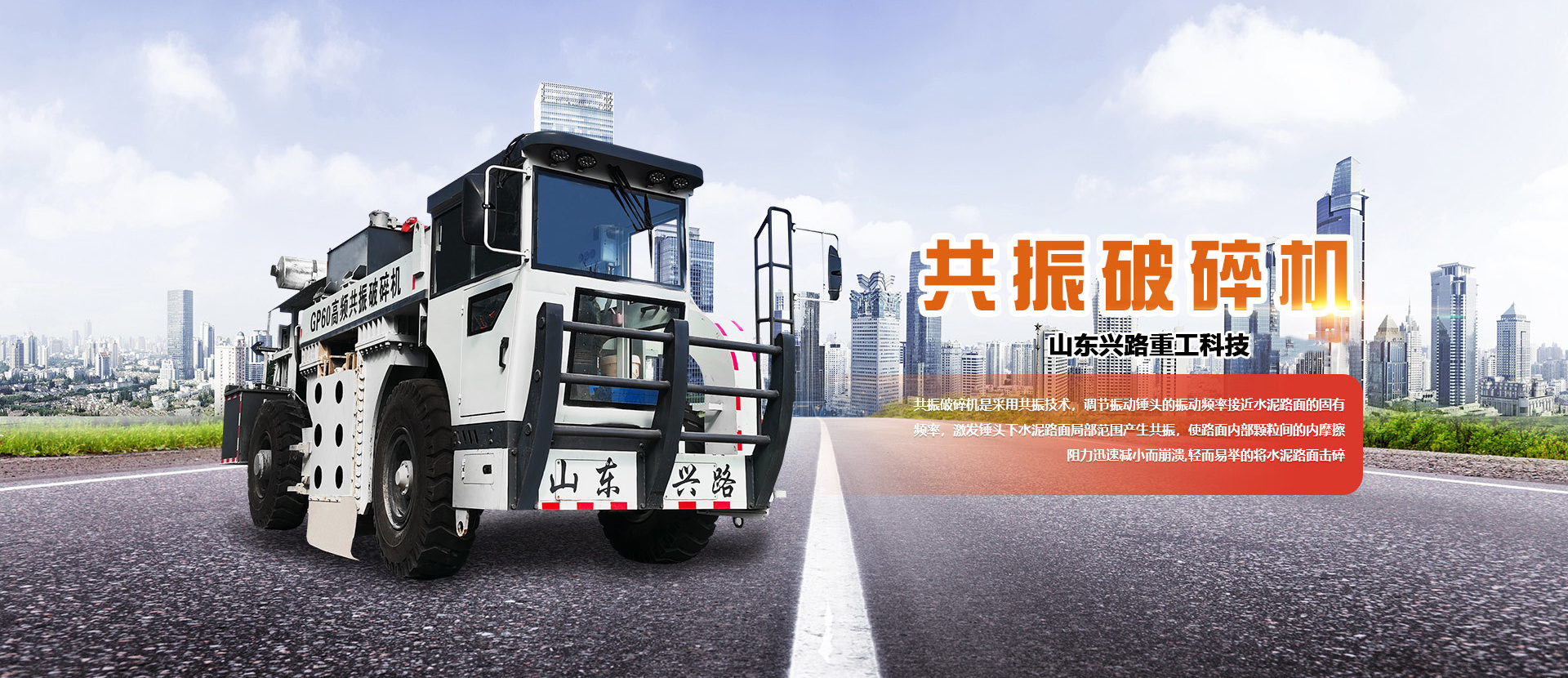
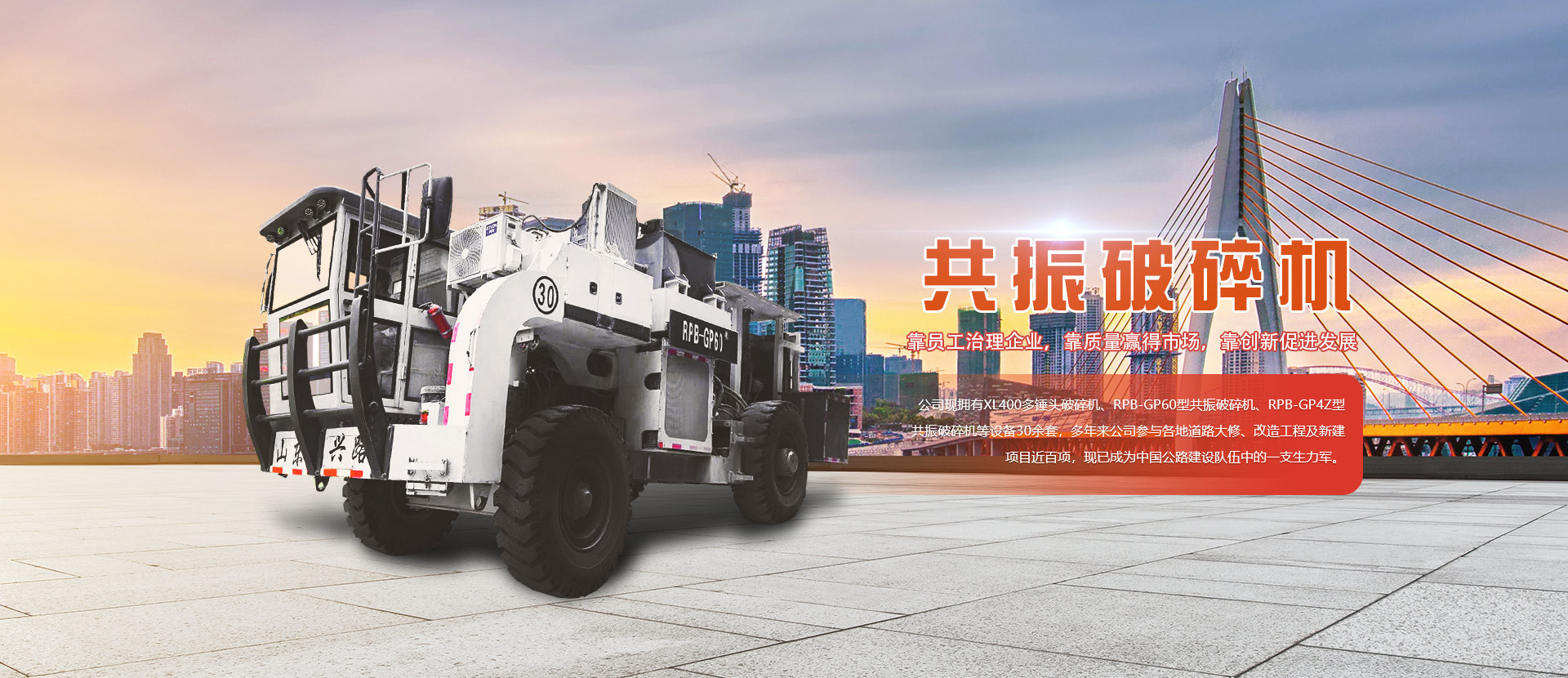
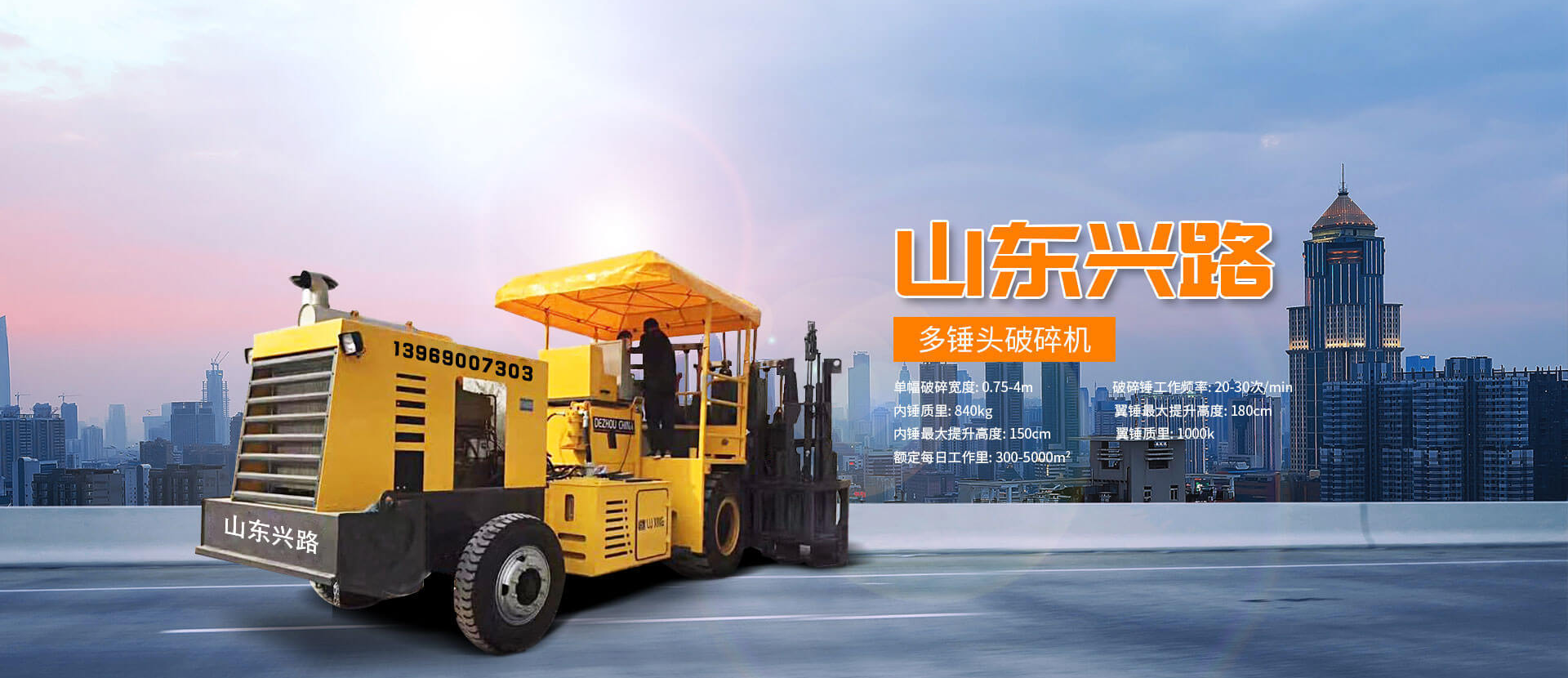
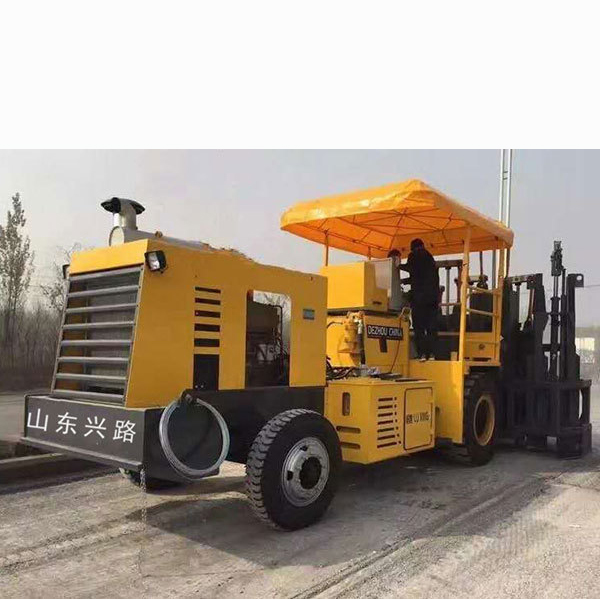
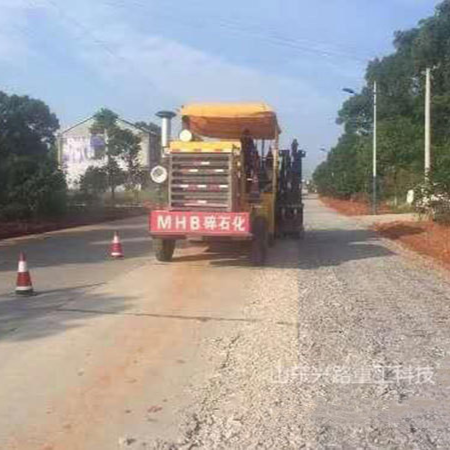
Resonant Crusher, Resonant Crushing Machine

Through the organization of construction records from asphalt pavement laying sites, this article will compile the following summary focusing on the construction techniques and technical requirements of resonance crushing, sealing, and laying.
Resonant Crushing and Screening Quality Control:
1. The quality of resonance fracturing of old cement concrete pavement is mainly influenced by factors such as the construction speed of the crushing machine, amplitude, crushing sequence, direction of crushing, and different base strength and stiffness conditions, as well as the adjustment requirements for the crushing machine. These conditions affect the degree of fracturing, particle size distribution, and the direction of the formed fracture surfaces. To ensure the quality of resonance fracturing, a trial vibration test must be conducted prior to the actual operation. After the trial vibration, excavation pits are used to inspect the particle size distribution and uniformity, and to determine the construction parameters and organizational measures of the crushing machine.
2. Resonant Crushing Construction: Prior to crushing, the original road surface and asphalt repair layer should be cleared. Additionally, water should be sprayed to moisten the surface of the concrete road that will be crushed to prevent dust during the crushing process and to prevent environmental pollution. The crushing sequence typically begins from the outermost lane of the cement road, progressing from the edge towards the center, with a repeated crushing pattern every 20cm. If longitudinal lanes have been cut, the crushing can also start from the center towards the edges. The actual crushed width should exceed the width of one lane, overlapping with the adjacent lane by at least 15cm.
3. Prior to compaction, remove all loose gravel larger than 5cm from the joints in the existing concrete road surface and fill in the concave sections with graded gravel. Subsequently, use a roller to compact the material.
4. Key Technical Requirements
1) Remove any asphalt patches that may be present on the existing concrete road surface.
2) Post-resonance crushing results in particle sizes ranging from 3 to 30 cm, with the surface crushed stone capable of bonding together, and the lower layer tightly packed, which can both prevent reflective cracks and guard against structural failure.
3) The crushed stone layer is within 0-10cm, with gradation controlled within the range of graded crushed (gravel) stones: 0-18cm, with the gradation closely approaching that of graded crushed (gravel) stones.
4) After crushing, use a steel-wheeled vibratory roller to compact the material 2-4 times over, with a rolling speed of ≤1.8 m/s.
5) Once a section is deemed as a weak subgrade during the crushing and rolling process, it is typically necessary to remove the entire layer from the crushed stone to the base course, followed by backfilling with crushed stone materials and compacting them.
6) After crushing and rolling the aggregate layer, no reinforcement should be exposed, and no asphalt jointing material or patches are permitted.
Prior to paving, traffic is prohibited on the top surface of the crushed stone layer, and depressions exceeding 2 cm in depth on the crushed stone surface are not permitted.
Quality Control for Asphalt Paving
1. Flatness: Check with a 3-meter straightedge immediately behind the paver.
1) Primarily, it uses the paver's automatic thickness and leveling devices for control.
2) Lay the material at a steady pace without interruption, ideally between 1.5-5 meters per minute.
3) The three-stage compaction combination is properly executed: initial compaction with a double-drum roller, followed by a rubber-tired roller for secondary compaction, and finally, finishing with edge smoothing and leveling using a small double-drum roller.
2. Thickness: The thickness is measured on-site during the spreading process using a cone, with adjustments made promptly.
3. Slope Control: Use a level instrument to control the slope before laying the subgrade.
4. Temperature: The出厂temperature of asphalt mix is selected based on the construction temperature. When the temperature is above 10℃, the出厂temperature is between 140℃ and 160℃; between 0℃ and 10℃, the出厂temperature is between 150℃ and 170℃. The appropriate laying temperature is generally not less than 15℃. The laying temperature ensures that it remains between 130℃ and 150℃; the initial compaction temperature is stable at 110℃ to 130℃; the re-compaction temperature is controlled between 110℃ and 90℃; and the final rolling temperature meets or exceeds 70℃. Due to strict control of the mixing stage temperature, the asphalt mix is uniform and consistent, with no speckled materials, no lumps, and no segregation. Compaction is a critical quality indicator of engineering work. During compaction, the initial rolling is done with a smooth wheel at 2km/h, the re-compaction with a tire at 5km/h, and the final rolling with a smooth wheel at 3km/h, ensuring the compaction of the paved road.
Section 3: Safety Requirements
1. Proper operation of large machinery and equipment requires that only personnel with the corresponding operator's certification be allowed to handle the machinery.
2. During manual and machine cooperation, safety is paramount. Operators, especially those assisting alongside the paver and roller during reverse, rolling, and paving operations, must pay close attention to the machinery's operation.
3. Asphalt mixture application temperatures exceed 140 degrees Celsius; construction workers are advised to take precautions against burns.
4. Toxic gases are emitted from hot asphalt mixtures; construction workers are advised to wear masks and other protective gear. The laying process involves high-temperature work, and precautions should be taken to lower the temperature.
Progress Control
Construction managers must first develop detailed construction plans and emergency response strategies for on-site incidents.
2. Considering materials (all specifications must meet standards during on-site construction), personnel (a professional construction team and reasonable on-site personnel arrangement), and weather conditions (especially considering the impact of rain and night-time construction).
3. Reasonable on-site arrangements are essential, especially for mixtures located far from the construction site. It's crucial to consider the arrangement of vehicles, appropriately schedule machinery and labor operations, ensuring efficient and swift construction progress.
V. Pre-construction Preparation
1. Survey and stakeout completed; elevation verification confirmed.
During construction, prominently marked signs are set up to close off the construction site.
3. The asphalt pavement and subgrade are sealed with an asphalt碎石 fiber layer.
4. Prior to applying the spray operation, protective measures for guardrails and traffic signs should be taken to prevent contamination.
Six: Construction Precautions
1. Post-completion road maintenance will be conducted, with traffic closure in effect during construction.
2. Asphalt concrete temperature, thickness, smoothness, density, and slope control.
3. Dump trucks are prepared with thermal and waterproof tarpaulins to prevent the rapid loss of temperature in the mixed materials or to avoid rain damage. Before transportation, the truck beds are cleaned to ensure they are flat and clean, and a mixture of 1:3 water and liquid is applied to prevent sticking.
4. Ensure the paver moves at a constant speed without any changes or stops during the process, with the paving temperature not below 145°C. Depending on the on-site conditions, the paver's walking speed should be adjusted between 2-4m/min, choosing a slow, even, and uninterrupted paving method. After starting the machine, the frequency and vibration parameters of the screed's compaction锤 should not be arbitrarily altered. During the paving process, the construction engineer should check the thickness of the spread material from left to center to right of the road width, comparing it with the measured elevation. If it does not meet the requirements, adjustments should be made promptly.


b2b.china9.net © Zhongshang 114 Hebei Network Technology Co., Ltd.Address: Room 6009, Oriental New World Center, No.118 East Zhongshan Road, Qiaoxi District, Shijiazhuang City, Hebei ProvincePlatform Service Hotline: 4006299930