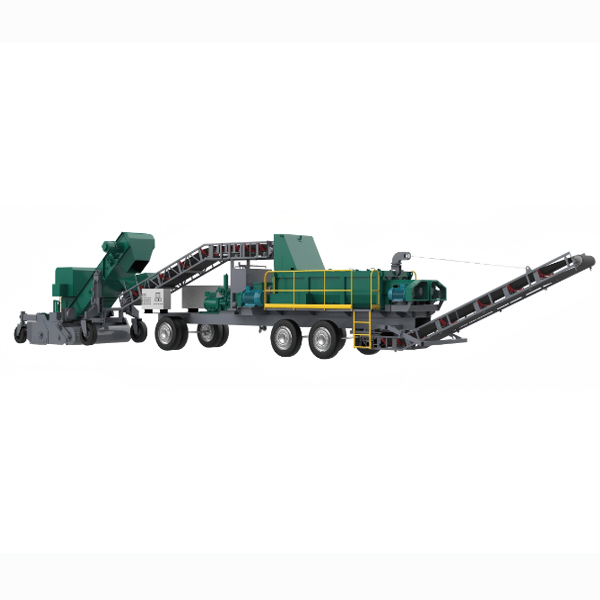
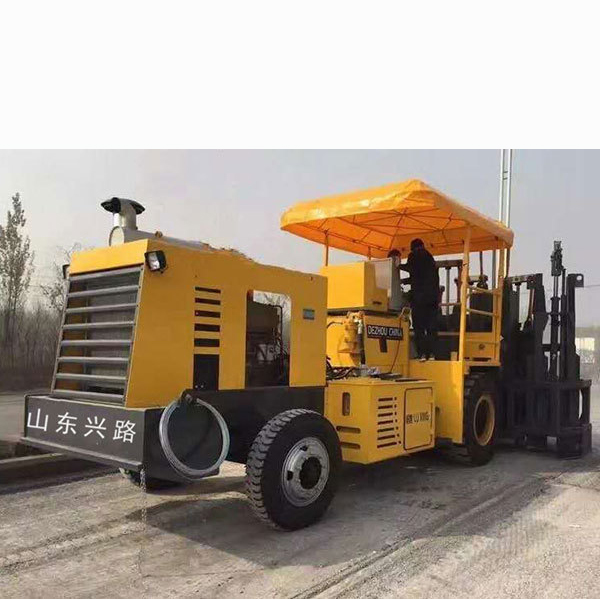
Resonant Crusher, Resonant Crushing Machine

As a cement road regeneration technology, the破碎 cement concrete road project is now widely used in projects where the original concrete road is severely damaged and requires major repairs and renovations. This technology is more economical than the excavation and reconstruction methods used in the original road renovation, and its environmental-friendly engineering characteristics have been widely recognized. Let's take a look at the construction process and precautions for the cement road fragmentation technology together!
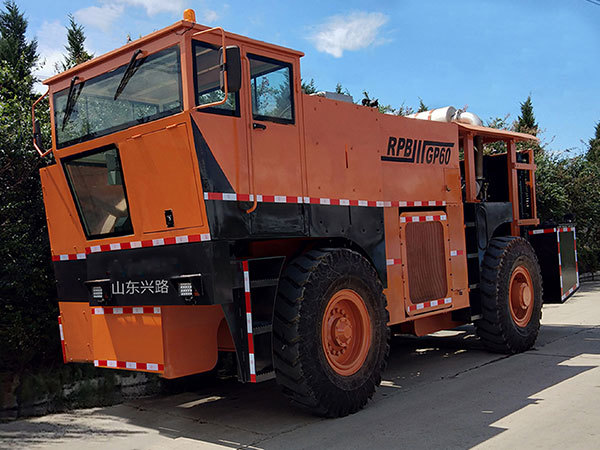
Pavement Recycling Technology and Construction Techniques for Cement Concrete, along with Construction Precautions
1. Cement Road Surface Aggregate Technology and Quality Control
Pre-processing before crushing. Remove the asphalt covering and asphalt patching materials from the concrete slabs before crushing to ensure better quality of the road crushing. Simultaneously, install and repair the full-line drainage system, excavating the road shoulders to the same height as the concrete subbase to ensure timely drainage of water from the road area.
Special Link Handling
Prior to road fracturing, repairs were made to the weaker sections of the project that may have had severe defects. First, the concrete pavement was removed, excavation continued to the stable layer, and then materials approved by the supervising engineer for this project were replaced.
Marking and Protection of Buildings
Prior to road fracturing, the structural materials subject to investigation should be clearly marked on-site to prevent damage during construction. Different red paint should be used to clearly identify structures, underground pipelines, and buildings buried at varying depths, ensuring distinction and safety during fracturing.
Pavement to Aggregate Technology Construction
Pavement Crushing Test Section. Prior to the formal commencement of the pavement crushing project, an 80-meter-wide lane with representative characteristics was selected as the test section. Experience shows that using a drop height of 1.1 to 1.2 meters and a drop spacing of approximately 10 cm, the pavement is crushed by adjusting the crushing parameters section by section. Visual inspection indicates that the crushed pavement surface presents a scale-like appearance, indicating that the crushing effect meets the specified requirements. The crushing parameters used at this time were recorded to ensure the pavement is crushed to the specified size. Two independent 1-square-meter test holes were randomly chosen within the test area, avoiding locations with transverse joints or working joints. To fully detect whether the crushed particles are within the specified particle size range, attempts were made to excavate holes down to the subgrade. When the particle size of the crushed concrete pavement does not meet the requirements, adjust the equipment control parameters, correspondingly increase the test area, and repeat the previous process until the requirements are met, and record and review the MHB crushing parameters that meet the requirements.
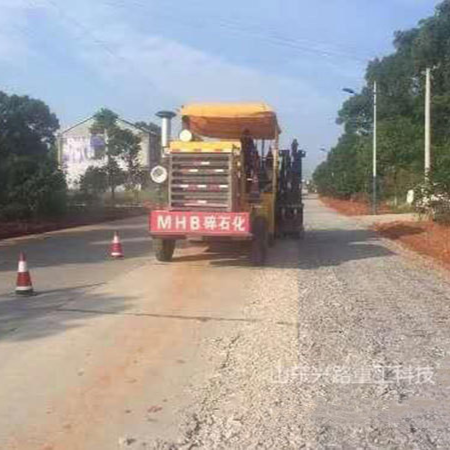
Standardized Construction. During the conventional crushing and screening process, the crushing parameters should be continuously fine-tuned according to the actual road conditions. For parameters requiring significant adjustments, the supervising engineer should be notified. When crushing the road surface, the MHB should first crush the side lanes of the road surface, followed by the central driving lanes. The overlapping width of the crushed sections should generally be around 10 cm. In mechanical construction, the walking speed, drop height, and frequency should be adjusted flexibly to achieve even crushing. After crushing and screening, all loose joint materials, expansion joint materials, and exposed reinforcing bars on the road surface must be cleared. For surface depressions within a 10 cm x 10 cm area, compacted gravel can be used to fill before compaction. For depressions larger than 10 cm x 10 cm, asphalt concrete must be used for leveling to ensure the flatness of the asphalt concrete road surface. Special consideration should be given to transition measures, such as setting grids for crushed and non-crushed concrete road surfaces. After crushing, compaction is necessary.
The primary role of compaction is to further crush the flat particles on the road surface while reinforcing the underlying masonry materials, providing a smooth surface for the new asphalt pavement. After crushing, the road surface is compacted using a vibration roller and a single-tyre roller, with 1 to 2 passes, and the compaction speed must not exceed 5 km/h.
Asphalt interlayer distribution
The cement road fracturing technology utilizes slow-cracking emulsified asphalt as an infiltration layer to achieve a certain degree of cohesion for the loose particle size on the surface. The intelligent spraying vehicle controls the dosage evenly at 2.5~3.0kg/m2. After spraying an appropriate amount of stone chips on the emulsified asphalt layer, it undergoes a static pressure with a light roller. The amount of stone chips is determined by ensuring they do not adhere to the wheels.
2. Breakage Effect Testing
The primary quality control indicators for crushed stone are the crushing rate and particle size. Generally, it is required to crush 75% of the cement concrete pavement into particle sizes of less than 7.5cm on the surface, 22.5cm in the middle, and 37.5cm at the bottom. The particle size after crushing can be controlled by adjusting the drop height of the hammer. After crushing, the concrete particles form a tight fitting structure, which should be embedded or tightly adhered to the subgrade of the old road to eliminate the original gaps of the voided slab. During crushing, the connection width to adjacent lanes must be no less than 15cm. The crushed pavement should not be opened to traffic. If the pavement becomes uneven or the bonding layer is damaged due to opening, it should be compacted again. The effectiveness of crushing cannot be evaluated by rebound bending or rebound rate; a comprehensive evaluation must be made by combining the strength variability of the crushed layer. Local spring plate excavation and replacement must be done after the old pavement has been crushed, and the replacement of the excavation plate must be determined by the rebound bending test. The settlement after crushing is greatly affected by the old road condition and is not suitable as a control indicator for crushing technology. After crushing the concrete pavement, close the traffic to avoid affecting the uniformity of the crushed layer's strength.
3. Compaction Testing for破碎Concrete Pavement surfaces
Detectable compaction refers to the process of testing the stability of fractured concrete pavements and subgrade base materials under loaded conditions in problem areas. This process is typically conducted on loaded dual-axle trucks as instructed by the supervising engineer. It helps identify weak areas that may have been missed during fracturing or compaction, but must be done before the asphalt surface layer is laid. The method should avoid over-compaction that could damage the fractured subgrade.
4. Tips for Construction of Aggregate Paving Technology on Cement Roads
1) Enhance particle size detection for crushing, enforce strict construction quality standards, ensuring the crushed particle size meets the design specifications. The surface of 75% of the concrete road should be crushed into particles (visible to the naked eye), with no individual particle size exceeding 7.5 centimeters. After rolling, the crushed stone should form a tightly integrated structure of concrete particles.
2) When widening an existing road by using crushed stone paving, the structural layer of the widened section must be constructed up to the surface elevation of the existing pavement slab to ensure the quality of the new road's joint and reduce the particle size at the ends of the old pavement slabs.
3) Pay special attention to the weather during construction. After the gravel is completed, the next step is to properly lay down water barriers to prevent water from seeping into the gravel sections.
4) Address soft soil diseases, strictly follow the aforementioned plan, and reduce reflective cracks caused by the original concrete pavement diseases.
Above is the introduction to the construction technology and precautions for the stone crushing technique in cement road paving. For more information, please feel free to contact us at any time!


b2b.china9.net © Zhongshang 114 Hebei Network Technology Co., Ltd.Address: Room 6009, Oriental New World Center, No.118 East Zhongshan Road, Qiaoxi District, Shijiazhuang City, Hebei ProvincePlatform Service Hotline: 4006299930