
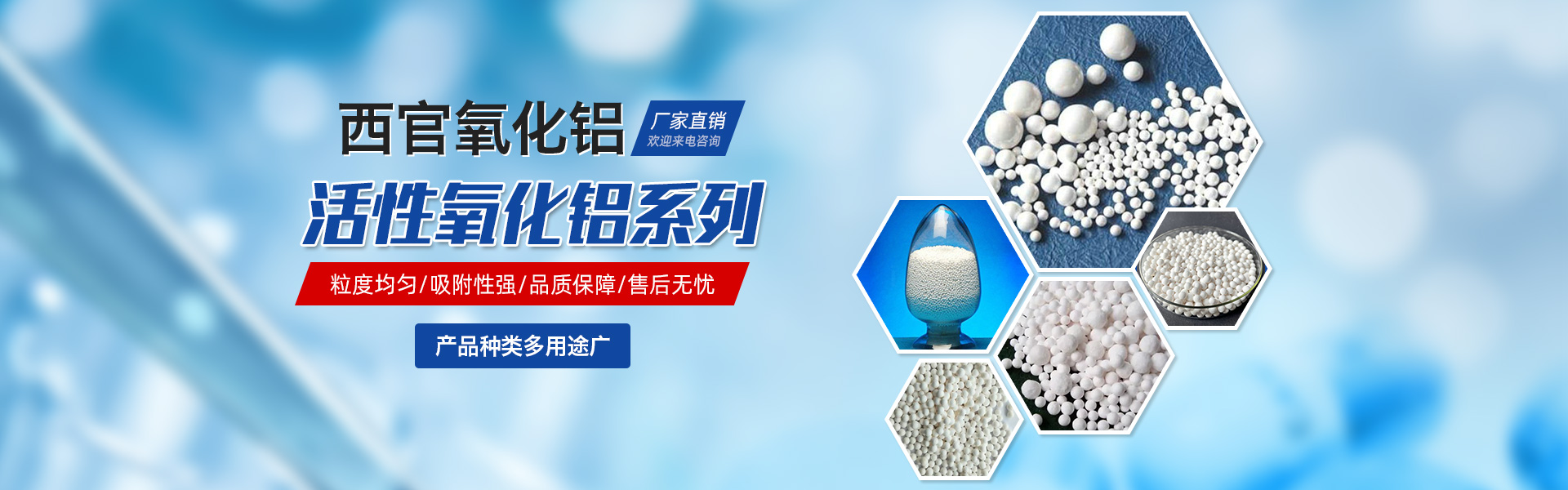

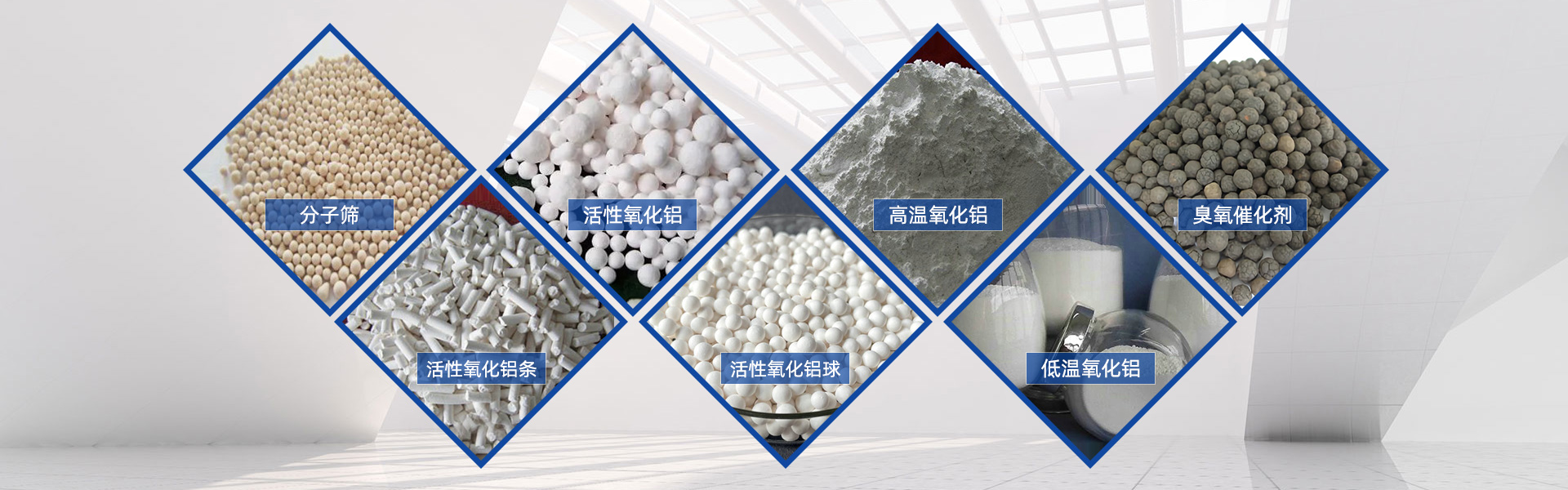

Active Alumina is a solid substance with excellent adsorption properties, making it suitable for use as a catalyst, with its micropores on the surface meeting the requirements for catalyst production. However, it is not limited to just being a catalyst; it has many other applications as well. The problem is that in these other uses, it is referred to by different names, leading to confusion about whether it is actually active alumina.
1. Activated Alumina Adsorbent
Crystal Form: γ-Al2O3 type
Formula: Al2O3·NH2O (0 < n ≤ 0.8)
Molecular Weight: 102 < Molecular Weight ≤ 117
Physical Properties: This product does not soften in water or alkali, boasts high clarity, and has a long service life. It exhibits strong degradation and regeneration capabilities for anthraquinone derivatives, making it a specialized adsorbent for the production of hydrogen peroxide via the anthraquinone process. In addition to adsorbing alkali from the working solution, it possesses powerful hydrogenation degradation regeneration capabilities, converting degraded substances from the hydrogenation reaction into effective anthraquinones. This ensures the stability of the total effective anthraquinone amount and promotes the oxidation reaction, while reducing the amount of anthraquinone added, thereby saving operational costs. Additionally, considering the need for regeneration, the aluminum oxide with hydrogen peroxide ensures excellent mechanical properties, with minimal changes in activity after regeneration.
2. Activated Alumina - Desiccant
Under specific operational and regeneration conditions, the dew point of active alumina can reach below -70 degrees Celsius. It can be used as a defluorination agent for high-fluoride drinking water, a defluorination agent for recycled alkanes in alkylbenzene production, an acid regeneration agent for transformer oil, and a drying agent in the oxygen production, textile, natural gas industries, automatic instrument air drying, and in the drying and purification of fertilizers, petrochemicals, and other industries (with a low dew point of -40 degrees). In the air separation industry, the dew point of pressure swing adsorption can reach -55 degrees Celsius. It is an ideal drying agent for deep drying of trace moisture. It is particularly suitable for use with no-heat regeneration equipment.
3. Activated Alumina - Fluoride Remover
This product serves as an adsorbent for removing fluoride from high-fluoride water, boasting an enormous specific surface area. It exhibits a high fluoride removal capacity when the raw water has a low pH and low alkalinity, exceeding 2.1 mg/g. Its cost is even lower than that of synthetic resins and it can also be used for arsenic removal in drinking water.
The product boasts a high specific surface area, with a commonly used specification of 3-5mm. In use, it has a large contact area with water. The specific surface area index reaches up to 260m2/g or higher. The abundance of micropores ensures strong adsorption capacity for fluoride ions in water and high desorption capability.
From the above introduction, it's evident that the applications of activated alumina are quite diverse. However, regardless of what substances are added or which properties are utilized, the true benefit ultimately stems from the alumina itself. Therefore, this product is an oxide with excellent performance, capable of meeting various demands from all angles.
