


Advantages and Disadvantages of Vibration Aging Treatment and Its Main Functions
In mechanical production, vibration aging equipment commonly places castings for an extended period in room temperature or natural outdoor conditions to stabilize casting dimensions before proceeding with machining. This measure is known as natural aging, which relies on the changes in external temperatures and longer intervals to release internal stresses in the workpiece and stabilize certain internal structures. However, this aging process does not belong to the metal heat treatment techniques. Through long-term and repeated research, it has been confirmed that the essence of aging strengthening is the precipitation of numerous very fine particles from supersaturated solid solutions, forming small areas rich in solute atoms.
A metal heat treatment process that involves placing the quenched metal workpieces at room temperature or higher temperatures for an appropriate duration to enhance the metal's strength. Artificial aging is the process carried out at higher temperatures. Both these aging treatments have their own advantages and disadvantages. The third method, vibration aging, has gradually entered practical use since the early 1980s.
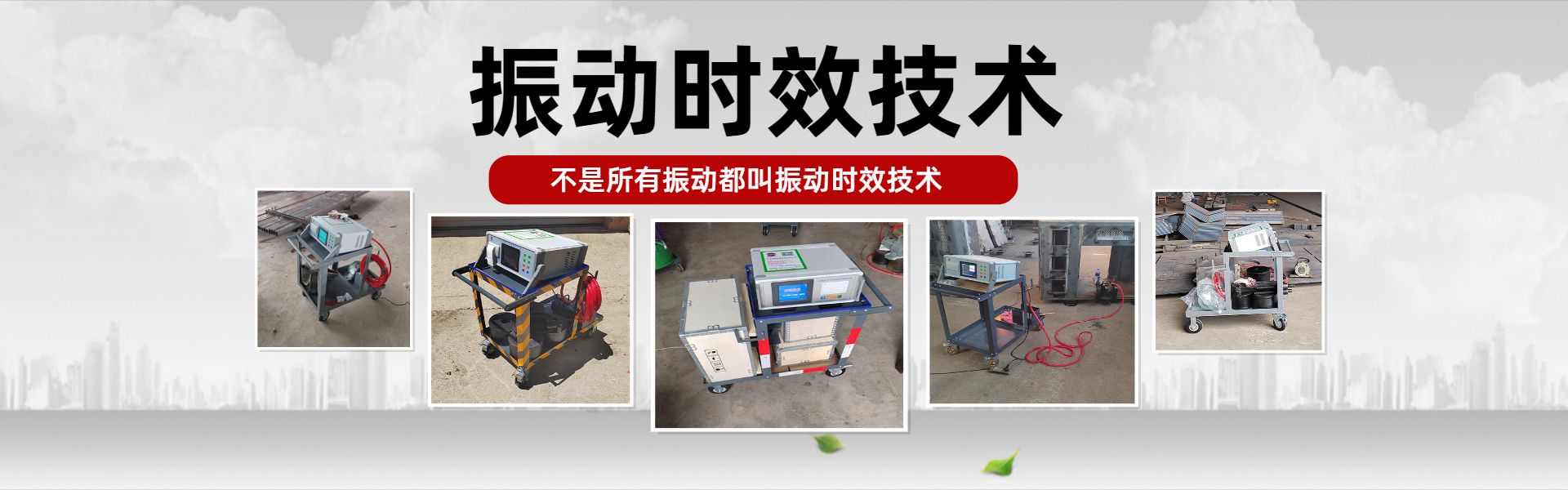
The vibration aging process involves using specialized vibration equipment to cause the workpiece to vibrate. The dynamic stress generated by the vibration is叠加 onto the residual stress already present within the workpiece, achieving stress homogenization and reducing deformation. The energy-consuming equipment is solely the vibration machinery (motor), and typically, it takes about 30 minutes to process a single workpiece, making it time-efficient and energy-saving.
The primary function of vibration aging
1. Multi-peak recognition with thorough time-sensitive processing.
2. TrueColor LCD dynamically displays various curves and data, making the timing process and trend of curve patterns clear at a glance.
3. Automatically determine the suitability of process parameters and provide revision plans, enabling human-machine dialogue.
4. The fully automatic function is now comprehensive, incorporating semi-automatic and manual capabilities.
5. The dynamic tracking feature ensures that vibration treatment is always conducted within the sub-resonance zone as required by the standard.
6. Based on advanced spectrum analysis technology, the optimal vibration frequency is selected for aging treatment according to the optimized process.
7. Utilizing pulse-width modulation technology, it boasts robust anti-interference capabilities.
8. Online printing with full Chinese display of curve annotations, making it easier to identify and judge printed curves.
9. Advanced human-machine dialogue capabilities combined with simple operation make it easy for operators to master the vibration aging process.
10. Enhanced electrical isolation for safer operation.
11. The flying car's alert system and multiple protection features eliminate the dangers associated with on-site operations.
Today's full sharing on the advantages and disadvantages of vibration aging treatment and its main functions has been covered. We hope this helps with your future use of the equipment.
