
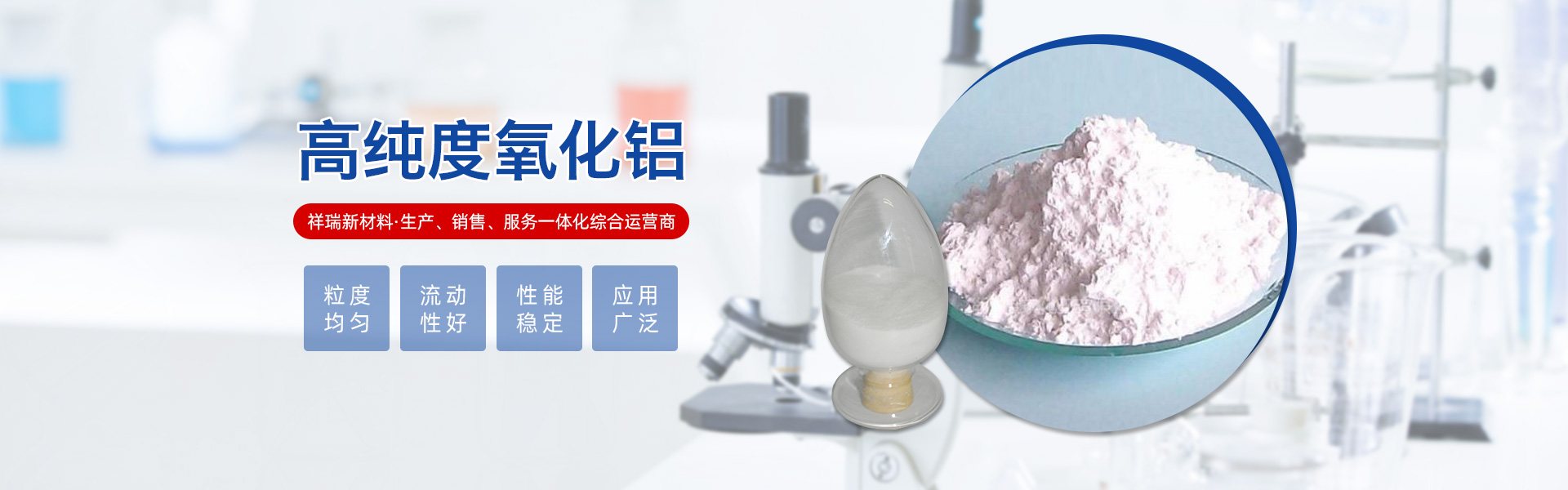
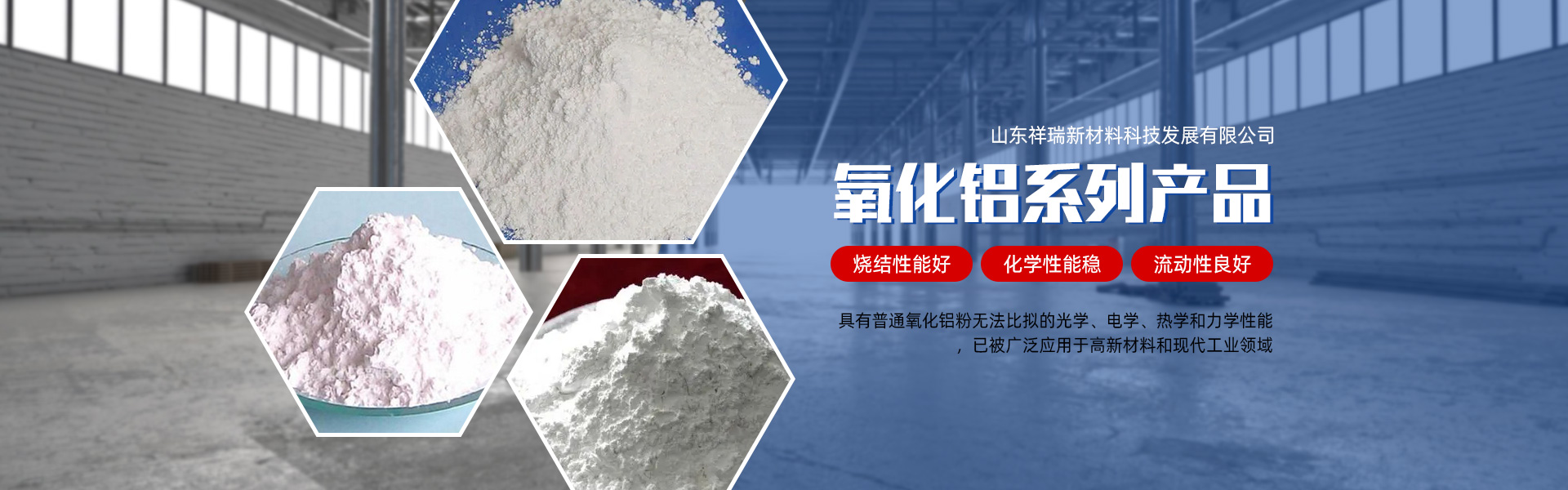

Alumina, chemically represented as Al2O3, has a molecular weight of 102. Pure alumina is a white amorphous powder, commonly known as bauxite, with a density of 3.9-4.0 g/cm³, a melting point of 2050°C, and a boiling point of 2980°C. It is insoluble in water, a amphoteric oxide, and can dissolve in inorganic acids and alkaline solutions. There are four allotropic forms: β-alumina, δ-alumina, v-alumina, and α-alumina, with α and γ being the main variants. Industrially, it can be extracted from bauxite.
In the lattice of alpha alumina, oxygen ions are arranged in a hexagonal close-packed structure, with Al3+ ions symmetrically distributed at the octahedral coordination centers formed by the oxygen ions. The lattice energy is high, resulting in high melting and boiling points. Alpha alumina is insoluble in water and acids, and is also known as aluminum oxide in the industry. It is a basic raw material for producing metallic aluminum; it is also used in the manufacture of various refractory bricks, crucibles, pipes, and high-temperature experimental equipment; it can also serve as an abrasive, flame retardant, and filler; high-purity alpha alumina is also used as a raw material for producing artificial corundum, artificial ruby, and sapphire; and it is also utilized in the production of the substrate for modern large-scale integrated circuits.
Gamma alumina is obtained by dehydrating aluminum hydroxide under low-temperature conditions of 140-150°C, also known as activated alumina or aluminum gel in the industry. Its structure features oxygen ions arranged in a face-centered cubic close-packed pattern, with Al3+ ions irregularly distributed in the octahedral and tetrahedral voids formed by the oxygen ions. Gamma alumina is insoluble in water but soluble in strong acid or alkali solutions; heating it to 1200°C converts it entirely into alpha alumina. It is a porous material with an inner surface area of hundreds of square meters per gram, boasting high activity and strong adsorption capabilities. Industrial-grade gamma alumina is typically colorless or faintly pink, cylindrical granules with good compressive strength. It is commonly used as an adsorbent, catalyst, and catalyst carrier in the oil refining and petrochemical industries; as a de-acidifying agent for transformer oil and turbine oil; in chromatographic analysis; and as a neutral, strong drying agent in laboratories, with drying capabilities comparable to phosphorus pentoxide. It can be regenerated for reuse by heating for 6-8 hours at temperatures below 175°C after use.
Currently, more than 90% of the world's alumina production is produced using the Bayer process, with most of the alumina used in the production of metallic aluminum, while less than 10% is used for other purposes.
