
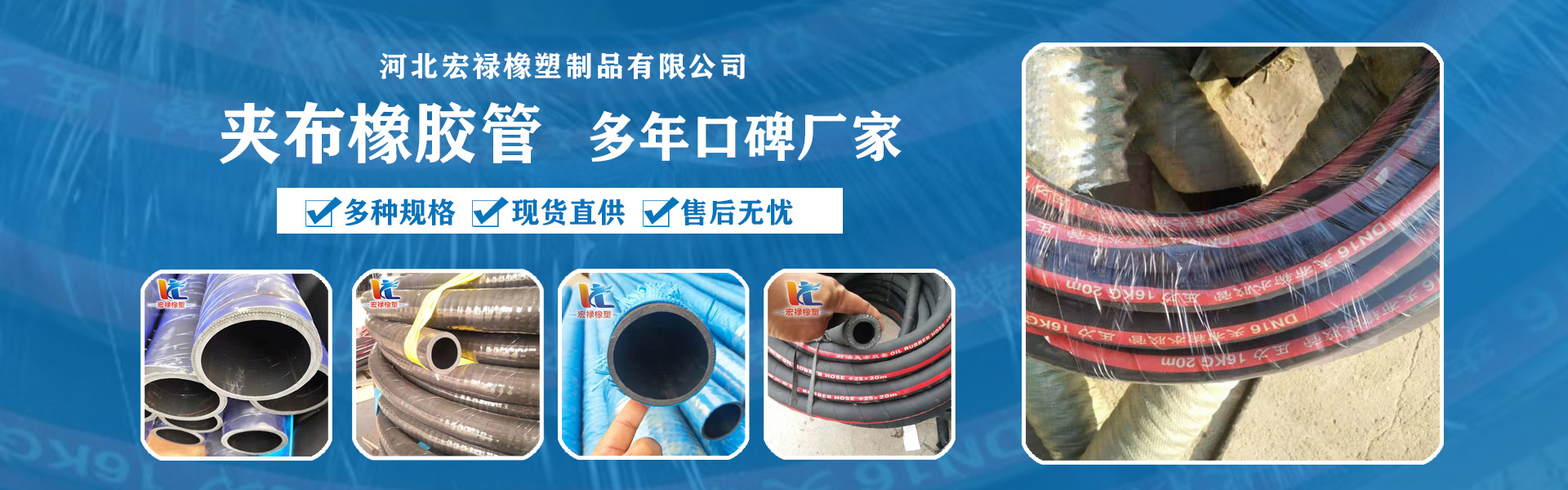


The development of the high-pressure hose industry is indeed rapid, bringing hope to many manufacturers. However, there are still some shortcomings, as evidenced by the recent discovery of frequent leaks at the joints of large-diameter high-pressure hoses. How can we prevent such leaks? This is the key topic that I will focus on today.
Whether it's large-diameter high-pressure hoses or hose connectors, leakage issues are common. For clamp-type pipe connectors, most leaks occur due to significant external force or impact, causing the clamp to loosen or the pipe end face to deform. At this point, one should inspect if the clamp is oval, if there are any defects in the cutting edge, if the pipe end is intact, and the tightness of the clamp nut, while also eliminating external forces on the pipe. For expanding-type pipe connectors, most leaks are caused by over-expansion, poor quality, or frequent disassembly, leading to deformation or cracks in the expansion. In such cases, the front end can be cut off and re-expanded. If a male-female cone top pressure seal is used, leakage is often due to damage to the two cone surfaces, which can be sanded down with abrasive sand. In some cases where "O" rings are used for sealing against the end face or outer diameter.
With the burgeoning trend of large-diameter high-pressure hoses in hydraulic systems, they are present in both the coal mining and oil industries. It is crucial to prioritize safety during these operations, making the quality of large-diameter high-pressure hoses a guarantee. Therefore, I believe manufacturers should exercise caution when producing large-diameter high-pressure hoses.
