
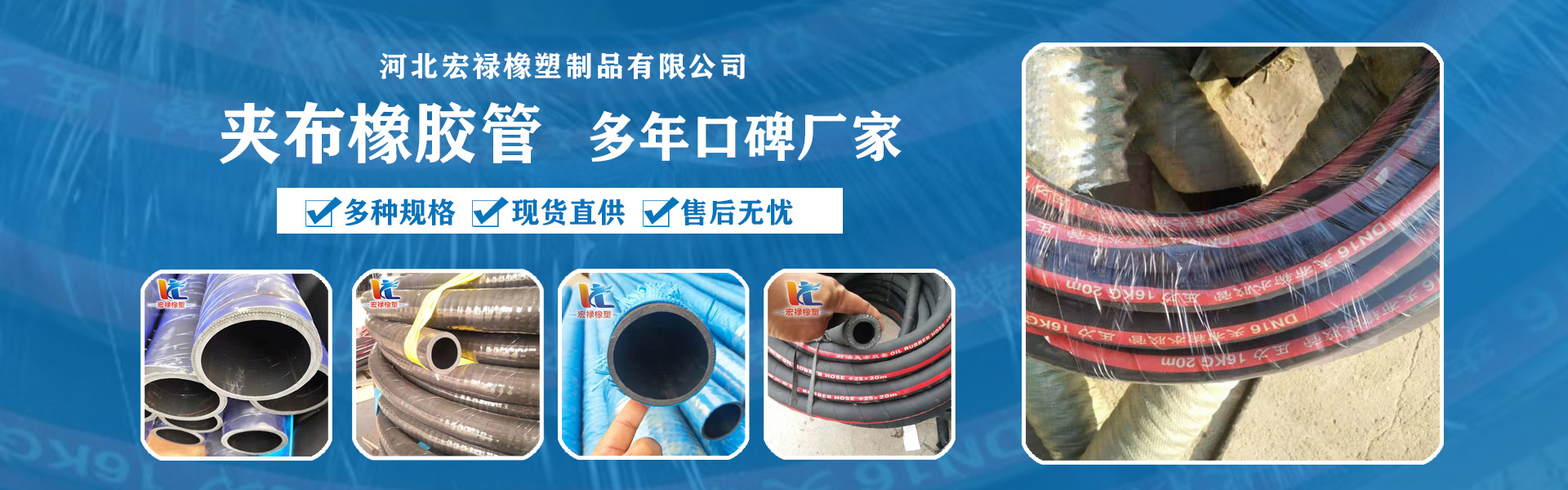


The basic processes in rubber hose production include mixing rubber, processing cord and canvas, forming the hose, and vulcanization. Different rubber hoses with various structures and skeletons require different methods for processing the skeletal layer and different forming equipment for the hoses.
Rubber hoses are produced without a skeletal layer, simply requiring the use of an extruder to shape the hose. For rubber hoses that need to have rubber sheets wrapped around the inner layer, a molding machine is used, where the rubber hose must be wrapped with a metal spiral wire before the inner rubber layer is applied. Woven and spiral-wound hoses require a weaving or winding machine, while knitted hoses necessitate the use of knitting machines.
These rubber tubes, often part of rubber products, tend to age over time, particularly at the joints with gas stoves, which are typically secured with wire. Prolonged use can lead to leaks, breaks, and loosening, posing certain safety hazards.
