
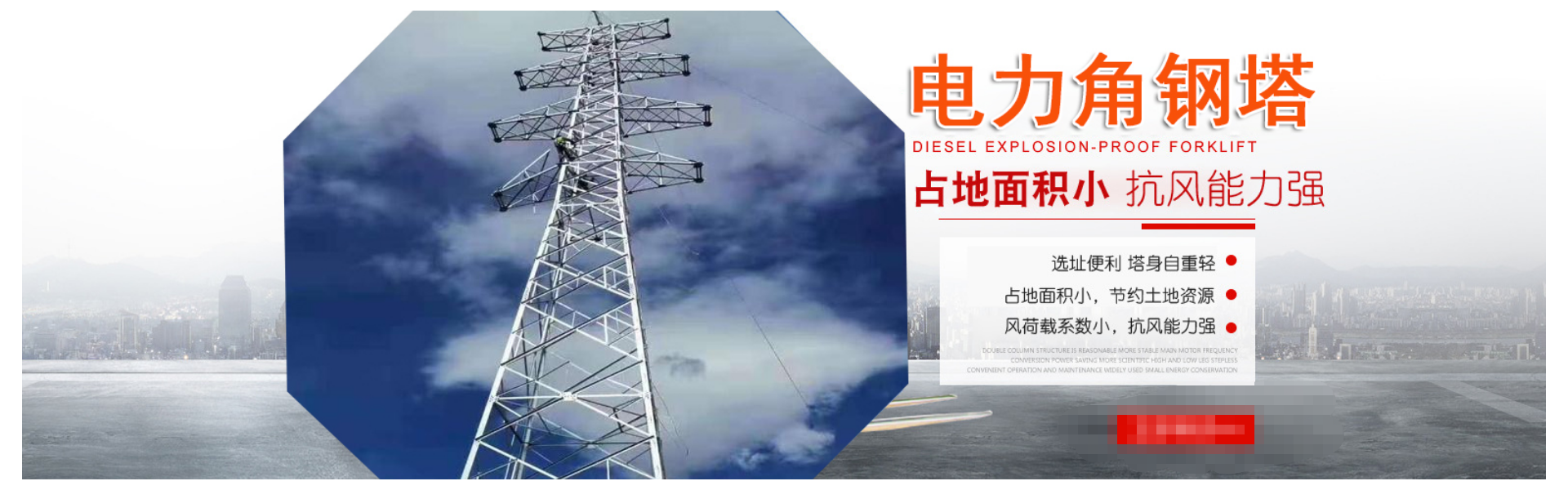
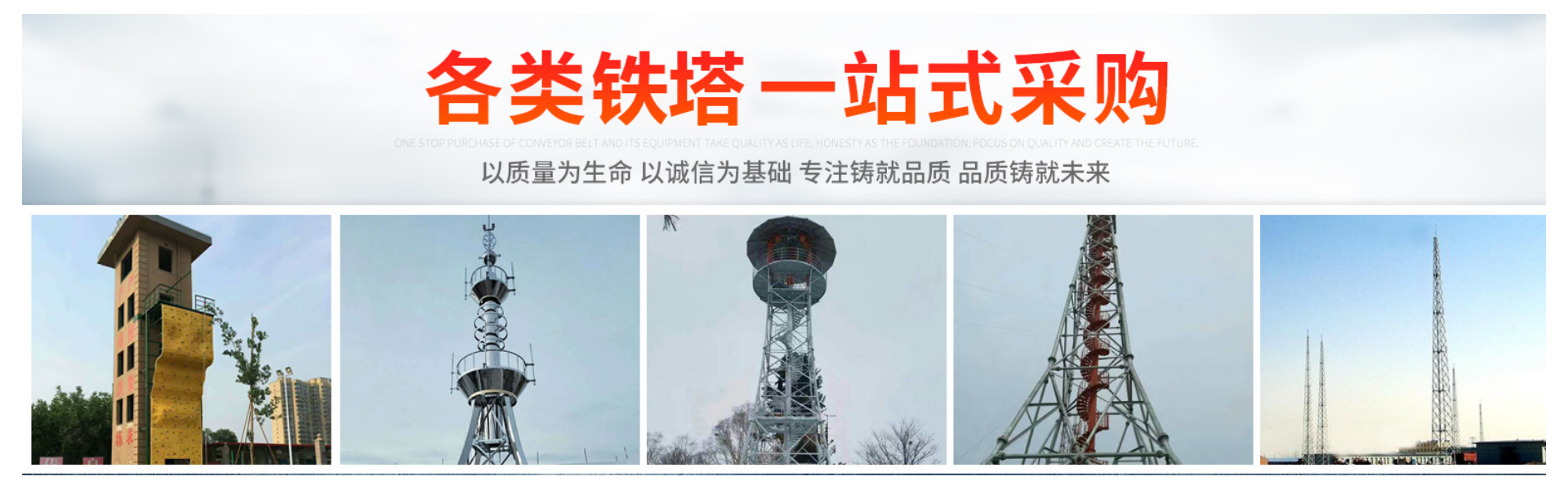
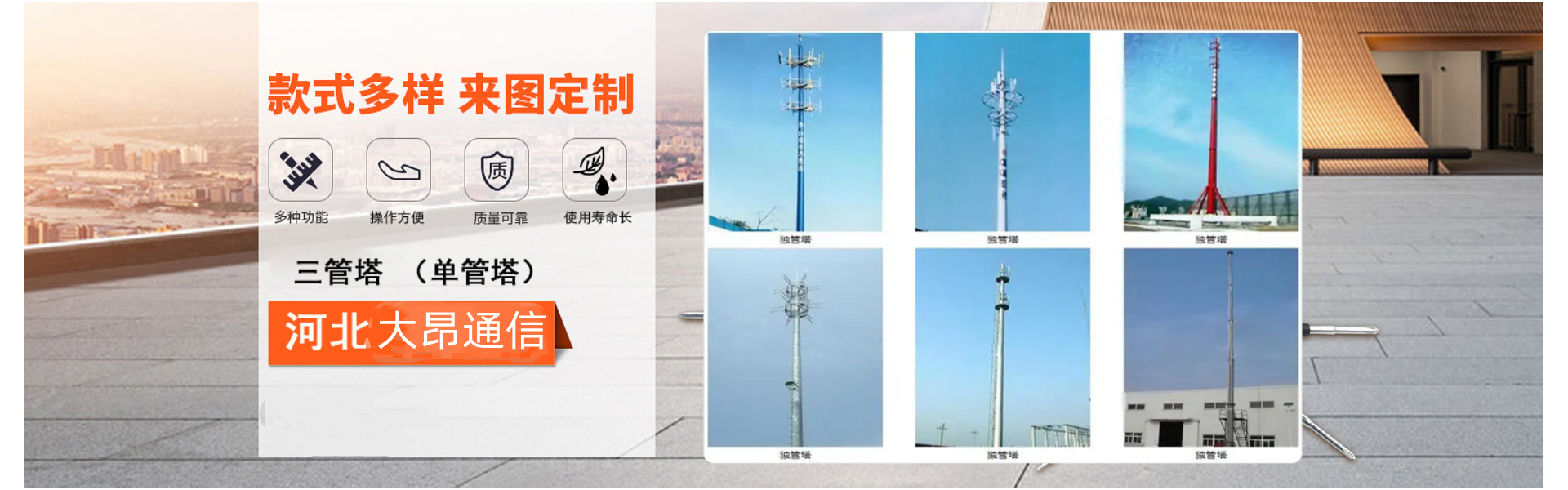

Common specifications of lightning rod towers include GFL angle steel lightning rod towers, GJT round steel lightning rod towers, GH steel pipe pole lightning rod towers, and various forms of metal towers.
The lightning rod tower's protective range must be calculated based on the rolling sphere method for determining the protection radius and range. Lightning rod towers are primarily used for lightning protection engineering in various buildings, especially in refineries, gas stations, chemical factories, coal mines, ammunition depots, and flammable and explosive workshops, where it is crucial to install lightning rod towers promptly. With climate change and increasing lightning disasters, many buildings now have lightning rod towers installed, particularly rooftop stainless steel decorative towers, which come in diverse shapes, are aesthetically pleasing, and have innovative designs. They are widely used on the roofs of various buildings, in public squares, and in the green areas of residential communities, complementing the architecture and becoming iconic decorative buildings in the city. The principle of the lightning rod tower is similar to that of lightning rods, aimed at reducing lightning disasters.
Terror Tower Usage Conditions:
1. Basic Wind Pressure: w0 = 0.4 and 0.7 KN/m²
2. Seismic fortification intensity: 8 degrees and small Tian 8 degrees area
3. Foundation bearing capacity: 100 and 200 KN/m²
4. Ice Thickness: ≤10mm 5. Verticality: ≤1/1000
Design Criteria for Lightning Rod Tower
1. Standard for Lightning Protection Design of Buildings (GB50057-94)
2. Tall Structure Design Code (GBJ135-90)
3. Steel Structure Design Code (GB50017-2003)
4. Tower Mast Steel Structure Construction and Acceptance Procedures (CECS 80:2006)
News Center Co., Ltd.
