



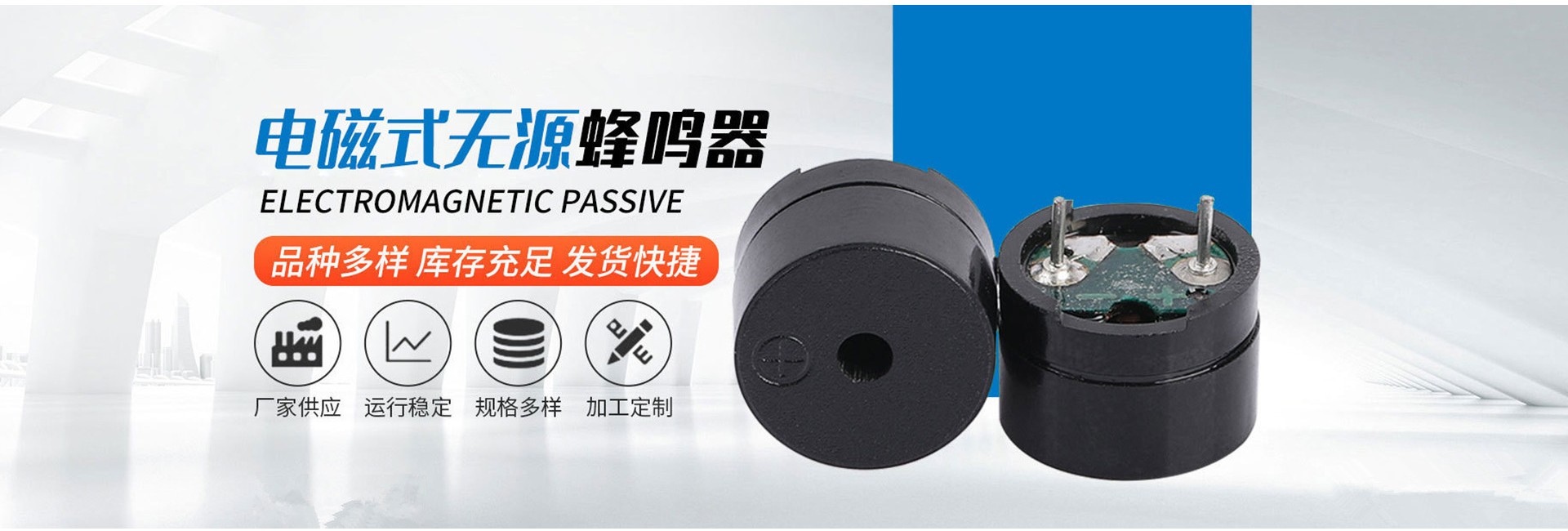





Oscillating buzzers are driven by direct current (DC) voltage and do not require an AC signal for operation. They can be activated simply by outputting the drive level through the drive port and amplifying the drive current through a transistor, causing the buzzer to emit sound. It's straightforward, so we will not elaborate further on the oscillating buzzer. Instead, let's explain the operation of the driven buzzer, which requires a 1/2 duty cycle square wave signal for activation. There are two methods for microcontroller-driven driven buzzers: direct PWM output drive and using I/O port level toggling to generate the drive waveform. Direct PWM output drive utilizes the PWM output port's ability to output a square wave directly to drive the buzzer. Within the microcontroller's software settings, there are several system registers for configuring PWM output, such as duty cycle and period. By setting these registers, a waveform with the required frequency for the buzzer can be generated. Once the PWM output is enabled, the PWM output port will produce a square wave at that frequency, which can then be used to drive the buzzer. For example, to drive a 2000Hz buzzer, knowing the period is 500μs, the PWM period is set to 500μs, and the duty cycle level to 250μs, a 2000Hz square wave is produced. This waveform can then drive the buzzer with the help of a transistor. The method of using I/O port level toggling to generate the drive waveform is more complex and requires a timer for timing. By toggling the I/O port levels at the appropriate intervals, a waveform with the required frequency for the buzzer is produced. For instance, to drive a 2500Hz buzzer, knowing the period is 400μs, the buzzer's I/O port needs to toggle the level every 200μs to create a 2500Hz, 1/2 duty cycle square wave. This wave can then be amplified by a transistor to drive the buzzer.
新闻中心
