






 通过中商114认证

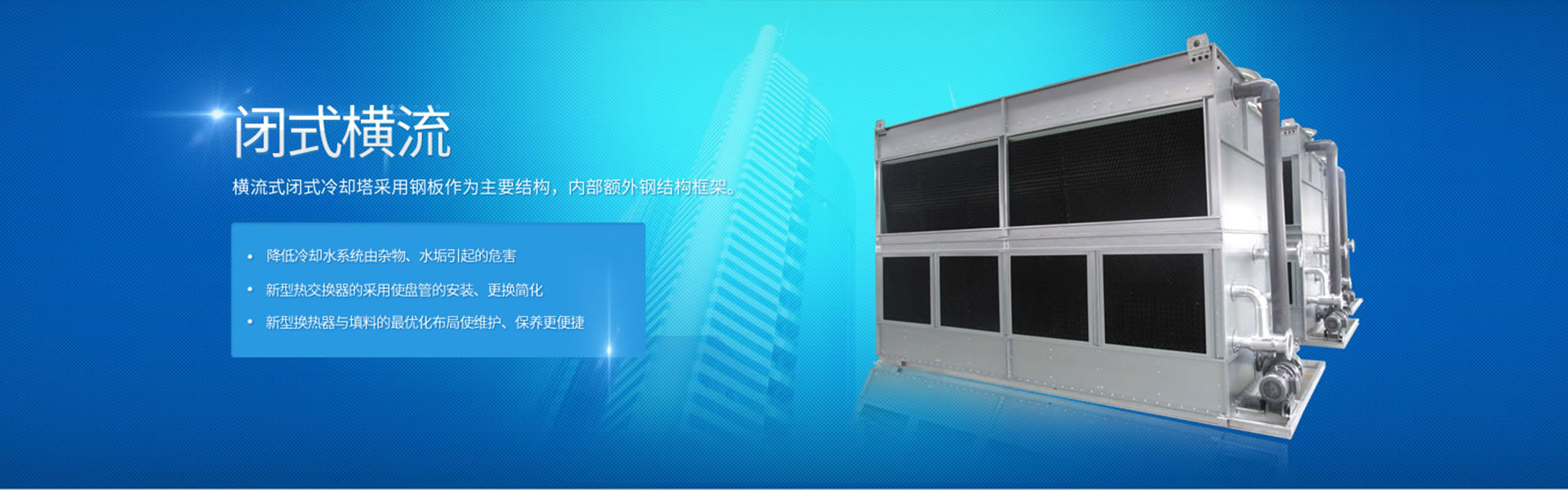
A closed cooling tower is a device that places a tube-type heat exchanger inside the tower, where the heat exchange between the circulating cooling water and the spray water achieves cooling effects through the flow of air. In recent years, closed cooling towers have been increasingly applied in industries such as power electronics, machinery processing, and air conditioning systems.
Many closed-loop cooling tower units are designed based on summer meteorological conditions, with the wet bulb temperature typically ranging from 20°C to 35°C. However, during the transitional season and winter, the outdoor wet bulb temperature can drop below 15°C. Using cooling tower technical parameters relevant to summer operation may result in the unit not achieving the expected cooling effect or consuming excessive energy, which is不利于 energy conservation.
By reviewing relevant literature, it is known that, in addition to the cooling tower's own operating parameters, changes in outdoor wet bulb temperature, dry bulb temperature, relative humidity, and other parameters will also affect the cooling tower's thermal performance, deviating from its designed operating conditions.
1) During the transitional months of March and November, the cooling tower's performance deviates from the designed conditions by approximately 5.5 to 7%. In April, May, and October, the deviation is around 6 to 7%. The cooling capacity of the tower can be increased by either increasing the wind speed at the intake or boosting the inflow of cooling water; however, this will correspondingly lead to negative impacts such as a decrease in energy efficiency and an increase in the outlet temperature.
2) During the transitional seasons (March and November), the cooling tower can adjust the inflow of water and the inlet wind speed based on different primary evaluation criteria, allowing the tower to meet the refrigeration requirements. In the transition months (April, May, October), due to relatively higher outdoor temperatures, the cost of adjusting the cooling tower performance through variable wind speed is high, and the economic efficiency of operating the cooling tower under such weather conditions is relatively poor.
3) When the cooling demand during the transitional season is low, it is recommended to prioritize variable water volume regulation. The energy consumption coefficients corresponding to variable water volume are approximately 5% higher than those under variable air velocity.
4) When the outdoor wet bulb temperature is at a relatively low level during the transitional season, such as 6°C or 8°C, it is recommended to implement variable air volume regulation. This will increase the cooling tower's relative cooling capacity while ensuring its relative energy consumption coefficient remains above the expected level.
