


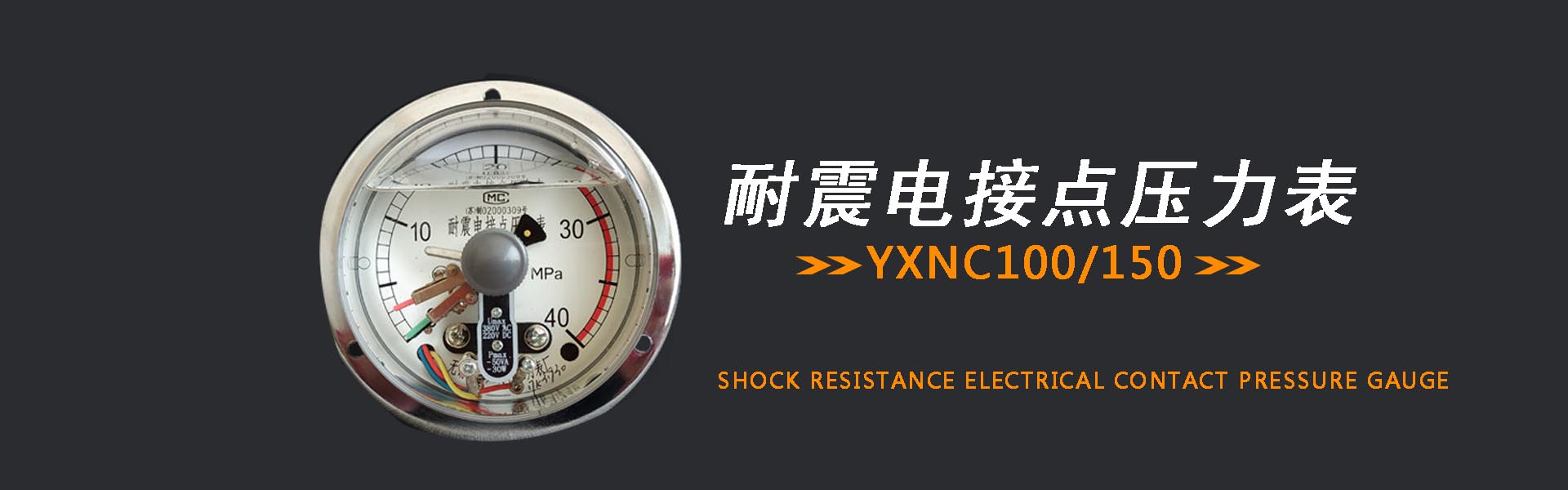


The shock-resistant pressure gauge is composed of a pressure guide system (including joints, bellows, throttle screws, etc.), a gear drive mechanism, a display unit, and a housing. The housing of the shock-resistant pressure gauge is airtight in structure. Filling the housing with damping fluid can resist vibrations in the working environment and reduce the impact of pulsations in the medium pressure.
Vibration-resistant pressure gauge pressure indication:
Pressure: The total pressure acting on the surface area of the container due to the lateral medium is calledPressure, represented by the symbol pi. Used for measurement.Pressure GaugePressure Gauge
Atmospheric Pressure: The pressure formed by the weight of the air column at the Earth's surface is known as atmospheric pressure. It varies with geographic latitude, altitude, and weather conditions, and is measured with a barometer, represented by the symbol pd.
Table Pressure: Typically, pressure measuring instruments are in the atmosphere, so the pressure values they measure are equal toThe difference between pressure and atmospheric pressure is known as gauge pressure, denoted by the symbol pb.
Vacuum Level: WhenWhen the pressure is less than atmospheric pressure, the gauge pressure is negative.Vacuum degree, represented by the symbol pz.
The Shockproof Pressure Gauge is suitable for environments with intense vibration, capable of withstanding pulsations, shocks, and sudden unloadings of the medium. The gauge provides a stable and clear indication. It is widely used in the oil, chemical, machinery, and power industries for measuring pressures of non-corrosive media to copper and copper alloys. That concludes the introduction to the shockproof pressure gauge. We hope this information has been helpful in your understanding.
News Center Co., Ltd.
