

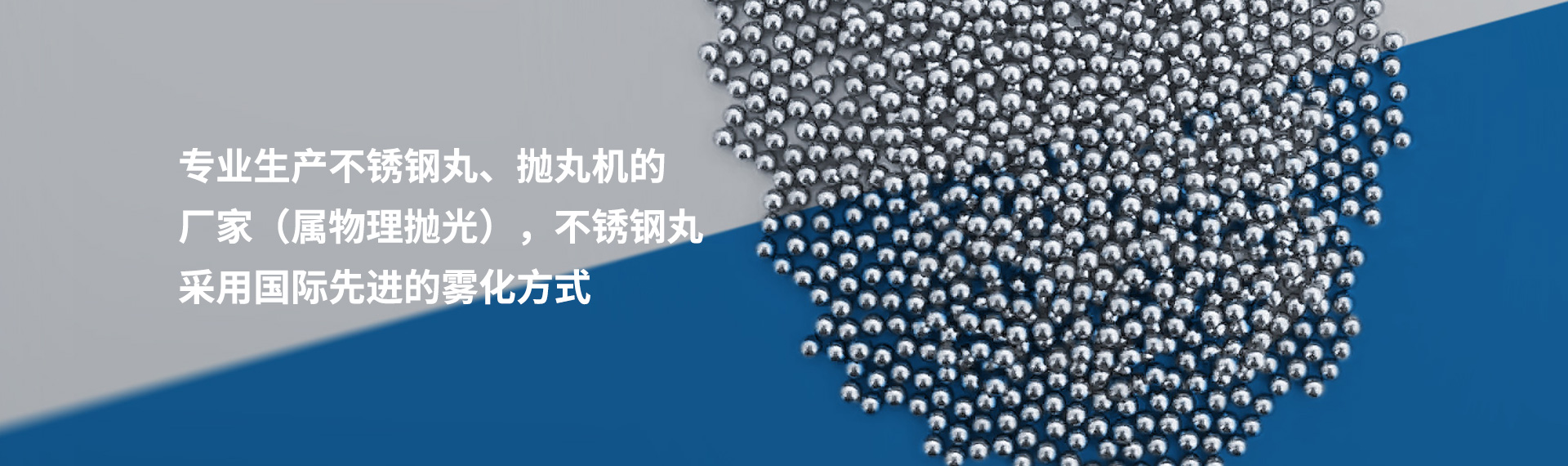

Stainless steel ball material is made of stainless steel, with the ball being its shape, which is divided into two types: cylindrical and spherical. Stainless steel balls are also known as stainless steel steel balls, circular wire cut balls, stainless steel shot, and stainless steel wire cut balls. The production methods of stainless steel balls can be divided into two major categories. The currently recognized method is to obtain cast stainless steel balls through smelting and atomization cooling. The other method is to obtain stainless steel balls by laser cutting stainless steel wire and rounding them. Common materials for stainless steel balls include 202 stainless steel, 304 stainless steel, 304L stainless steel, 316 stainless steel, 316L stainless steel, 410 stainless steel, and 430 stainless steel, among which 304 stainless steel is widely used, and the corrosion resistance of 304L stainless steel and 316L stainless steel is better than that of other stainless steel materials.
Stainless steel shots are extensively used for surface blasting, sandblasting, shot peening, casting, reinforcement, matte finishing, calibration, paint stripping, and descaling in various fields such as rare metal castings, stainless steel products, aluminum profiles, hardware tools, and natural marble. They highlight the inherent nature of metal materials, resulting in a smooth, corrosion-resistant surface with a matte finish, and have superior wear resistance compared to common cast steel balls. These shots are widely employed for surface shot peening solutions in diverse applications such as rare metal castings, stainless steel products, aluminum profiles, hardware tools, and natural marble, enhancing the metallic appearance and ensuring a smooth, corrosion-free surface with a matte look. Made from high-quality stainless steel wire, they feature good material, uniform particle size, and consistent strength, ensuring longevity and high shot peening quality. The edge design is钝化处理后的 ring-like, minimizing wear on machinery.
Stainless steel slag is a granular byproduct of stainless steel materials. It can replace a variety of mineral sands and non-metallic abrasive materials, such as alumina, corundum, quartz sand, and glass beads. Primarily used for the surface removal of rare metals and stainless steel products, as well as for the removal of paint and oxidation scales, stainless steel slag can achieve a uniform surface roughness, making it particularly suitable for pre-coating surface preparation. Compared to non-metallic abrasive materials, stainless steel slag can generate lower operating costs and significantly reduce dust emissions, thereby decreasing ash removal costs and improving the working environment.
