




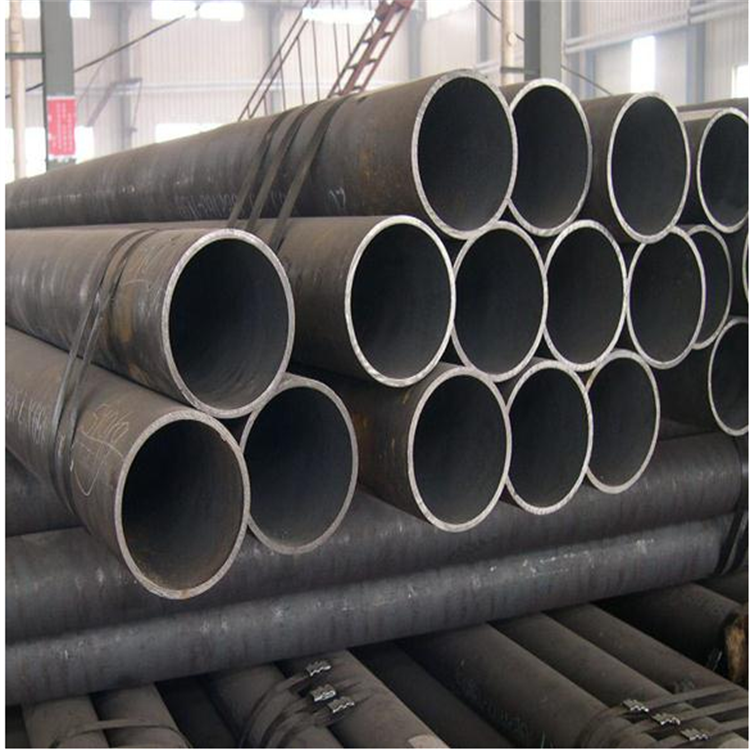
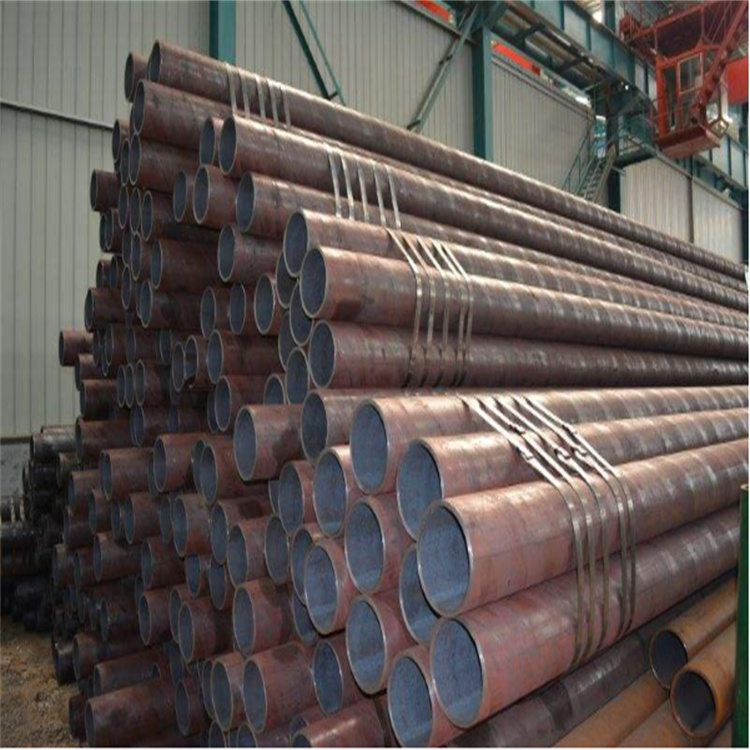
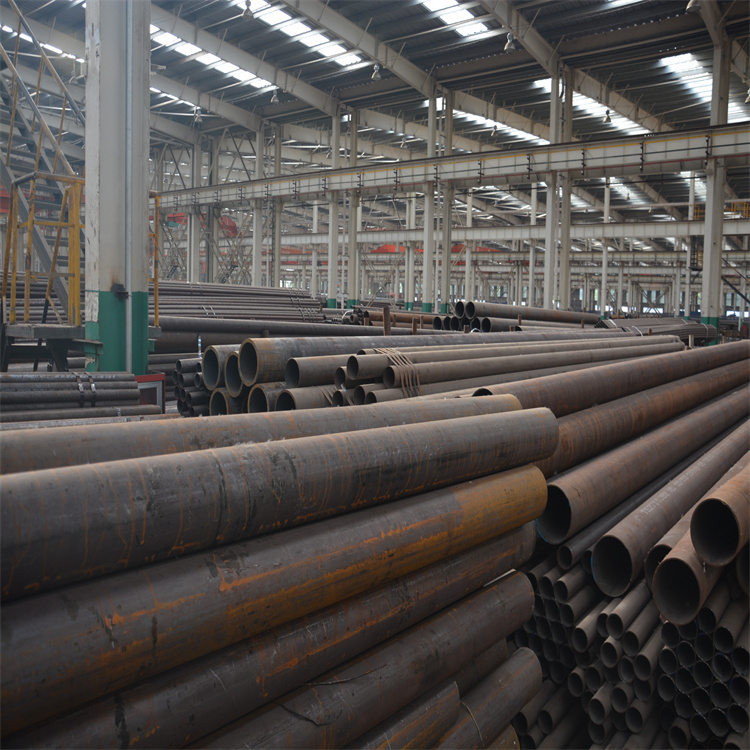
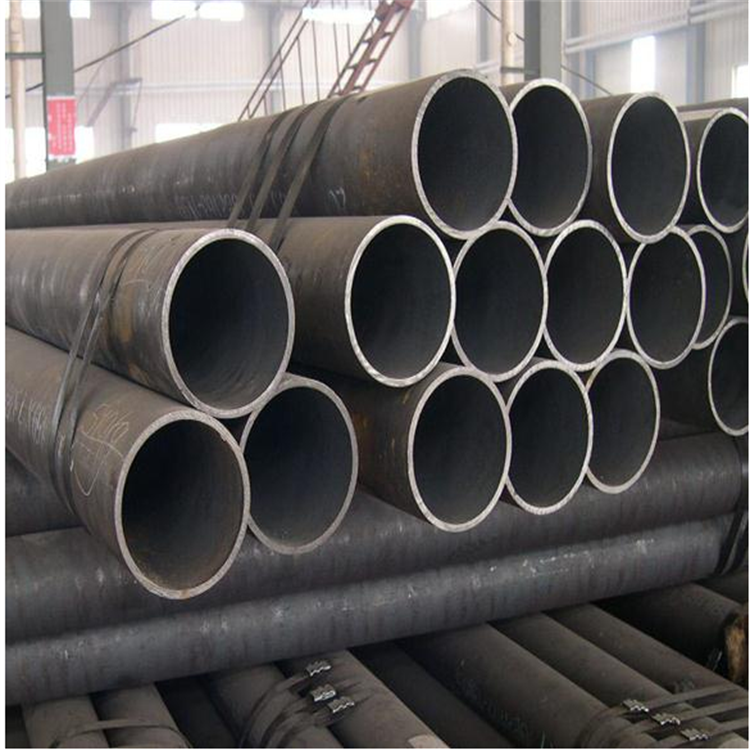
Seamless steel pipeProduction Manufacturing Model.
One, the production and manufacturing of hot-rolled seamless pipes generally employ fully automatic rolling mill units. Surface defects of solid billets are inspected and eliminated, length requirements are trimmed, and safety is ensured on the end face where the billet may crack. It is then sent to the heat treatment furnace for heating and cracking is guaranteed on the cutting machine. As the hole is continuously rotated forward, under the action of the hot rolled strip steel and the top edge, the internal cavity of the billet slowly forms, known as a rough tube. A second cold rolling is performed on the fully automatic rolling mill. Subsequently, the entire billet is processed to achieve the specified wall thickness and diameter by the sizing machine. Using a rotating rolling mill unit to produce hot-rolled seamless pipes is a good production method.
For smaller diameter and higher-quality seamless tubes, opt for cold rolling, cold drawing, or a combination of both. Cold rolling is typically performed on twin-roll extrusion machines, where seamless steel tubes are cold rolled in a ring die with a variable cross-section circular slot and a stationary conical top edge. Cold drawing is usually conducted on a multi-chain or double-chain machine with a capacity of 0.5~100T.
The extrusion method involves placing a warm, tube billet into a sealed extrusion cylinder, where it is worked with an extrusion die, forcing the extrudate out through a smaller die hole. This invention is capable of producing small-diameter seamless steel tubes.
Two, Main Applications.
The main applications of seamless tubes are extremely versatile. General seamless tubes are cold rolled from carbon steel, low-alloy tool steel, or alloy tool steel, with high production volume, primarily used as pipeline or structural components for conveying liquids.
Supplies are categorized into three types based on primary use: a) by composition and physical properties; b) by physical properties; c) by compression test. Seamless tubes supplied at the a and b grades must also undergo a compression test when subjected to liquid pressure.
Professional applications mainly include seamless pipes for heating furnaces, geological environments, crude oil, and more.
Three, Types.
Seamless pipes can be categorized into various types based on different production methods, such as hot-rolled, cold-rolled, cold drawn, and extruded pipes.
Based on the classification of appearance design, there are circular tubes, special-shaped tubes, etc. In addition to rectangular square tubes, there are also stainless steel round tubes, semi-circular tubes, triangular tubes, hexagonal tubes, keel-shaped tubes, plum blossom-shaped tubes, and more.
According to different materials, it is categorized into carbon structural pipes, alloy structural steel pipes, carbon structural pipes, aluminum alloy structural pipes, stainless steel structural pipes, and more.
