


- AllProduct Category
-
Thermal Oil Steam Generator
Heat Transfer Oil Evaporator
Air-to-Air Heat Exchanger
Air-to-Water Heat Exchanger
Heat Pipe Evaporator







详情描述
Thermal oil heated water steam generator
Overview
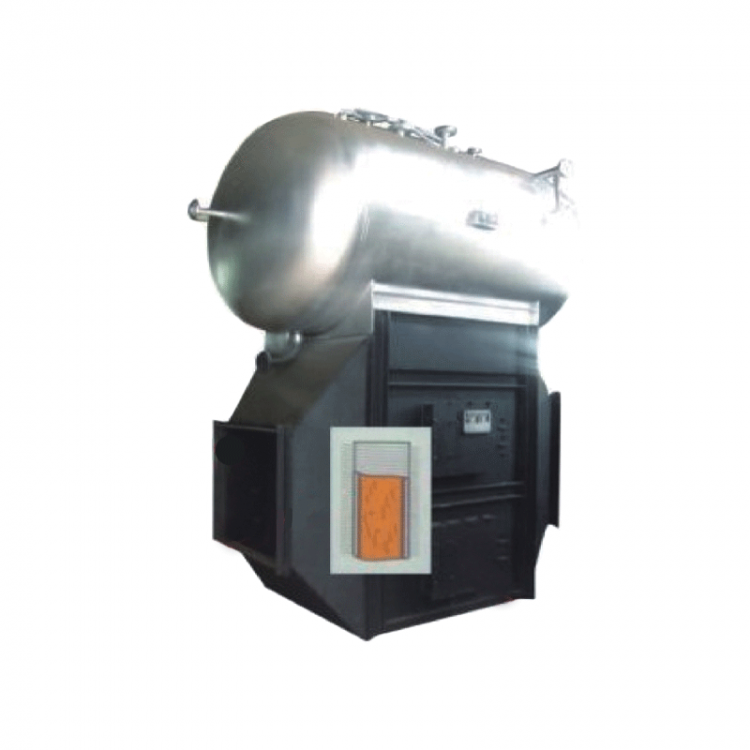
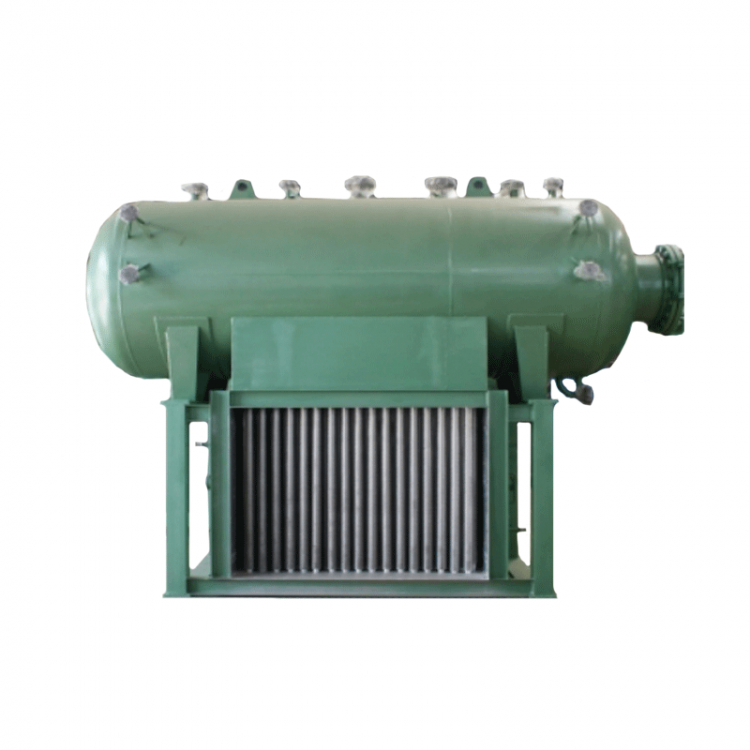
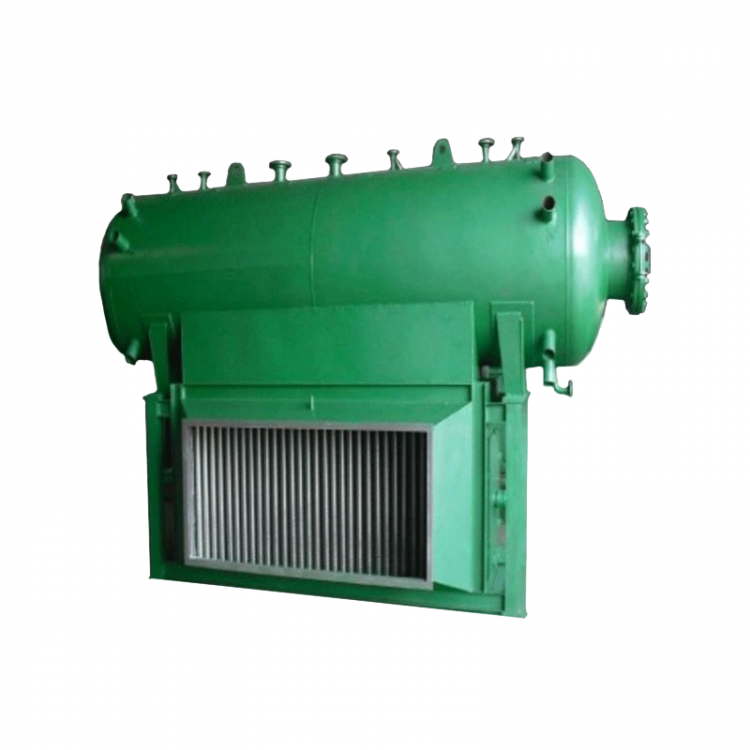
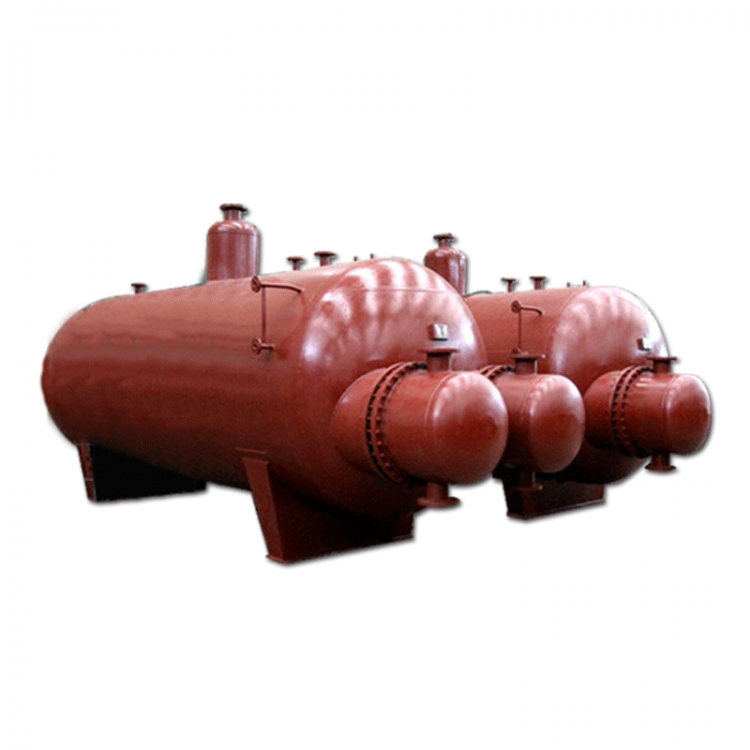
This steam generator uses high-temperature thermal oil as the heating source, employing a coil tube bundle or a serpentine tube bundle as the heating element. As the high-temperature thermal oil flows through the tubes, it releases heat to heat the water inside the boiler, generating saturated steam, thereby achieving the purpose of supplying gas externally.
Product Features
This product utilizes thermal oil heating and can continuously or intermittently produce steam according to actual operating conditions. It is a non-direct flame heating equipment, offering greater safety, reliability, and cost savings compared to steam boilers. By utilizing its residual heat, it also saves energy and reduces expenses.
The environmental friendliness of the thermal oil heating water vapor generator is superior to that of steam boilers, with no smoke or dust emissions and no ash or slag produced. The auxiliary equipment is just a single feed pump, making its operation and maintenance extremely simple and very convenient to use.
This product features a compact structure, making installation, cleaning, and maintenance extremely convenient.
Due to the compatibility of the heat-conducting oil with our company's organic thermal carrier heating furnace, it not only provides users with a high-temperature medium but also supplies the necessary steam and hot water to meet the demands of production and daily life.
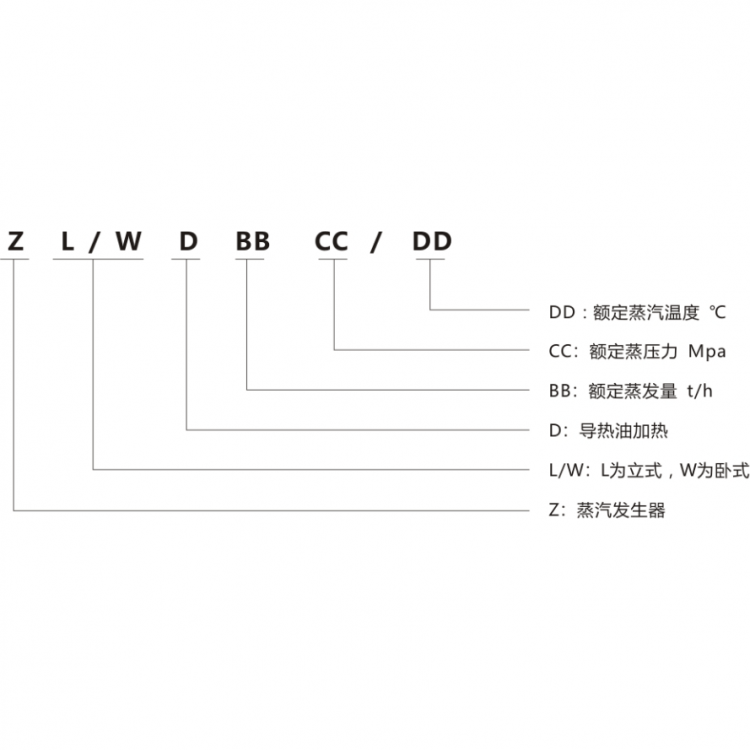
Model Description
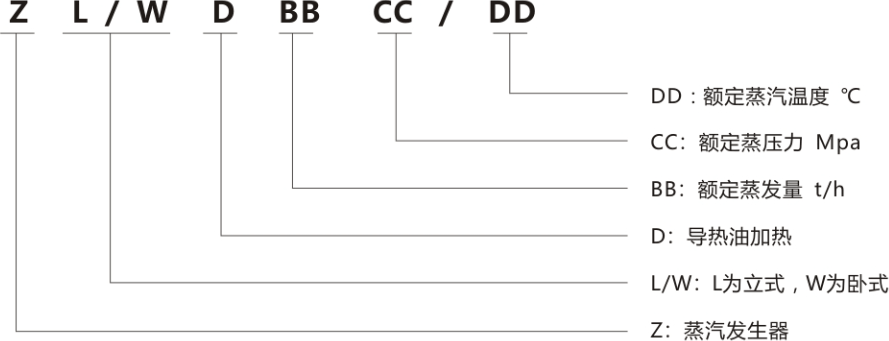
Specs
0.3 to 12 tons/h, vertical and horizontal.
Working Principle
The heat-conducting oil heating water steam generator consists of two parts: the tube bundle and the drum. The tubes within the tube bundle contain the heat-conducting oil medium, while the drum serves as the steam generator section.
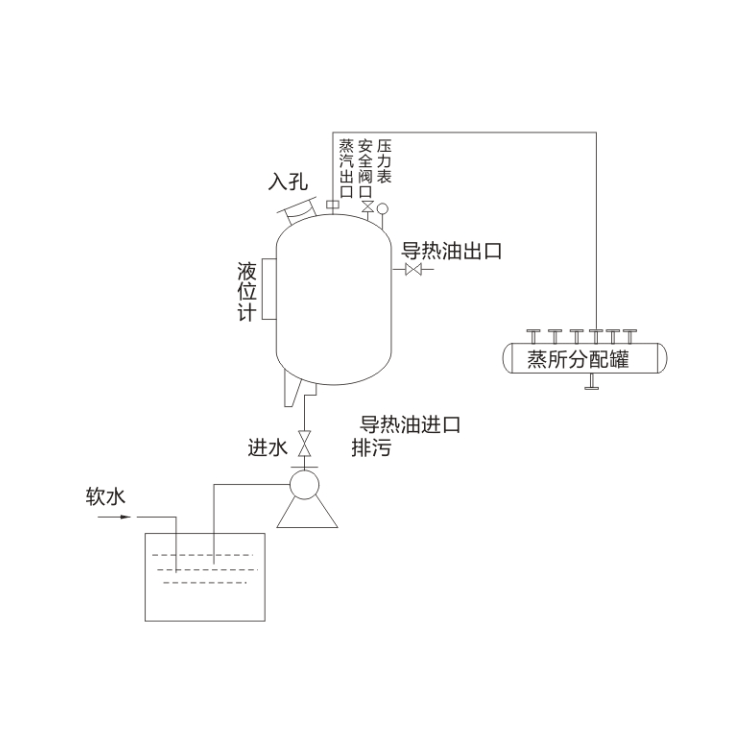
High-temperature thermal oil is circulated through the steam generator's tubes by a circulating thermal oil pump (or directly heated by a heat carrier furnace). Under specific conditions of circulation flow rate, inlet temperature, inlet pressure, and thermal oil flow velocity, the heat of the thermal oil inside is exchanged with the water outside through the tube walls, thereby heating the water in the boiler drum and producing saturated steam. With continuous circulation within the tubes, the product can continuously supply saturated steam externally.
The drum is filled with potable water or preheated water, which enters from the bottom of the steam generator and is heated by the high-temperature heat transfer oil inside the tubes. The water is heated by natural convection, produces continuous boiling on the heat transfer surface, generates steam at a certain pressure, and is separated from water through a separator, becoming saturated dry steam. The steam is then provided for production and domestic use through a steam distribution tank.
Because this steam generator uses a thermal oil furnace for heating, there are no flames inside the equipment, so there is no need to worry about the boiler drum from drying out during use. Additionally, the steam generator does not come into contact with high-temperature flue gases or corrosive gases. The working conditions of the heat transfer and pressure elements inside the equipment are excellent.
Technical Standards
National Quality and Technical Supervision Administration's 1999 Edition of "Safety Supervision Regulations for Pressure Vessels"
2. GB/T 17410-1998 "Organic Heat Carrier Furnace"
3. GB150-1998 "Steel Pressure Vessels"
4. GB151-1998 "Shell and Tube Heat Exchangers"
5. JB4730-94 Non-Destructive Testing of Pressure Vessels
6. JB2536-80 "Paint, Packaging Boxes, and Transportation for Pressure Vessels"
Operation Principle
One, Continuity
Pressure Pump Water Injections: Before injecting water, first open the drain valve to allow water to flow from the pressure pump through the H44T-10 swing check valve and then through the J41T16 type loading check valve into the generator. The water level must be above the heat exchange tube bundle by 50mm before closing the drain valve.
Subsequently, open the valve of the heat-conducting oil output from the heating furnace. The hot oil enters from the lower import, exits from the upper position, and returns to the heating furnace. The heat output is controlled by the heat-conducting oil inlet valve.
After the steam is generated, it is sent to the steam distribution tank via the steam outlet for distribution to various steam-consuming equipment, while also serving as a buffer.
During operation, attention should be paid to level control. Mark the normal level on the level gauge, with the normal level being ±50mm around 50mm above the tube bundle (see enclosed drawing for details). During continuous operation, the normal level must be maintained. The steam generator equipment should not arbitrarily open the manhole, drain valve, ignite, or strike during operation or at the beginning of shutdown. After shutdown, the steam inside the equipment must be vented to atmospheric pressure to avoid danger. A condensate drainage line must be set up for the steam distribution tank and routed to a safe and reliable location.
Pressure Pump Injection
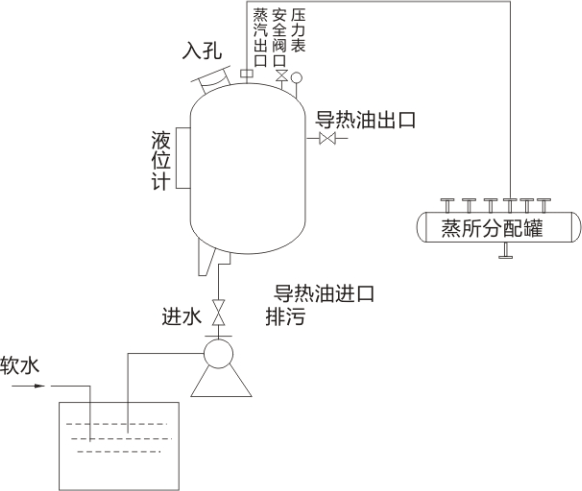
Two: Gapped Operation
1. Open the vent valve, inject tap water directly into the generator, and maintain the liquid level at the normal level as indicated. Close the water intake valve and the vent valve.
Subsequently, open the valve of the thermal oil output from the heating furnace, following the same sequence as the continuous operation.
After steam is produced, the liquid level will drop.
If a secondary intermittent operation is required, repeat the above process.
Points to note in operation are the same as in continuous operation.
2. In a rush for steam supply in the morning, it is permissible to lower the incoming water level (see random illustration for details).
询价单


