


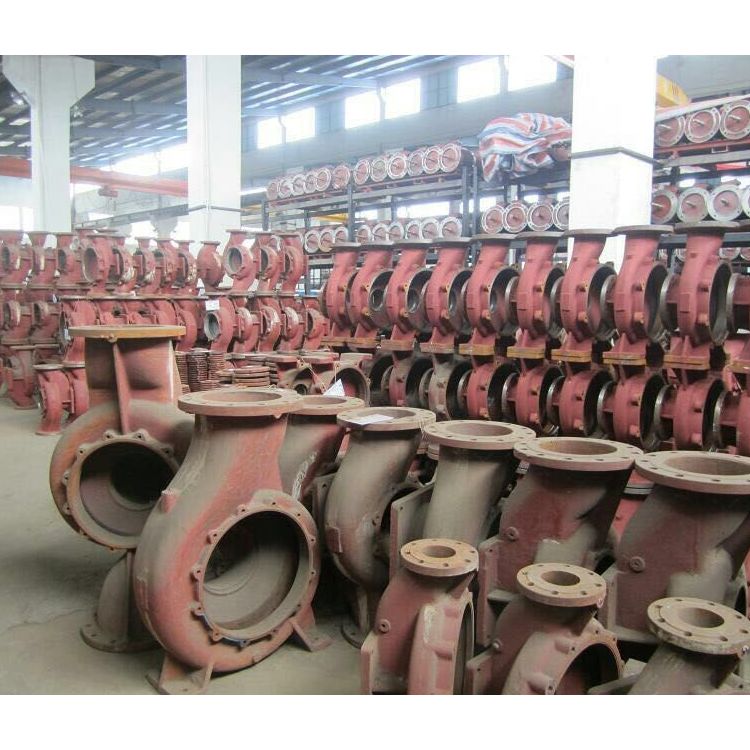


Additionally, the surface grooves on the sealing face may cause gaps when the ends are in contact, leading to the failure of the sealing elements. The main reasons include:
① Impurities in the liquid medium, with fine, hard particles, slide at high speed into the sealing surface, scratching the end face and rendering it ineffective.
②Axial misalignment in pump drive components causes the pump end face to vibrate and rub with each revolution, resulting in eccentric movement of the dynamic ring, leading to end face vaporization and overheating wear.
③ Frequent occurrences of hydraulic properties of the liquid medium cause pump unit vibration, leading to misalignment and failure of the sealing surfaces.
During the 12th Five-Year Plan period, nearly 430 billion yuan was invested in the construction planning of urban and rural wastewater treatment and recycling facilities. This included 427.1 billion yuan for facility construction investments, and 27 billion yuan for facility capacity investments. Among the facility construction investments, 244.3 billion yuan was for improving and constructing new pipelines, 104 billion yuan for expanding urban and rural wastewater treatment capacity, 13.7 billion yuan for upgrading and renovating urban and rural wastewater treatment plants, 34.7 billion yuan for sludge treatment and disposal facility construction, and 30.4 billion yuan for the construction of reclaimed water utilization facilities.
The "2013-2017 China Centrifugal Pump Industry Production, Sales, Demand Forecast and Transformation and Upgrading Analysis Report" shows that in wastewater treatment equipment investments, pumps account for about 15% of the total machinery investment. Based on this ratio, during the "12th Five-Year Plan" period, the demand for pump products in the urban wastewater treatment field is expected to reach around 60 billion yuan. There will also be nearly 40 billion yuan in market demand over the next three years, benefiting the centrifugal pump industry. ForwardNet predicts that by 2020, China's centrifugal pump import value will reach $5 billion, surpassing the United States' $4.9 billion to become the world's largest centrifugal pump importing country.
Huquan Pump Industry is a modern enterprise that integrates the development, production, design, and consultation of general pump series, including vertical and horizontal multi-stage centrifugal pumps, ISG pipeline centrifugal pumps, GDL multi-stage pipeline pumps, ZWP/ZXP self-priming chemical pumps, light multi-stage centrifugal pumps, chemical pumps, multi-stage pumps, self-priming pumps, submersible pumps, diaphragm pumps, and screw pumps. Centered around high-quality technical standards and substantial investments, Huquan Pump Industry continually aligns with global industry leaders and actively introduces and adopts both software and hardware to enhance new product R&D and high-quality testing. The company has initially formed a distinctive technical core system. In today's globalized world, Huquan people deeply understand their mission to consistently provide products and services to customers. Our products are widely used in the fields of oil, chemicals, electricity, light industry and textiles, food equipment, HVAC, environmental protection building automation, metallurgy and steelmaking, and city construction, particularly demonstrating exceptional performance in large-scale domestic projects such as Wuyang Iron and Steel, Jining Steel Group, Anyang Iron and Steel,梅花Group, Daqing Petrochemical, Tianjin Petrochemical, China National Petroleum Corporation, and Shengli Oilfield, which have been highly recognized by a wide range of users.
China still has a significant gap in the centrifugal pump product sector, with ample room for import substitution. Currently, China's centrifugal pump industry is in an opportune period of transformation and upgrading, with local governments actively supporting the industry's upgrade and transformation to enhance its core competitiveness.
2. Application: Widely used in water supply systems, fire protection systems, and HVAC systems in municipal pipeline networks, subway projects, waterworks, pressure-free equipment, chemical factories, power plants, coal mines, and sewage treatment stations.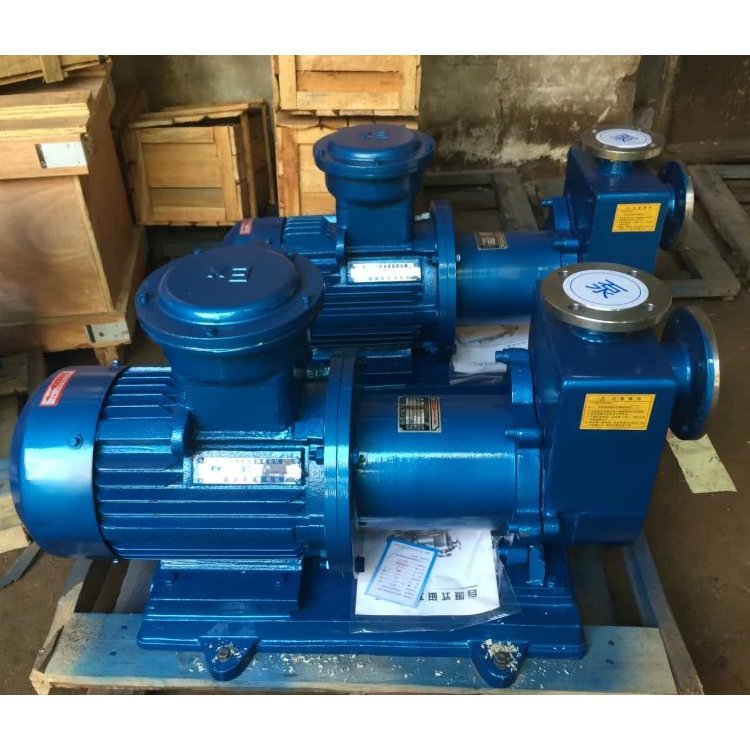
Utilize
The pump trial operation should comply with the following requirements:
The motor's rotation should be the same as the pump's rotation.
② Determine the rotation direction of pipeline pumps and coaxial pumps.
③ All fixed connection parts should be free from loosening, and the specifications and quantities of lubricants added to the lubricated parts should comply with the equipment's technical documents.
④ Areas requiring pre-lubrication should be pre-lubricated as per regulations.
All indicators and safety devices should be sensitive, accurate, and reliable.
⑥ The wheel should operate smoothly without any abnormal phenomena.
Before trial operation, the high-temperature pump should be preheated, with the temperature rising evenly, not exceeding 50℃ per hour; the temperature difference between the pump body surface and the process pipeline with the working medium inlet should not exceed 40℃.
⑧ Set up a connection device to eliminate the temperature rise effect, and install an bypass connection device to provide a cooling water source.
Operation of centrifugal pumps should be mindful of the following points:
Do not operate without water, do not adjust the suction to reduce the discharge volume, and do not operate at excessively low flow rates.
② During operation, completely prevent leakage in the packing box; when replacing the packing box, use new packing material.
Ensure adequate flushing water flow for mechanical seals; prohibit excessive water flow for water-cooled bearings.
Do not use too much lubricant.
⑤ Conduct inspections at recommended intervals. Establish operating logs including operating hours, adjustments and replacements of packing, addition of lubricants, and other maintenance measures with corresponding time records. Regular measurements and documentation should be done for the centrifugal pump's suction and discharge pressures, flow rate, input power, temperature of the washing liquid and bearings, as well as vibration levels.
⑥ The main unit of a centrifugal pump relies on atmospheric pressure to pump water from a lower to a higher level, but atmospheric pressure can only support a column of water up to about 10.3 meters. Therefore, the main unit of a centrifugal pump cannot operate if it is 12 meters above the water surface.
Vibration Analysis
1. Impeller imbalance and misalignment are significant issues in centrifugal pumps, accounting for about 80% of vibration problems. Causes of impeller imbalance include uneven material distribution, substandard part structure, and the resulting misalignment between the impeller's mass centerline and the shaft centerline, leading to eccentricity and imbalance. Correcting impeller imbalance can be divided into static and dynamic balancing, also known as single-sided and double-sided balancing, respectively. The difference lies in the correction method: single-sided balancing corrects balance on one surface, while double-sided balancing corrects on two surfaces.
2. Installation reasons: loose foundation bolts, improper level adjustment. Before the centrifugal pump operates, check for loose foundation bolts and ensure the pump is installed horizontally. These issues can also cause vibration during operation.
3. Foreign objects inside the centrifugal pump. Before operation, inspect the pump interior, as long-term use may lead to foreign objects like aquatic weeds within the pump.
4. Internal cavitation erosion holes in the centrifugal pump due to prolonged use.
5. Unreasonable design aspects in centrifugal pumps, such as part size issues. However, this is relatively rare. All centrifugal pumps undergo multiple inspections in the workshop before leaving to ensure high pass rates.
Key Performance Characteristics
One. Centrifugal Pump Power and Efficiency
Pumps, during operation, experience various losses that reduce their actual (effective) head and flow compared to theoretical values, while the input power to the pump is higher than the theoretical value.
Efficiency of the H______ pump, which is the energy obtained by a unit volume of liquid from the pump in the gravitational field, measured in meters.
Actual flow rate of the pump, m³/s
ρ Liquid Density, kg/m³
Net pump power, i.e., the mechanical energy obtained by the fluid from the pump per unit time, W.
Effective power can be expressed as Ne = QHρg
The power input to the centrifugal pump from the motor is known as the pump's shaft power, represented by N. The ratio of the effective power to the shaft power is defined as the pump's total efficiency η, i.e.
η=Ne/N
II. In Pump Loss
Various losses within a centrifugal pump include:
(1) Volume Loss
Losses caused by pump leakage are known as volumetric losses. The ratio of the pump's power without volumetric losses to the power with volumetric losses is referred to as the pump's volumetric efficiency ηv.
(2) Hydraulic Loss
As fluid flows through the impeller and pump casing, changes in velocity and direction, along with the presence of a reverse pressure gradient, cause recirculation and vortices, resulting in energy loss, which is referred to as hydraulic loss. The hydraulic efficiency ηh of a centrifugal pump at rated flow is generally between 0.8 and 0.9.
(3) Mechanical Loss
The loss caused by friction between the high-speed rotating impeller and the liquid, as well as mechanical friction at the bearings and shaft seals, is called mechanical loss. The mechanical efficiency ηM is generally between 0.96 and 0.99.
Note:
1. The main performance parameters on the centrifugal pump label are values obtained under efficiency conditions with 20°C clear water as the test medium.
2. Understand and master the meanings and application conditions of each curve in the characteristic curve, pay attention to the range of the efficiency zone (η=92%ηmax) and its uses.
4 Advantages Edit
Compact structure
Wide range of flow and head range
Suitable for lightly corrosive liquids
Multiple control options
Even flow, smooth operation, low vibration. No special vibration reduction foundation required.
Low equipment installation, maintenance, and repair costs.
5 Technical Parameters Editing
Traffic
Head Pump Capacity
Temperature Range for Pumped Liquids
System Pressure
Axial Power
6 Application Scope
Liquid Transfer
Cooling System
Industrial Cleaning System
Aquaculture farm
Fertilization System
Measurement System
Industrial Equipment
