



Based on the fundamental content of the Screw Encyclopedia, we have conducted further research and revisions. We have delved deeper into the topic of what an expansion screw (expansion bolt) is, leading to the following conclusions:
Introduction to Expansion Bolts:
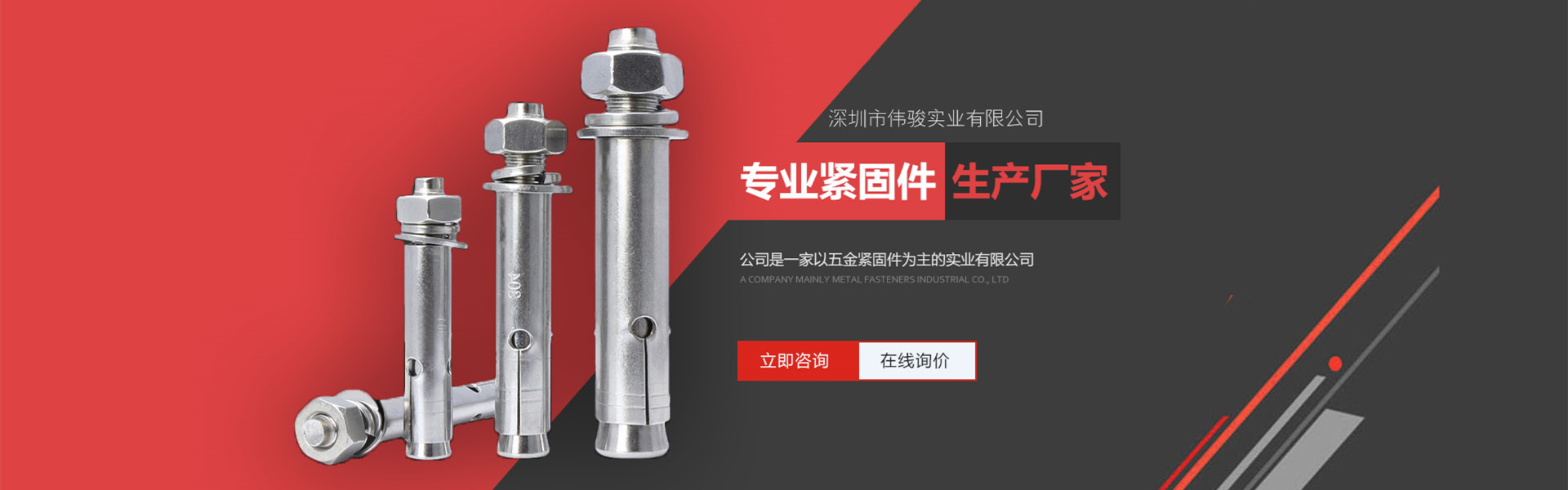
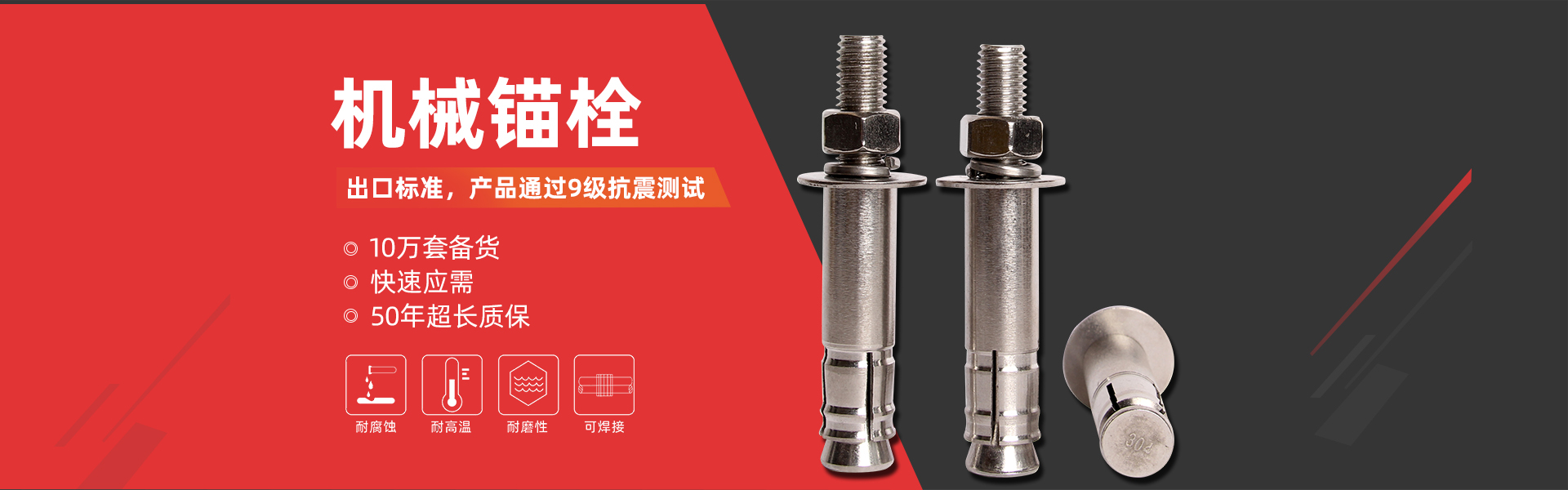
Expanding bolts, also known as expansion bolts, are typically made of metal. While plastic expanding bolts exist, they are not commonly used. Consequently, we often assume they are metal. The primary method of securing expanding bolts involves utilizing their wedge-shaped slope, which generates frictional gripping force. The bolt features a threaded end and a conical end. The expanding bolt is wrapped in a metal sleeve, with several slits along the half of the cylindrical sleeve. These are inserted into pre-drilled holes in the wall, then the nut is tightened. The nut pulls the bolt out, forcing the cone into the metal sleeve, causing it to expand and securely fasten to the wall. However, this method is not entirely reliable, as it may become loose with significant vibration. For safety reasons, do not use it to install ceiling fans or similar items, as it could pose a hazard if not secured properly. In terms of product categories, expanding bolts fall under the categories of fasteners or standard components.
Expansion Screws, Expansion Bolt, Expansion Anchor Bolt
Material: Q235, 45 steel, various stainless steels; Categories: Fasteners or Standard Parts
Grade: 4.8, 8.8, 10.9 levels; Material Categories: Austenitic A1, A2, A4
Section II: Product Material of the Expansion Bolt
Material and Grade Classification of Stainless Steel Expansion Bolts
The grades of stainless steel expansion bolts are categorized as 45, 50, 60, 70, and 80.
Materials are primarily categorized into Austenitic A1, A2, and A4.
Martensite and Ferrite C1, C2, C4
The representation is, for example, A2-70.
- indicates the material and strength grade of the bolt.
② Material and Grade Classification of Standard Carbon Steel Expansion Bolts
Standard carbon steel expansion bolts are categorized as: Grade 4.8, Grade 5.8, Grade 6.8, Grade 8.8, Grade 10.9, Grade 12.9, Grade 14.9, and so on.
The nominal tensile strength is typically the number before the decimal point multiplied by 100, with the unit being MPa. The number after the decimal point represents the yield strength ratio.
Grade 4.6 expansion bolts, meaning:
Expanding bolt material achieves a nominal tensile strength of 400MPa.
The tensile yield ratio of the expansion bolt material is 0.6.
The nominal yield strength of the expansion bolt material reaches 400×0.6=240MPa grade.
The meaning of the performance grade of expansion bolts is an internationally recognized standard. Expansion bolts with the same performance grade, regardless of their material or origin, exhibit identical performance. Designers can simply select the performance grade.
(1) Common bolt materials include Q215, Q235, 25 and 45 steel grades. For important or special-purpose threaded fasteners, alloy steels with higher mechanical properties such as 15Cr, 20Cr, 40Cr, 15MnVB, and 30CrMrSi can be selected.
(2) Allowable Stress: The allowable stress of threaded fasteners is related to factors such as the nature of the load (static or variable), whether the connection is properly tightened, the need for control of preload, and the material and structural dimensions of the threaded fastener components.
