


UPS Uninterruptible Power Supply Malfunction, Try These Repair Methods
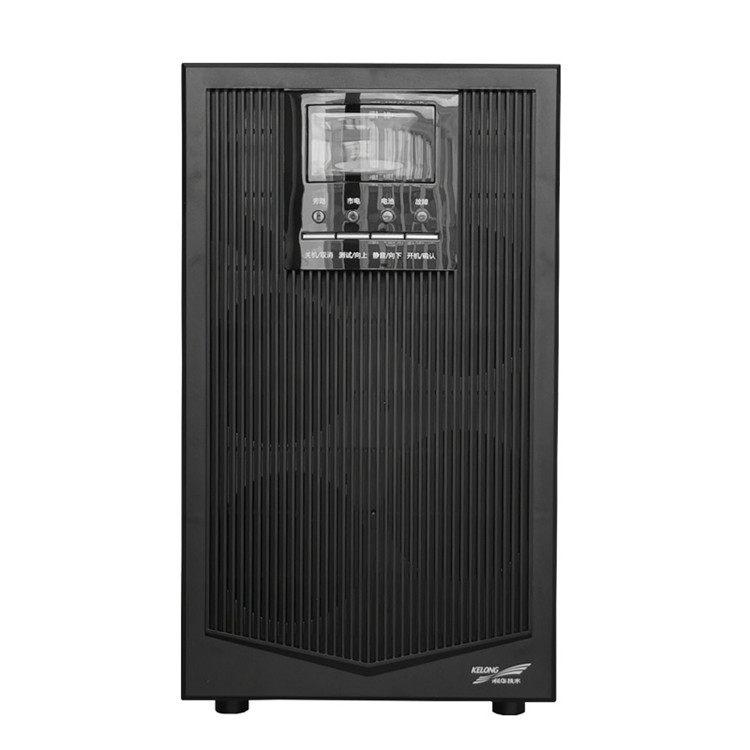
The UPS uninterruptible power supply is a constant-voltage and constant-frequency power supply equipment that contains energy storage devices and is mainly composed of inverters. It is an essential peripheral device for systems that cannot be powered down, such as communication equipment and computer systems.
Its purpose is to provide timely power supply to computers and other equipment in the event of an external power outage, to prevent communication interruptions, loss of critical data, and hardware damage.
However, while using the UPS power supply to protect other objects, the UPS power supply itself often experiences some malfunctions.
If there is a failure in the UPS power supply, it will be unable to provide protective functions for our loads.
Therefore, we need to master the analysis and troubleshooting methods for common UPS power supply failures.
UPS Uninterruptible Power Supply Maintenance Method 1:
Firstly, checked the internal battery voltage, normal; no visibly damaged components on the circuit board.
Four MJ4502 inverters show no anomalies, and the Vcc power supply to all integrated circuits is normal after booting up, yet there are no signs of inversion. Therefore, it is suspected that a certain IC is damaged.
Due to the difficulty in locating the maintenance drawings and documents for this machine, it was challenging to identify the fault using the on-road measurement and judgment method. Therefore, a replacement method was adopted to locate the fault.
The first replacement is the control core of the inverter circuit, Icl(sG3524), which was directly substituted with the KA3524 produced by Samsung.
The inverter operated normally immediately after startup, confirming that the fault was due to a damaged SG3524. After replacing the Icl, the issue was resolved.
UPS不间断电源维修方法二: UPS Uninterruptible Power Supply Maintenance Method Two:
Upon startup, there is no response within the device, and the device shows no reaction when connected to the city power supply. This fault phenomenon indicates that the low-voltage circuit inside the device (primarily the control circuit) is unable to function. A common cause is an abnormal power supply to the low-voltage circuit within the device.
This irregular power supply is usually caused by a damaged internal battery (or over-discharge) or a blown low-voltage fuse (20-40A blade fuse).
UPS Uninterruptible Power Supply Maintenance Method Three:
Indications suggest a non-inverting or inverting indicator light is flashing.
We must delve into the detailed inspection of the inverter's output and the conversion circuit of the inverter output.
This relies on one's accumulated experience in maintenance work and practical operational skills.
In actual damaged components, electric measurement is effective and easy to pinpoint the fault points.
UPS Uninterruptible Power Supply Maintenance Method Four:
The in-car low-voltage fuse is normal, and the battery terminals only show less than 5V of voltage.
Replaced with a new battery, plugged the power cord into the household outlet, and the machine operated normally immediately after turning it on.
Remove the new battery while it is still connected (be cautious of safety) and replace it with the original electrical battery.
After about 10 hours of charging, the device is functioning normally, proving that the original battery was not damaged.
The so-called "damage" was actually a result of the natural discharge due to long-term disuse.
UPS Uninterruptible Power Supply Maintenance Method Five:
To determine the quality of a battery, you can judge by measuring whether there is 12V voltage at both ends of the battery (for models that use two or two sets of batteries in series, each battery should be 12V).
If the voltage at both ends of the battery is very low or there is no voltage, it indicates that the battery has an issue (note that sometimes it's a pseudo-damage caused by over-discharge).
