



The emergence of green plant screens not only transforms the appearance of construction sites but also further enhances the urban aesthetics. Rows of green vertical plant walls, adorned with flowers, stand tall in the city streets, bringing greenery to the construction site through wall greening. This not only increases the city's green area but also achieves the principles of safe, civilized, and green construction without occupying green space, striving for precision and landscaping.
Fencing and hoarding are commonly seen in municipal projects, used in construction sites, residential communities, schools, and industrial parks, serving to protect pedestrian safety and ensure privacy. With the popularity of vertical greening technology, municipal projects have begun to widely employ landscaping with plants, which occupies no space and can increase the city's green area, enhancing the urban appearance.
Green Wall Screening, also known as Green Screening or Greening Screening, utilizes the properties of greenery to create scenery in design. Modular carriers allow for easy planting on facades, with low maintenance costs and excellent scenery effects.
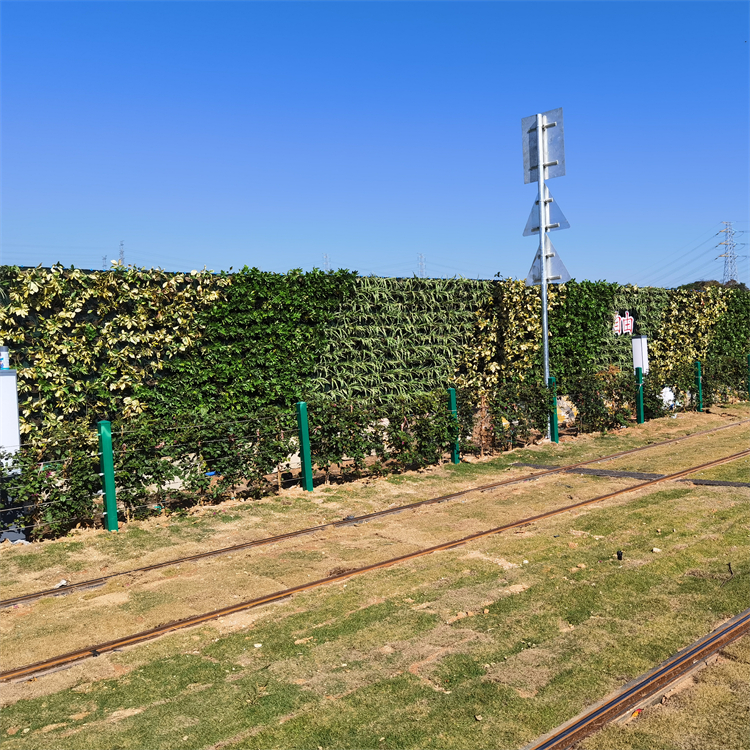
Greenery Fencing Structure Selection:
1. Enhance road barrier aesthetics with rapid construction, as immediate results are expected upon completion. Therefore, modular vertical greening is generally recommended, rather than climbing or sack-style options.
2. Modular vertical greening, using modular planting containers to cultivate plants, and by reasonably joining variously shaped individual containers, they are fixed on steel frames to achieve a quick three-dimensional landscape effect.

Greenery Retaining Wall Plant Selection:
In selecting plants, it's necessary to consider factors such as container styles, climatic characteristics in the north and south, and the application scenarios. Preferably choose native plants.
Due to the characteristics of the facade conditions, plants generally require shallow-rootedness, tolerance to barrenness, drought resistance, waterlogging resistance, and high adaptability to sunlight. Typically, flowering or ornamental leaf herbaceous plants, vines, and shrubs are used to create a layered, colorful, three-dimensional effect.
Common vertical greenery plants include climbing vines such as morning glory, ivy, flowering periwinkle, and variegated ivy; perennial herbaceous plants like sorrel root, coleus, begonia, and cherry blossoms; and small shrubs like boxwood, Japanese privet, sassafras, rose, azalea, and camellia.

The role of vertical greening on road barriers:
1. Decorative construction site hoarding, enhancing road landscaping.
2. Reduce land occupation, increase urban green space, and improve the city environment.
3. Soundproofing, dust reduction, noise reduction, and oxygenation; purify the air, enhance air quality.
4. Protective fence to minimize the wall's exposure to sun, rain, wind, frost, and snow.
5. Glare reduction, fatigue relief while driving, mood regulation, and emotional stability.
6. Alleviate urban heat island effect, regulate rainfall runoff, conserve energy and reduce emissions, and improve local climate conditions.
Guangzhou Meiju Green Wall Co., Ltd. boasts a team of industry experts with years of experience. Not only can they independently undertake project construction, but they also excel in coordinating and collaborating on comprehensive projects. With their wealth of experience and customer-centric service, they think like their clients and fulfill their needs.
