

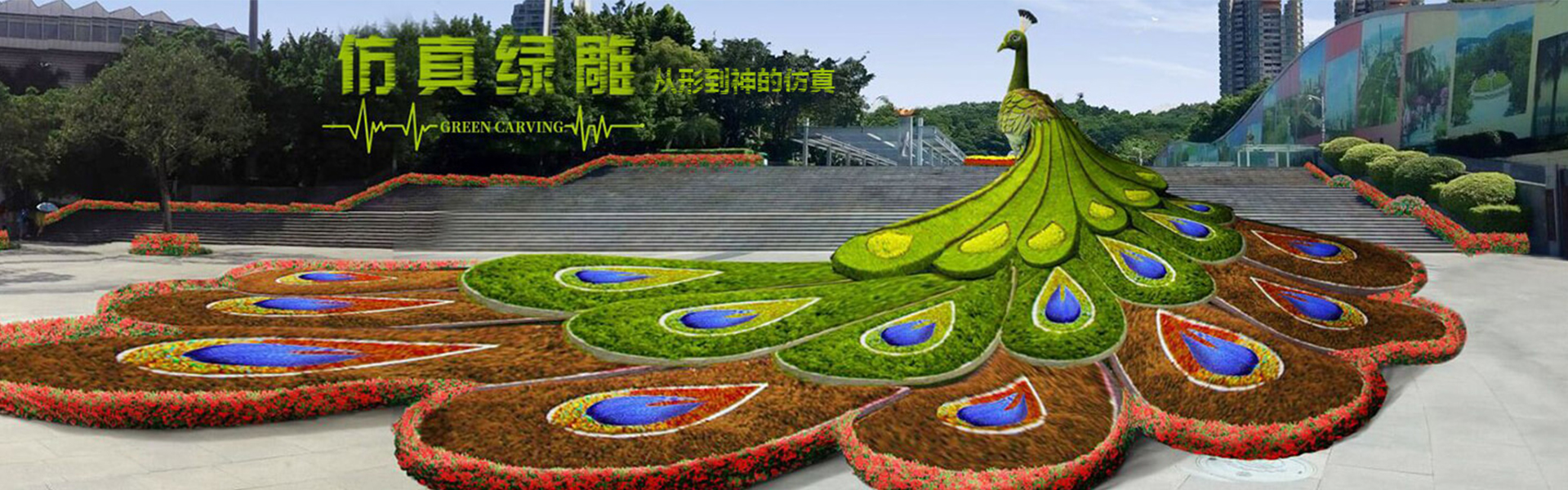


Create interactive garden landscapes with green sculptures. At the end of the day, whatever the tourist attraction, the ultimate service recipient is the people. While traveling, people essentially do two things: "see," which is appreciating the scenery, and "do," which is experiencing and interacting. This is akin to farms offering "pick-and-taste one-day tours." By utilizing lively and adorable green sculptures like animal-shaped and cartoon-shaped ones, these interactive green sculptures can enhance the vitality of the attraction.
Green Sculpture, also known as green sculptures, is hailed as a rarity in world garden art, being living plant sculptures. They typically feature a steel frame structure, filled with cultivation soil, and then planted with annual or perennial shrubs or herbaceous plants. This involves covering the surface of the structural design with flowers of different colors using techniques like hanging soil and inserting grass, or pot carding. The clever integration of sculpture shapes with horticulture creates a vibrant "flower sculpture." The plant coverage on the steel frame must be at least 80%. Therefore, green sculptures are a lively "flower sculpture," another example of horticultural civilization created by humans using natural forces.

Greenery Sculpture Maintenance:
Generally, pruning, binding, and weaving are employed, which involves trimming or binding the shape. After weaving, the green sculpture plant materials can be moved to a well-lit area for regular care. For plants like pentas and cosmo, only a small amount of water should be applied to maintain vitality and prevent withering of leaves. More water can be used during hot weather.

Green sculptures, also known as three-dimensional flower beds, typically feature steel frameworks, filled with planting soil, and then planted with foliage and flowering plants that can withstand pruning to enhance the horticultural artistry of urban greenery. The "Guidelines" stipulate that green sculptures should be dressed according to the change of seasons, with daily watering depending on the weather conditions—watering every 3-5 days in winter and 1-2 times daily in summer. Additionally, green sculptures may also be attacked by pests such as snails and aphids. Snails often harm the plants before and after rain or in the early morning, and should be killed using dense or wettable powder formulations.

Selection of green sculpture materials:
Preferred plants should have small leaves and dense growth, with slow-growing perennials such as ornamental dandelions, half-stem flowers, and low-creeping liriope as main choices. Traditional green sculptures are primarily made of pentas. As pentas have short plants, strong branching, dense foliage, and are tolerant of pruning, their varied leaf colors are bright and vibrant. They prefer warmth, are averse to cold, and can withstand dry heat while avoiding low temperatures. Small-plant varieties like evergreens and canary grass can also be used, as they thrive in fertile loamy or sandy soil rich in humus. To enrich colors, pair with: golden sedum, Strobilanthes, coleus, evergreens, cacti, small-leaf red grass, pinkish-red red grass, and silver-gray chrysanthemums. Plant materials should be used in pots, as their smaller roots are easier to plant and have a shorter post-planting recovery period.
Guangzhou Meiju Green Wall Co., Ltd. combines experienced technical expertise and user-friendly design to elevate traditional techniques, truly replacing wood with "plastic." This allows greenery to be mass-produced for households, bringing nature back to the city. It enables citizens to simply and joyfully enjoy greenery, thereby realizing "greening daily life, embracing nature in cities, and propelling the industry forward in leaps and bounds."
