


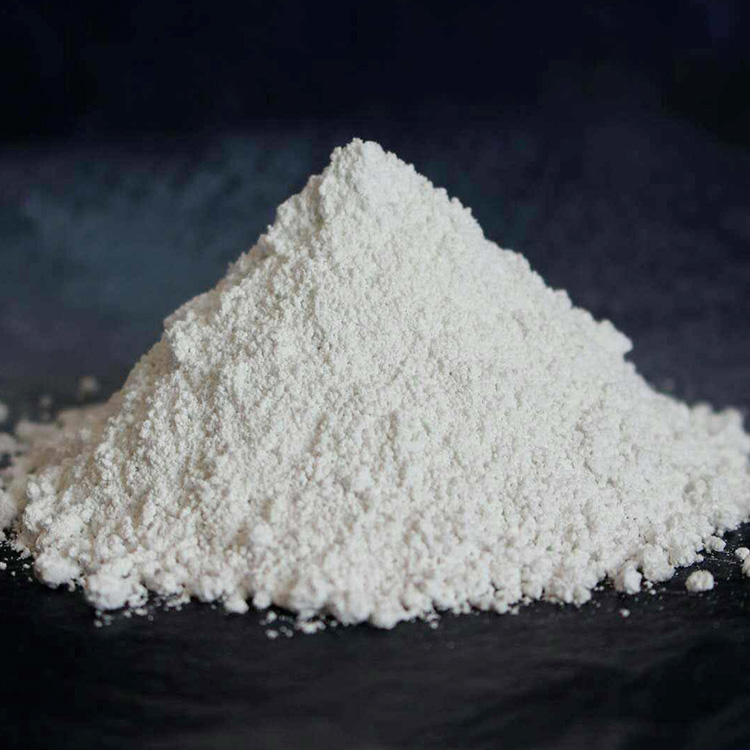
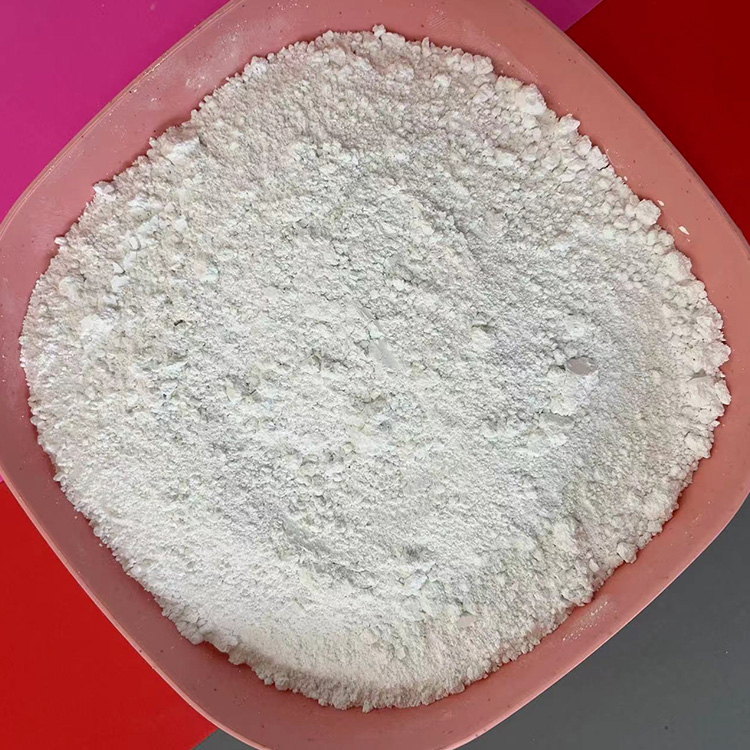
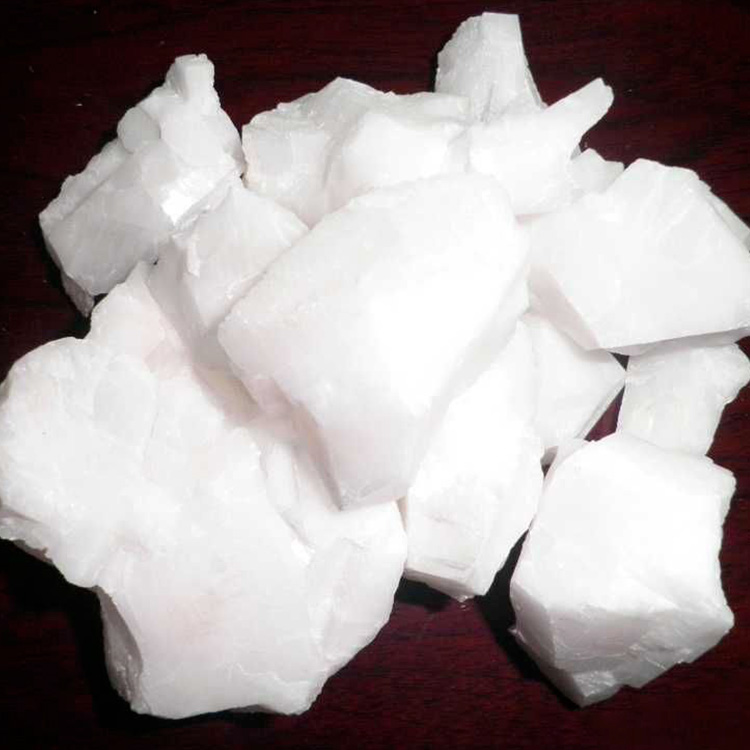
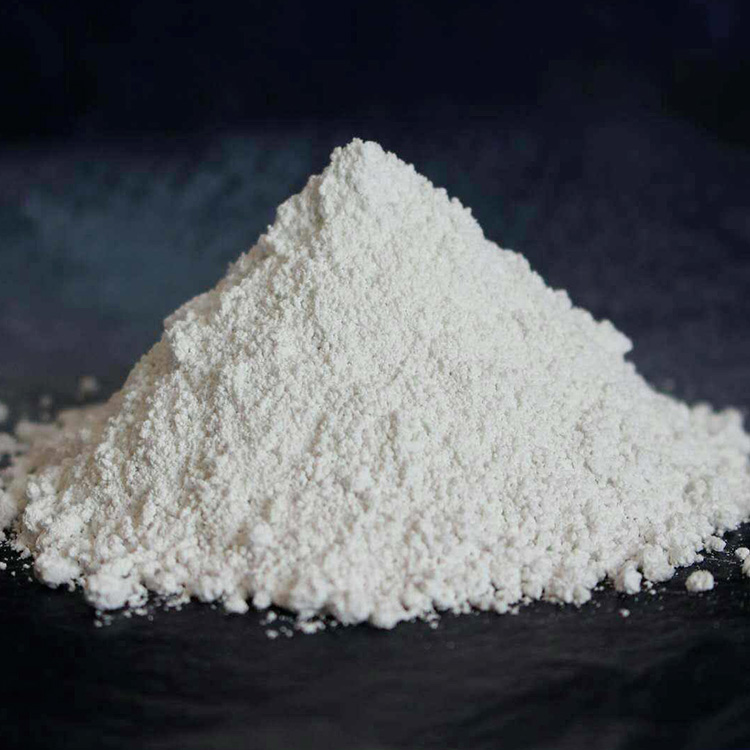
High-purity kaolin features high brightness, soft texture, easy dispersion and suspension in water, excellent plasticity, and high adhesion, as well as excellent electrical insulation properties. It also possesses good resistance to acid solubility, very low cation exchange capacity, and good refractoriness. Consequently, kaolin has become a mineral raw material essential for dozens of industries, including papermaking, ceramics, rubber, chemicals, coatings, and more. Reports indicate that kaolin is also used in Japan to replace steel in the manufacturing of cutting tools, lathe drills, and engine casings, among other applications. Particularly in recent years, with the rapid development of modern science and technology, the application scope of kaolin has expanded further, with some technical fields now utilizing kaolin extensively as a material. Even components for high-temperature ceramics in atomic reactors, space shuttles, and spacecraft are now being made from kaolin.
Calcined kaolin for papermaking is produced from high-quality coal-based kaolin, processed through beneficiation, ultra-fine powder grinding, and calcination. It boasts a complete hexagonal plate-like structure, good porosity, a reasonable particle size distribution, and ideal light scattering properties. Moreover, due to its high brightness, low wear value, and good oil absorption, it is an excellent paint pigment, primarily used in the paper industry for coated surface coatings. It is characterized by reducing production costs, enhancing paper properties, improving ink absorption rate, having good compatibility with other ingredients, and a high viscosity.
Compared to raw kaolin, low-temperature calcined kaolin has reduced combined water content, increased silicon dioxide and aluminum oxide content, more active sites, altered structure, smaller and more uniform particle size. The curing characteristics curve of NR rubber compound filled with low-temperature calcined kaolin is essentially the same as that with raw kaolin, with no change in Shore A hardness and improved tensile strength. Both meet the industry standards for non-transparent soles of sports shoes in terms of physical properties.
Recently, ceramics, rubber, plastics, artificial leather, cement, refractory materials, and chemicals, as well as agriculture, have been widely used. With the further improvement of the high-alumina mining process, the application scope of kaolin will become increasingly broad. Coalfield geological units can start from the actual situation and focus on the kaolin resources in coal-bearing strata and market demand. Kaolin is a non-metallic mineral widely existing in nature, which was generally used in the production of ceramics, refractory materials, and as a small amount of reinforcing filler in plastics and rubber. As various economic fields continue to develop, there is growing emphasis on the deep processing of kaolin, as it not only provides materials with special properties but also enhances economic benefits. One method of deep processing kaolin is to further heat, calcine, and dehydrate the washed and dried kaolin to convert it into metakaolin, which is used as a filler in plastic cables to improve the insulation performance of the cable sheath. The common rubber fillers for footwear mainly include organic fillers and inorganic fillers. The former includes reclaimed rubber and recycled materials, while the latter includes silicon dioxide, calcium carbonate, titanium dioxide, magnesium carbonate, magnesium oxide, carbon black, and zinc oxide powder. Kaolin is a rubber product filler that has been developed in recent years.
But all applications of kaolin require it to be processed into a fine powder before being mixed with other materials for complete integration.
The cohesive property refers to the ability of kaolin to combine with non-plastic materials to form a plastic clay mass with certain drying strength. The determination of cohesive ability involves adding standard quartz sand (with a particle size composition of 70% between 0.25-0.15mm and 30% between 0.15-0.09mm) to the kaolin. The higher the sand content that can still maintain the plastic clay mass and the higher the bending strength after drying, the stronger the cohesive ability of the kaolin. Generally, kaolin with strong plasticity also has strong cohesive ability.
Viscosity and thixotropy
Viscosity refers to a fluid's characteristic of resisting relative flow due to internal friction, measured by its size in terms of viscosity (frictional force acting on 1 unit area), with the unit being Pa·s. Viscosity is typically measured using a rotational viscometer, based on the rotational speed in a kaolin slurry with a 70% solid content. In the production process, viscosity is of great significance; it is not only a critical parameter in the ceramic industry but also has a significant impact on the papermaking industry. According to data, for external coating applications using kaolin, the viscosity should be around 0.5 Pa·s during low-speed coating and less than 1.5 Pa·s during high-speed coating.
Thixotropy refers to the property of mud that, after thickening into a gel-like, non-flowing state, becomes fluid under stress and then gradually thickens back to its original state upon rest. It is expressed by the thickening coefficient and measured using a flow viscosity meter and a capillary viscometer.
Viscosity and thixotropy are related to the mineral composition, particle size, and cation type in the mud. Generally, mud with a higher montmorillonite content, finer particles, and exchangeable cations predominantly sodium has higher viscosity and thickening coefficient. Therefore, in the process, it is common to increase viscosity and thixotropy by adding clay with strong plasticity and improving fineness, and to decrease them by increasing diluent electrolytes and water.
Drying Performance
Drying properties refer to the performance of kaolin clay slurry during the drying process. This includes drying shrinkage, drying strength, and drying sensitivity, among others.
Drying shrinkage refers to the contraction that occurs in kaolin clay after it loses water and dries. Kaolin clay typically starts to dehydrate and dry at temperatures between 40-60°C, with no more than 110°C, as water is expelled, the distance between particles shortens, resulting in shrinkage in the length and volume of the sample. Drying shrinkage is divided into linear shrinkage and volume shrinkage, which are expressed as percentages of the change in length and volume when the kaolin clay reaches constant weight. The linear shrinkage of kaolin is generally between 3-10%. Finer particle size, larger specific surface area, and better plasticity result in greater drying shrinkage. For the same type of kaolin, due to different water content, the shrinkage varies; the more water, the greater the shrinkage. In ceramic processes, excessive drying shrinkage can lead to deformation or cracking of the green body.
The drying strength refers to the flexural strength of clay after it has been dried to a constant weight.
Dry sensitivity refers to the ease with which a green body may deform and crack during drying. Higher sensitivity leads to easier deformation and cracking during the drying process. Generally, kaolin with high dry sensitivity (dry sensitivity coefficient K > 2) is prone to forming defects; those with lower sensitivity (dry sensitivity coefficient K < 1) are safer during drying.
Sinterability
Sinterability refers to the property of a shaped, solid, powdery kaolin body that spontaneously fills particle gaps and densifies when heated to near its melting point (usually over 1000°C). The state where porosity drops to a lower value and density reaches a higher value is called the sintered state, and the corresponding temperature is known as the sintering temperature. As heating continues, the liquid phase in the sample increases, and the sample begins to deform, at which point the temperature is called the transformation temperature. The interval between the sintering temperature and the transformation temperature is known as the sintering range. The sintering temperature and sintering range are important parameters in the ceramic industry that determine the batch formula and the selection of kiln types. It is preferable for the test material to have a low sintering temperature and a wide sintering range (100-150°C), which can be controlled by adding fluxing materials and proportionally blending different types of kaolin.
