



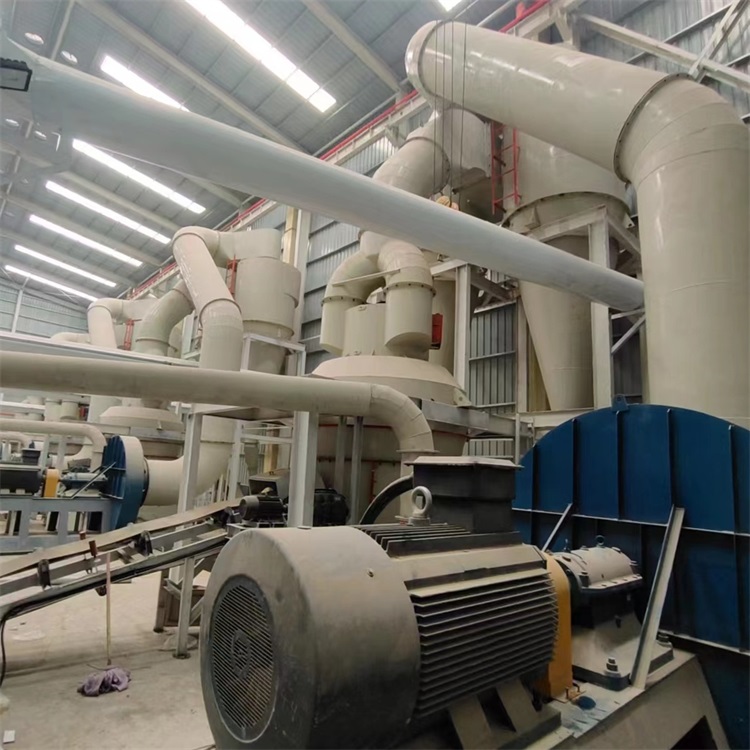
Usage
The Raymond Mill Pulverizer is suitable for the powder processing of non-flammable and non-explosive mineral materials such as gypsum, calcite, limestone, barite, fluorspar, apatite, feldspar, and quartz, etc., with Mohs hardness not exceeding 9 and moisture content below 10%.
Work Process
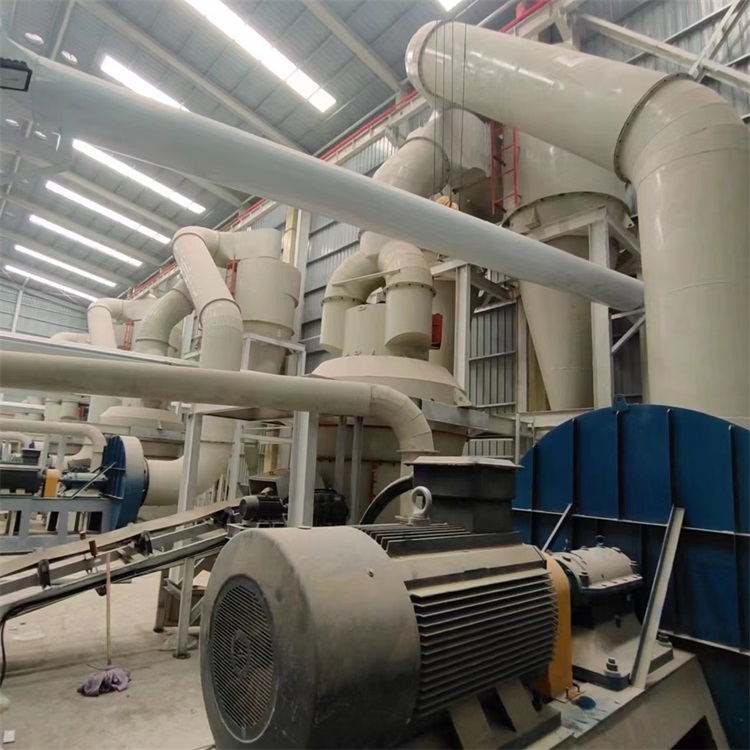
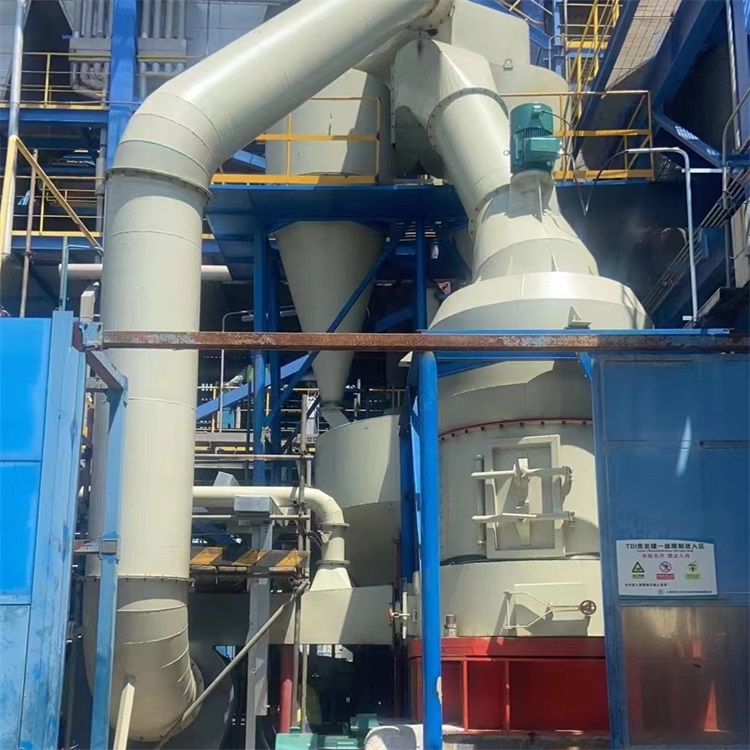
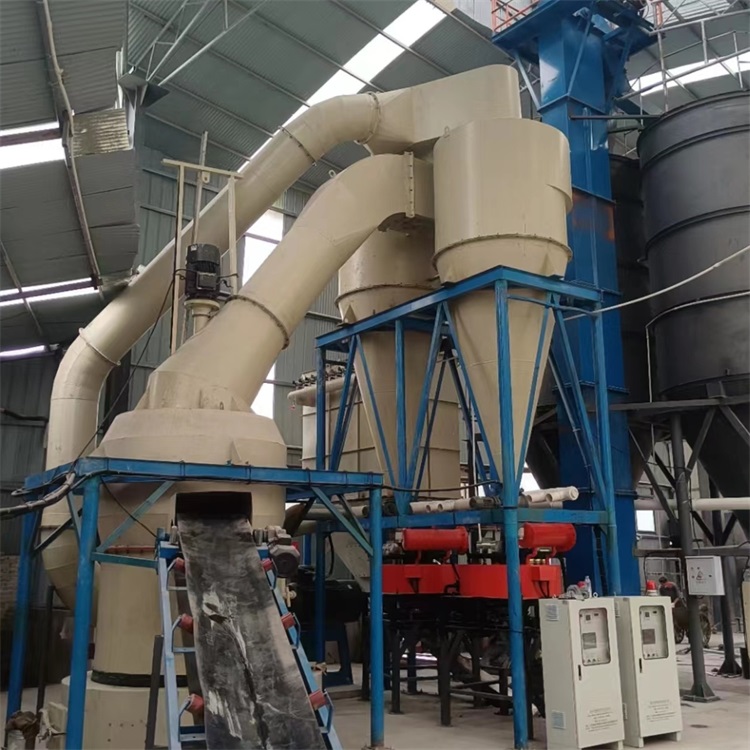
The blocky material is crushed to a certain particle size, then lifted vertically by a bucket elevator to the hopper. It is then fed into the main machine by an electromagnetic vibration feeder, which delivers it in a quantitative and uniform manner. Inside, the material is ground, and the powdered product is blown out by a blower. It is then graded by an analyzer placed above the main machine. The finely ground powder that meets specifications is carried by the air flow into a large cyclone collector, where it is collected and discharged through a powder outlet as finished product. The air flow returns to the blower through the return air pipe at the top of the cyclone collector, and the entire air circuit operates in a closed, negative pressure state with no dust leakage.
Structural Features
★ The oscillating mill occupies a small area, has strong integration, and can independently form a production system from raw material crushing to finished product packaging.
★The finished product granularity passed through the sifter after being ground by the oscillating mill can reach over 98%, which is beyond the capability of other grinding mills.
★Equipped with an electromagnetic vibration feeder for uniform feeding, easy adjustment, compact size, light weight, energy-saving, and convenient maintenance.
★Electrical equipment features centralized control, optimal selection, and can be operated unmanned within the main server room.
★The main drive unit employs an enclosed reducer, ensuring smooth transmission, reliable operation, and no oil leakage.
★The main blade is in constant contact with the material during operation, hence it consists of two parts: the upper and lower sections. When the lower section wears out, the bolts can be removed to replace it, reducing operational costs.
