

Feeding Spreader: Convenient Feed Delivery Method
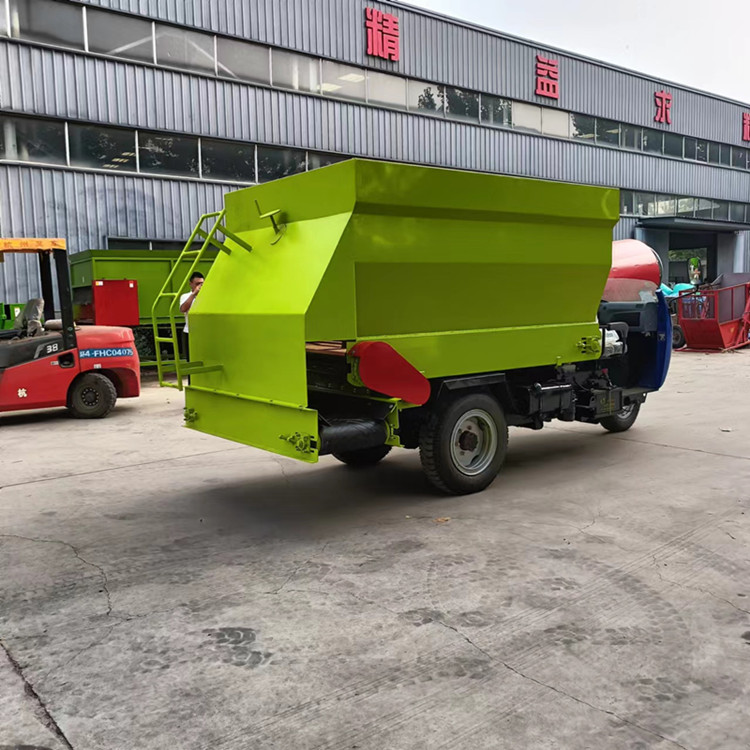
Feed spreaders are specialized engineering vehicles used for distributing feed in farms, breeding farms, and zoos. The feed they carry can be quickly and evenly distributed to the required locations in a short period of time. Due to their convenience and cost-effectiveness, feed spreaders have gained widespread popularity and are increasingly recognized and used by more and more people. Below, we will briefly discuss feed spreaders from four aspects.
Quick manufacturing
The manufacturing of feed spreader trucks requires selecting manufacturers with certain technical capabilities, production processes, and equipment, capable of offering quick and competitive services. The manufacturer must have a research and development team with relevant expertise, able to customize different types of feed spreader trucks based on customer needs and site requirements, as well as unique mixing and control systems. The manufacturer also needs a design, production, and installation team to ensure a short production cycle for feed spreader trucks, high manufacturing quality, stable performance, and reliability.
Two: Intelligent Blending System
Feeding spreader vehicles differ from standard delivery trucks, as the feed they carry must be distributed through hundreds of outlets to the designated feeding locations at all times. Therefore, their batching system requires strict precision to ensure automated control levels and accuracy. Typically, the batching system consists of an intelligent control center, pumps, sensors, control lines, and more. The central controller offers multiple functions, including unloading time, unloading quantity, flow control, tank temperature, and wireless capabilities. Sensors can detect the weight of the feed inside the tank and provide real-time feedback on the storage tank's status. These controllers, sensors, and control lines make the batching system more intelligent and safer than manual operations.
Section 3: Multiple Models for Flexible Use
There are various types of feed spreader trucks, chosen and designed according to specific site requirements. Common types include straight trailer, rear-mounted, dump truck, flatbed, and more, offering a diverse range of models to meet different customer needs. Among these, rear-mounted and straight-pulled types are particularly popular. Rear-mounted feed spreader trucks operate directly without the need for manual pushing or pulling. Straight-pulled models come with their own trailers, making it easy to tow and drive. When selecting a model, factors such as the terrain, cargo volume, workload intensity, and transportation distance should be considered, ensuring a suitable feed spreader truck is chosen.
Four: Design Appearance
The feed spreader truck, in addition to its functionality, also requires an aesthetically pleasing design. Its appearance is simple yet elegant, with a cohesive overall shape and suitable dimensions, making it versatile for various types of sites. The feed spreader truck also features a design that can be termed a "touch of class." This involves branding the vehicle with the company's name, logo, and descriptive information, which not only enhances the commercial image of the feed spreader truck but also boosts brand promotion and strengthens brand recognition and affinity.
In summary, the convenience and cost-effectiveness of feed spreader trucks have been increasingly recognized and accepted by more and more people. Of course, manufacturers and users need to understand and master the relevant technology of feed spreader trucks to ensure their effectiveness. By carefully understanding each requirement and developing different vehicle models, feed spreader trucks can truly become powerful weapons for achieving high efficiency. Ensure effectiveness, understand each requirement, develop different vehicle models.