






Rubber Mill Emission Treatment
During the operation of rubber factory equipment, waste smoke and exhaust emissions occur to varying degrees due to heating, resulting in a small amount of organic waste gas production, which becomes a major source of secondary environmental pollution. These emissions permeate the workshop, harming workers' health, and when discharged outside, they further pollute the surrounding environment.
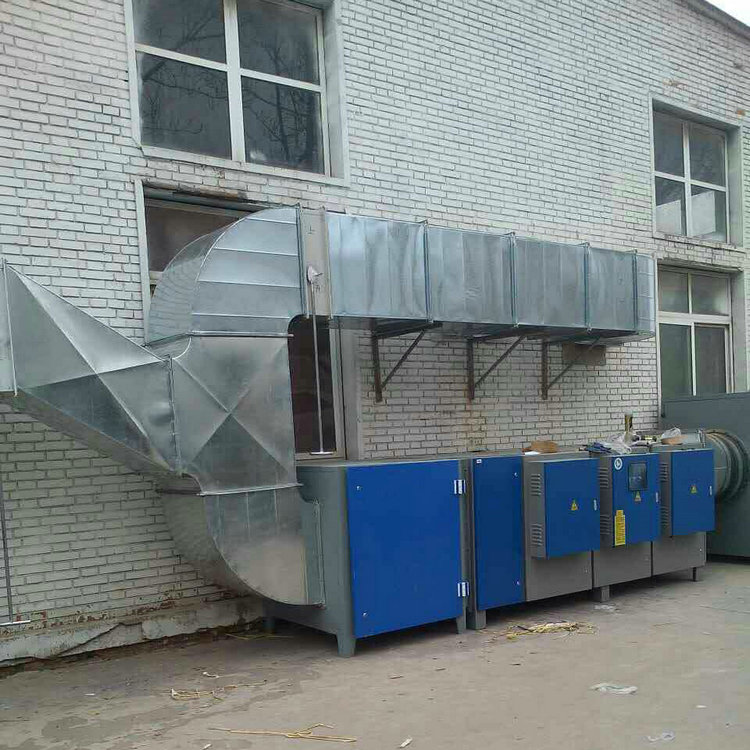
Based on the characteristics of complex waste gas composition in rubber companies, the following treatment methods are established: 1. Enclose the exhaust gas collection hood at the feed opening and curing equipment of the intensive mixer and open mill. 2. Collect all exhaust gas collection hoods through branch pipes and progressively into the main trunk, selecting equipment based on the waste gas composition and process characteristics. Generally, the waste gas concentration ranges from several tens to several thousand milligrams per cubic meter. 1) Sulfur-containing compounds: such as H2S, SO2, thioles, etc.; 2) Dust: such as carbon black; 3) Chlorine-containing compounds: such as amides, indoles, etc.; 4) Hydrocarbons: such as alkanes, alkenes, aromatics; 5) Oxygen-containing organic compounds, such as alcohols, phenols, aldehydes, ketones, organic acids, etc.
Governance Method:
PP tower washing + UV photocatalytic oxidation.
PP Tower Wash + Low Temperature Plasma Oxidation
PP Tower Wash + Activated Carbon Adsorption + Desorption Thermal Oxidation
PP Tower Washing + Biodegradable
PP Tower Washing + Zeolite Wheel Concentration Oxidation Treatment Method:
