




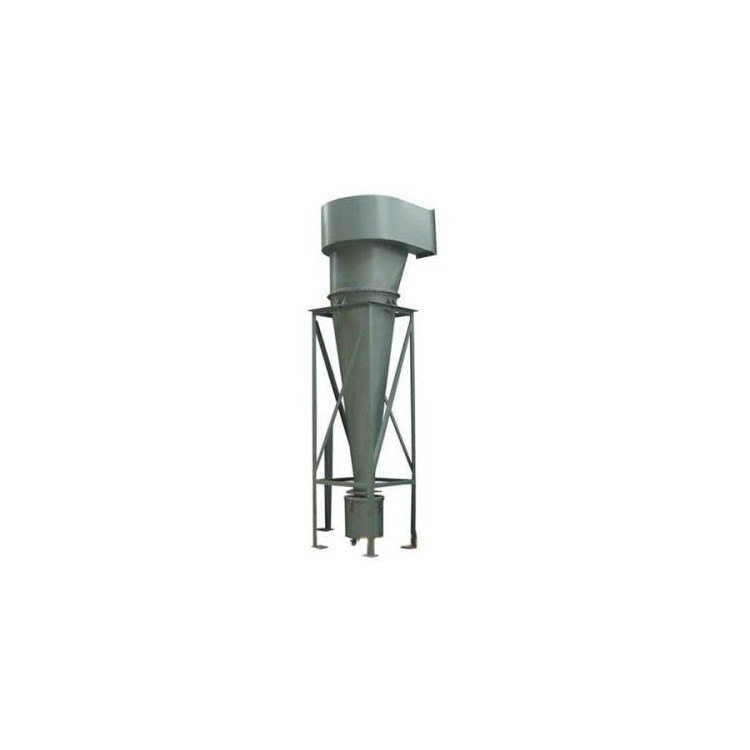
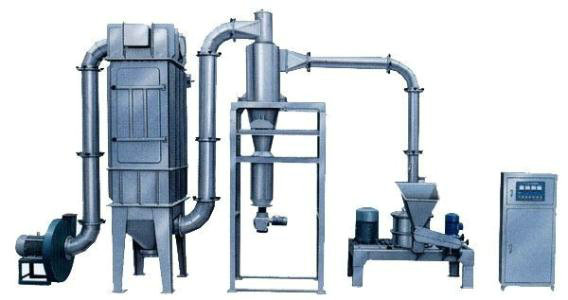
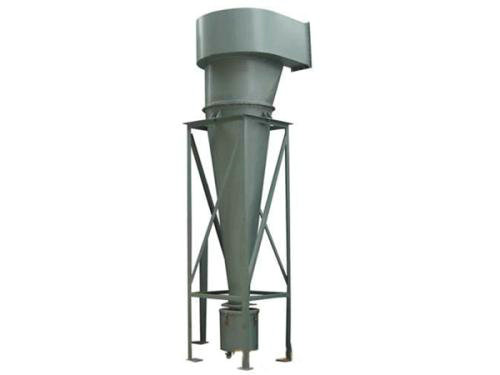
The operating parameters of the XLP Cyclone Dust Collector mainly include: the air velocity at the dust collector inlet, the temperature of the treated gas, and the inlet mass concentration of the dust-laden gas.
1) Inlet air velocity. For a cyclone dust collector of a certain size, a higher inlet air velocity not only increases the volume of air handled but also effectively improves the separation efficiency. However, the pressure drop also increases. Once the inlet air velocity reaches a certain level, the separation efficiency may decrease, leading to increased wear and a shorter lifespan of the dust collector. Therefore, the inlet air velocity should be controlled within the range of 18~23 m/s.
2) Temperature of gas treatment. As the gas temperature increases, its viscosity also increases, causing the centrifugal force on dust particles to rise, thereby reducing the separation efficiency. Therefore, dust collectors operating under high-temperature conditions should have a higher inlet air velocity and a lower cross-sectional flow velocity.
3) Inlet quality concentration of dusty gases. At high concentrations, large particle dust has a significant carrying effect on small particle dust, resulting in improved separation efficiency.
Prevent air leakage
The cyclone dust collector's efficiency will be severely impacted if there is a leak. According to estimates, a 1% air leak at the lower cone of the dust collector reduces its efficiency by 5%; a 5% air leak reduces efficiency by 30%. There are three areas where a cyclone dust collector can leak: at the inlet and outlet flange connections, the body of the dust collector, and the ash discharge unit. The reasons for the air leaks are as follows:
1) Air leakage at the flange connection is mainly caused by bolts not being tightened properly, uneven thickness of gaskets, and uneven flange surfaces.
2) The main cause of air leakage in the dust collector body is wear, especially in the lower cone. According to operating experience, when the dust concentration of the gas exceeds 10g/m³, the steel plate can be worn down by 3mm in less than 100 days.
3) The primary cause of air leakage in the ash unloading device is the poor sealing of mechanical automatic ash unloading valves (such as hammer-type valves).
Prevent wear on critical areas
Factors affecting wear on critical parts include load, airflow velocity, and dust particle size. Areas prone to wear include the housing, cone, and dust outlet, etc. Technical measures to prevent wear include:
1) Prevent dust outlet clogging. The main method is to select ash unloading valves and strengthen adjustments and maintenance of the valves during operation.
2) Prevent excessive gas from backflowing into the ash outlet. Ensure the ash unloading valve is tight and the counterweight is properly adjusted.
3) Regularly inspect the dust collector for any signs of leakage due to wear, so that timely measures can be taken to prevent it.
4) At the dust particle impact area, use replaceable anti-wear plates or increase the wear-resistant layer.
5) Minimize welds and joints; any necessary welds should be ground smooth. The inner diameter of the flange and gasket should be the same and maintain good alignment.
6) The tangential air velocity at the dust collector wall and the inlet air velocity should be maintained within the critical range.
Avoid dust blockage and accumulation.
The clogging and accumulation of dust in a cyclone dust collector primarily occurs near the exhaust outlet, followed by inside the intake and exhaust piping.
1) Dust Extraction Port Clogging and Preventive Measures. Dust extraction port clogging is usually caused by two reasons: first, large pieces of material or debris (such as shavings, wood chips, plastic bags, shredded paper, rags, etc.) get stuck in the extraction port, with dust accumulating around them; second, excessive dust accumulation in the ash hopper, not being discharged in time. Preventive measures for dust extraction port clogging include: adding a grille at the air intake; increasing a hand-cleaning hole at the top of the extraction port (with a hole cover, gasket, and sealant applied).
2) Air inlet and outlet blockages and their preventive measures. Air inlet and outlet blockages are often caused by poor design – slight rough angles or斜角 in the inlet and outlet can lead to dust adhesion and thickening, eventually resulting in a blockage.
