




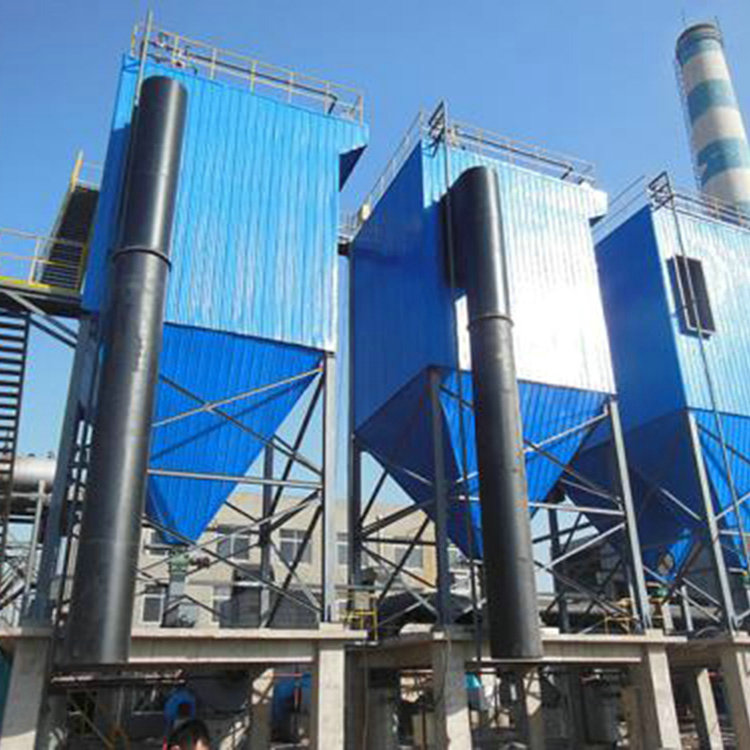
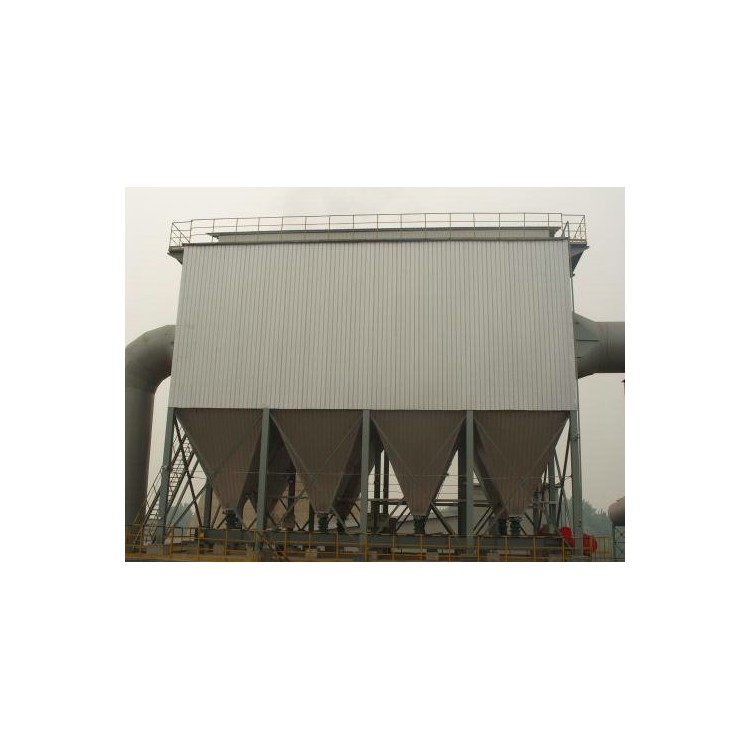
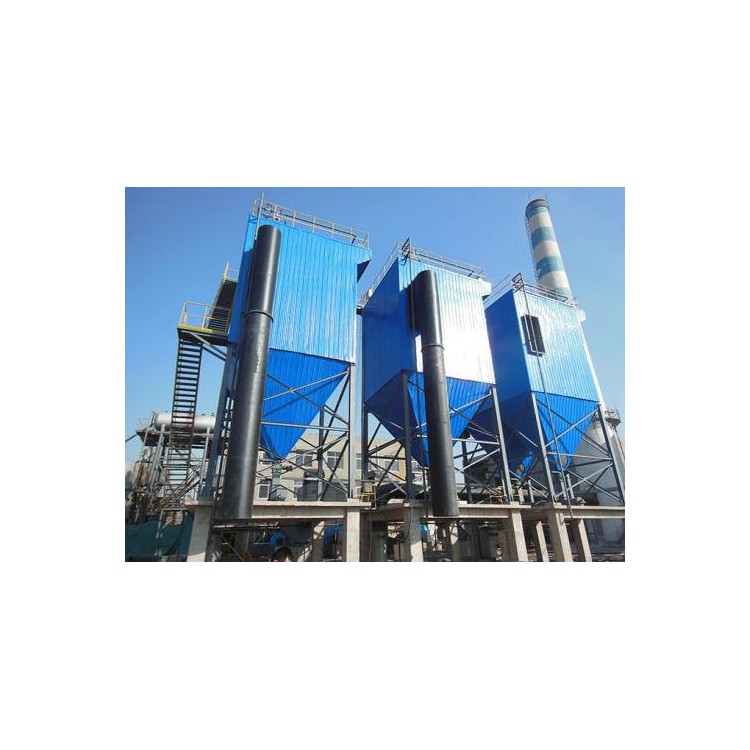
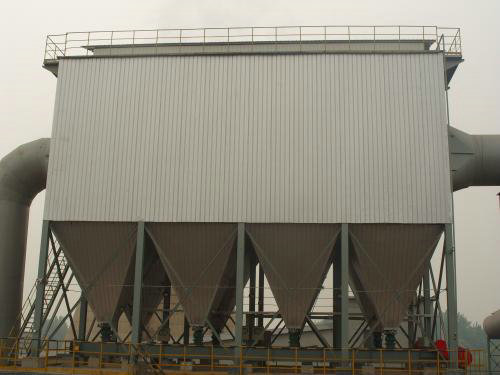

Boiler dust collector, referring to the equipment that separates dust from flue gas. The boiler dust collector is a commonly used auxiliary equipment in boilers and industrial production. Its function is to remove particulate soot from the flue gas emitted by the boiler fuel, thereby significantly reducing the amount of soot discharged into the atmosphere. This is an important environmental protection equipment for improving environmental quality and air quality.
The smoke enters the Venturi through the inlet duct, where it is uniformly sprayed with water at the throat entrance. Due to the high-speed movement of the smoke, the water sprayed in is atomized into a fine mist, wetting the ash in the smoke. This causes the ash particles to collide and coalesce with water droplets, particularly the fine dust particles. This process achieves initial dust removal and desulfurization, preparing the ash for separation. The smoke then enters the cylinder, where it rapidly cools and continues to冲击 the lime slurry in the pool. The dust and SO2 in the smoke react with the lime slurry to form sulfates, which sink to the bottom due to inertia, gravity, adhesion, and cohesiveness, completing the secondary desulfurization process. The water droplets and mist agitated by the smoke are lifted along with the cleaned smoke by the fan's suction, allowing for a full reaction between the smoke and lime slurry. The gas and water are then separated using a centrifugal dewatering unit, with the water flowing into the pool via a drainpipe. This results in a third round of dust removal and desulfurization for the smoke, which is then purified and discharged into the atmosphere through the fan.
Boilers dust collectors can be categorized by different principles, including steam dust collectors, bag dust collectors, boiler desulfurization dust collectors, vertical kiln bag dust collectors, and more.
